





UK Wind Engineering Society
The WES exists to promote the advancement and application of knowledge in all aspects of wind engineering.

Alan Robins, emeritus professor of environmental fluid mechanics at the University of Surrey, will deliver this year’s Scruton Lecture.
In the late 1970s, it seemed that wind tunnel dispersion research was under-represented at major wind engineering conferences. A few of us working in this field thought that we should have our own events, so we held an inaugural meeting at the Netherlands Organisation for Applied Scientific Research, Apeldoorn, in 1982. Eventually, this resulted in the biennial International Workshop on Physical Modelling of Flow and Dispersion Phenomena (Physmod conference series).
What we do has changed in many respects over the years, driven by competition from computational fluid dynamics and growing ambition. But how robust is our discipline today and what new topics might we address?
One certainty is that we must keep developing facilities that will continue to enable innovation. Another is that there are 24 hours in the day – and, given suitable investments in automation, these can all be used.
Enhancements at this level require substantial funding, but the benefits they offer will be substantial too, especially if our community can collaborate more closely to deliver them with greater efficiency.
The 2025 Scruton Lecture will explore these themes in depth and provide insights into future innovations in the field.
The WES exists to promote the advancement and application of knowledge in all aspects of wind engineering.

Buro Happold
director, sustainability and physics
Bernardo Vasquez has worked for engineering consultancy Buro Happold since 1998, specialising in construction technology, environmental impact assessment and wind engineering. Also experienced in solar energy and master planning, he works in the firm’s sustainability and physics team, which has advanced environmental simulation capabilities.
Vasquez chairs the executive committee of the UK Wind Engineering Society, the foremost national body dealing with wind effects in urban settings. He has also acted as an industrial adviser to the city councils of Liverpool and Leeds.
Vasquez has presented papers at conferences both in the UK and overseas. His work has been published in several journals and course notes.
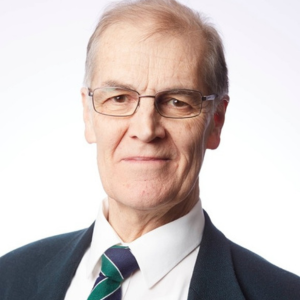
University of Surrey
Emeritus professor of environmental fluid mechanics
Alan Robins is an emeritus professor at the University of Surrey, having retired in 2020 as chair of environmental fluid mechanics. He was also director of its Environmental Flow Research Centre (EnFlo) – a major facility established in 1993 as a focus for UK studies requiring lab-scale simulations of atmospheric flow and pollutant dispersion.
Before joining EnFlo, Robins had been with the Central Electricity Generating Board (CEGB)/National Power from 1969 to 1993. Over that period, he obtained a PhD in aeronautics from Imperial College London and became head of the flow and dispersion modelling group at the CEGB’s Central Electricity Research Laboratories.
Robins’ research interests have included turbulent flow and dispersion, with applications in air and water pollution. His studies featured the mathematical and experimental modelling of mixing processes, concentration fluctuations and the atmospheric dispersion of emissions. His most recent work focused on traffic pollution and malicious releases in urban settings. This encompassed field, numerical and wind tunnel studies.

Technical Curiosity is a key pillar of building a successful career, and Pablo Gugel, director of sustainability and AI at Bryden Wood, will present and lead a discussion on Technical Curiosity: Broadening your perspective.

Aligning with publication of Ecosystem Strategy paper, this webinar explores how to implement aligned, integrated approaches that enhance infrastructure delivery, sharing Project 13 adopter insights and case studies demonstrating application, challenges and lessons learned.

An informal careers talk series designed to give an insight into the wide range of career opportunities available within civil engineering. Each talk, a different civil engineering professional will share their career journey, experiences and current role, providing an authentic perspective on worki…