





As we mark National Engineering Day, we reflect on how far the profession has come and where we're heading.
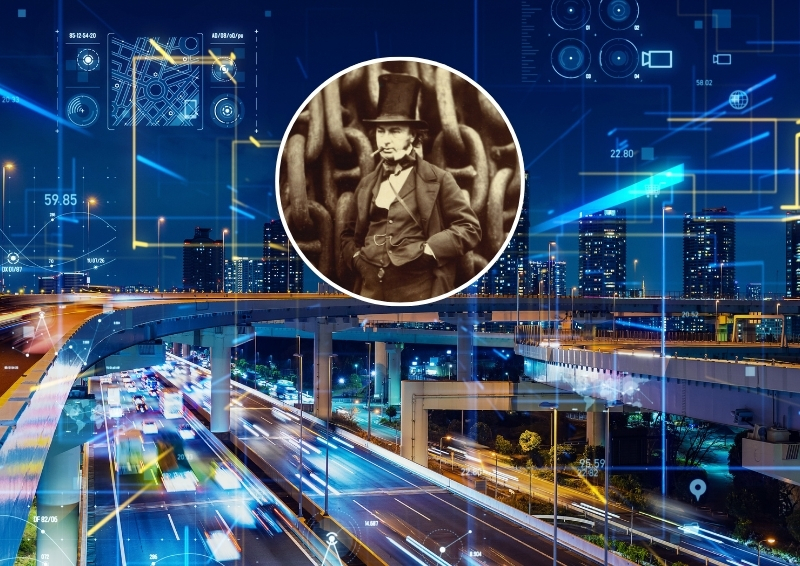
When Isambard Kingdom Brunel designed the Great Western Railway, and Joseph Bazalgette engineered London's sewer system, they solved the challenges of their age with slide rules, hand-drawn plans, and remarkable audacity.
But if we could transport those Victorian engineering giants to 2025, we’d likely leave them speechless.
This National Engineering Day, let's celebrate five engineering challenges that would astound our professional ancestors.
1. Designing buildings that heal themselves
Our engineering predecessors built for durability. Roman aqueducts still stand, Gothic cathedrals have weathered centuries, and Victorian bridges were designed to last generations.
But even the finest infrastructure needs maintenance and repair.
Today, we're developing concrete that fills its own cracks using bacteria that produce limestone when exposed to water.
We're also creating smart materials with shape-memory properties that return to their original form after damage.
Researchers are even experimenting with self-healing asphalt.
The idea that a bridge could monitor its own structural health in real-time and begin self-repair would seem like sorcery to Brunel.
2. Building cities in virtual worlds before breaking ground
Victorian engineers relied on experience and calculation. When things went wrong, as with the Tay Bridge disaster of 1879, the consequences were tragic and irreversible.
Now we create digital twins: virtual replicas where we simulate decades of wear, test earthquake resilience, model flooding scenarios, and predict pedestrian traffic flow before construction begins.
We're not just visualising structures – we're integrating real-time sensor data, AI predictions, and climate modelling.

For example, Crossrail's digital twin allowed engineers to identify conflicts between 16,000 design elements before they became costly onsite problems.
Most commonly known as the Elizabeth Line on the London Underground, it existed in digital form throughout construction, continuously optimising operations.
Our ancestors would marvel at solving problems in virtual space that they could only address through expensive, sometimes catastrophic, trial and error.
3. Engineering for a planet we're trying to cool down
The Industrial Revolution was built on coal and steam.
Today's civil engineers face a paradox: building infrastructure for billions while reversing climate change. For instance, we're developing carbon-absorbing concrete that pulls CO2 from the air as it cures.
We're creating road foundations enhanced with biochar (a form of charcoal) that store carbon for centuries.
Urban developments now feature engineered wetlands that manage stormwater while serving as carbon sinks.
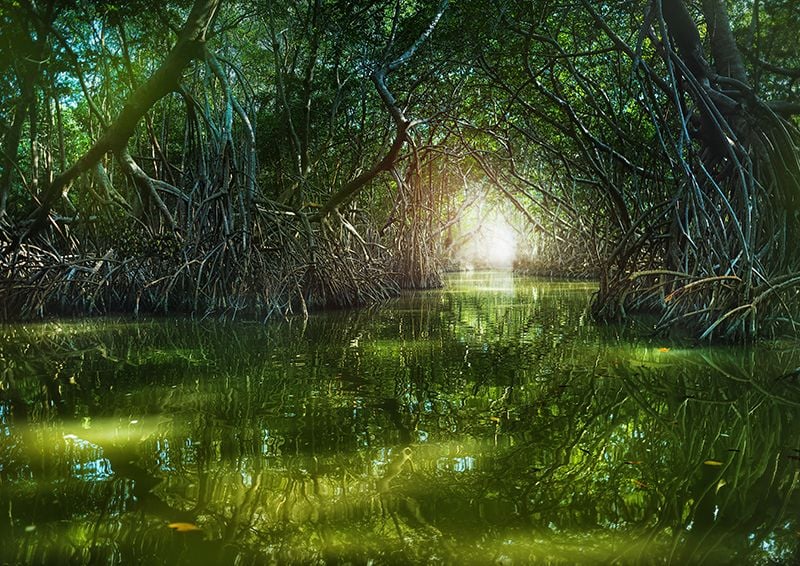
Coastal defences don't just protect against rising seas – they cultivate mangroves and salt marshes that capture carbon at rates that far exceed most forests’ abilities.
The concept that infrastructure could heal the atmosphere while serving its primary function would be incomprehensible to Victorian engineers who powered their achievements with coal.
4. Managing infrastructure through invisible networks
When our predecessors designed water networks, railways, or power grids, they created systems operated by thousands of people manually controlling valves and switches.
The London Underground's first signals were people with flags.
Now we're building infrastructure that thinks.
Smart water networks can detect leaks within minutes and reroute supply automatically. Bridges can monitor their own stress and alert engineers before problems become visible. Traffic systems can learn patterns and adapt signals in real-time without human intervention.
Today's civil engineers don't just design physical structures – they design intelligent systems.
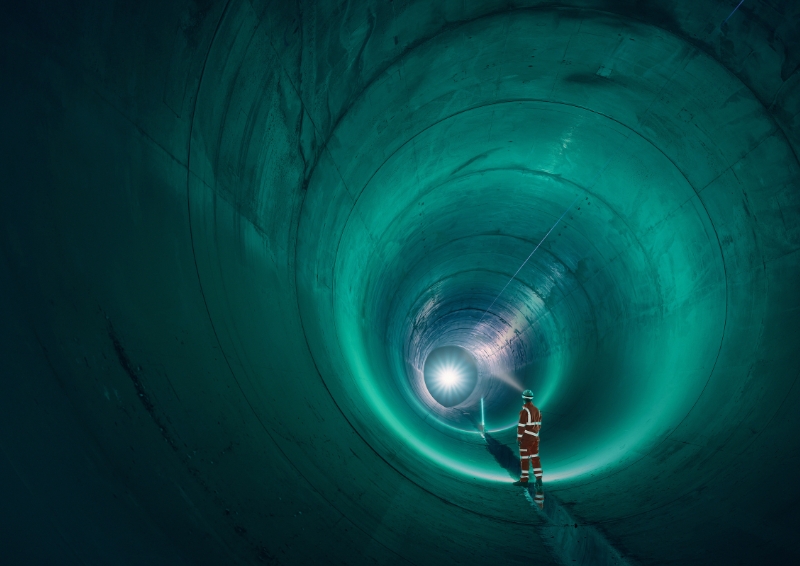
The Thames Tideway Tunnel, London’s new ‘super sewer’, uses advanced sensors to manage 25 kilometres of interconnected infrastructure.
It optimises flow based on rainfall predictions, tide schedules, and demand patterns – all happening invisibly beneath London's streets.
Our ancestors would be astounded that millions of infrastructure elements now communicate wirelessly, self-optimising without armies of operators.
5. Building with materials that don't exist yet
Victorian engineers had a limited material palette: stone, brick, iron, and later, steel and concrete.
Material properties were discovered through trial and error. Engineers worked with what nature provided.
Today's civil engineers collaborate with materials scientists to design substances with precisely specified properties at the molecular level.
Need a material lighter than aluminium but stronger than steel, transparent to certain wavelengths, and capable of generating electricity? We can engineer that.
Graphene-enhanced concrete offers unprecedented strength-to-weight ratios. Transparent aluminium provides hurricane-resistant windows. Aerogels create insulation that's nearly 99% air yet supports thousands of times its own weight.
We're even developing living building materials with engineered bacteria that create structures while filtering air and producing light.
Take the Forth Bridge for example, which required 55,000 tonnes of steel to construct.
A modern equivalent might use programmable materials that adapt their properties based on load and temperature, requiring a fraction of the material while outperforming the original.
Standing on the shoulders of giants
These challenges would astound our engineering ancestors not because we're smarter – we're not – but because we're building on foundations they laid.
Brunel's principles of elegant efficiency still guide us. Bazalgette's attention to future-proofing taught us to think in generations.
What unites us across centuries is the engineering mindset: seeing impossible challenges as invitations, not barriers.
Our Victorian predecessors couldn't imagine the problems we face today, just as we can't fully envision what engineers in 2125 will be solving.
But if history teaches us anything, it's that they'll be magnificent.

Sustainable Development Goals:
You may also be interested in

- Type
- Civil Engineer blog
Linking data to value: 5 priorities from the ICG's data and digital benchmarking report
The Infrastructure Client Group's 2026 benchmarking survey shows progress, but greater focus is needed on value, data quality and delivery outcome.

- Type
- ICE Community blog
What's the foundation of flood resilience? Information
ICE President David Porter explains why being informed about flood risk is so important for the public and civil and infrastructure engineers.

- Type
- Awards and competitions
It’s electrifying! South Wales Metro track transformation bags top award
The electrification of the Core Valley Lines impressed the judges at the 2026 British Construction and Infrastructure Awards.