





The ICE’s virtual work experience helped Alice Ford and Miriam Sellick with the skills and knowledge they needed to succeed at university and beyond
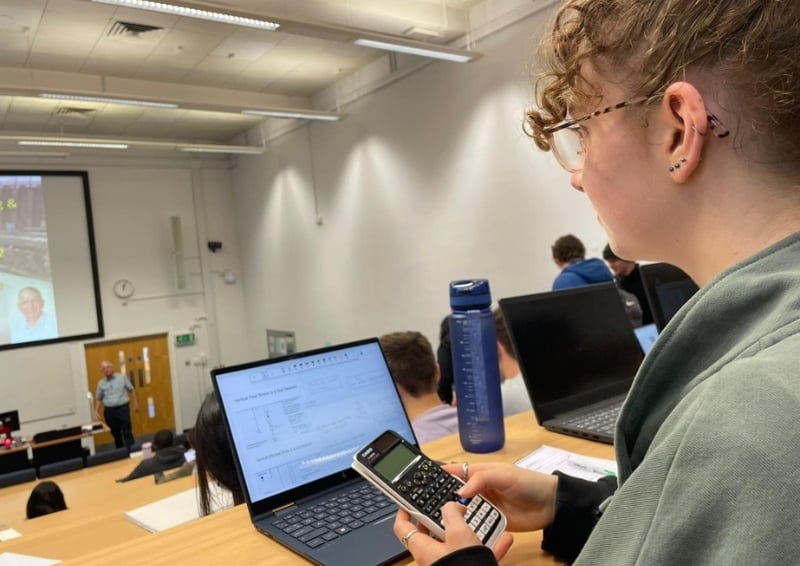
Some people have always had an inkling of what they’d like to do when they grow up.
“Ever since I analysed how swings moved in the school playground, it’s been my passion to become an engineer,” says Miriam Sellick, a second-year civil engineering student at the University of Cambridge.
“I’ve always wanted to use maths and physics (and all I have) to solve problems and stop climate change.”
For others, it’s been more of a process of exploration.
“I never had a single lightbulb moment where I suddenly knew what I wanted to do,” writes Alice Ford, also on her second year of undergraduate studies.
“Once I knew I might want to go into engineering, I decided to take part in the ICE’s Civil Engineers: Shaping the World virtual work experience on Springpod,” says the University of Leeds student.
“I was fascinated.”
Learning how engineers balance creativity with practicality
For Miriam, finding the ICE’s work experience came at the perfect time.
She got stuck into the 30-hour online course during the Easter holidays of her first year of sixth form.
“I loved learning at my own pace and finding out about how essential civil engineering is to life,” she says.
With modules ranging from housing and sustainable drainage to smart cities and listed-building renovations, there is something for everyone.
Alice agrees: “I loved seeing how everything connects and how engineering ties into social issues, the environment and everyday life.”
She was particularly interested in the Thames Tideway and Castlefield Viaduct projects, which showed that engineers can design with people and the planet in mind.
“Later on, I met people who had actually worked on some of those projects. It was a bit surreal to hear them describe challenges and solutions I’d just learned about online,” Alice says.
Using learnings in university applications

The Bosco Verticale apartment block in Milan captivated Miriam’s interest.
Famous for integrating plants into the building to increase air quality and reduce energy needs, there’s more than meets the eye when it comes to this structure.
“I saw the link between mechanics at school and the mass of the cantilevered terraces built to contain baths of water for trees to grow outside of every floor,” she says.
“But then I learned that wind forces apply dynamic loads that are actually more significant, and I realised how challenging winds are for structural design.”
These learnings featured on Miriam’s personal statement for UCAS, and alongside her A-level results, earned her offers from all five universities she applied to.
Getting stuck into university
Though challenging, Miriam has enjoyed her first year at the University of Cambridge.
She’s looked at innovative research to create zero-carbon cement, taken an exchange trip to Paris and volunteered at an international Arctic Repair Conference, learning innovative ways to cool the planet.
She also volunteers with Engineers Without Borders, working on projects like solar cookers for refugee camps.
For Alice, the start of university felt somewhat familiar thanks to the virtual work experience.
“I can see how much that early experience helped me,” she says. “It made starting my degree feel more familiar, especially in moduled like sustainability and integrated design.”
Work placements cementing their knowledge
“One of my biggest highlights so far has been my summer placement with WSP in the asset design team,” says Alice, who secured the placement through an ICE QUEST scholarship.
“It was a chance to see how everything I’d been learning actually fits together in practice.”
“I helped on a mains rehabilitation project, visited different offices around the UK, and started learning Autodesk, which gave me a real sense of how designs come to life behind the scenes.”
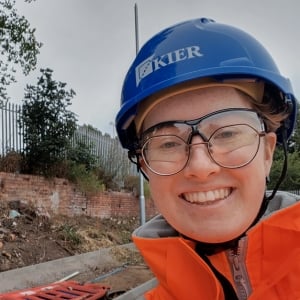
Miriam, also a QUEST scholar, completed a six-week internship with Kier over the summer.
She learned to use carbon modelling and calculator tools, undertook slope stability analysis as part of a wetland project and assessed risks on the site of a new railway station.
Her highlight: researching and presenting on bacteria-based self-healing concrete.
“I was thrilled when one of the principal engineers told me he was adding the session to his CPD log,” Miriam says.
“I realised that I actually first heard of self-healing concrete from the virtual work experience, two and a half long years ago!”
First step on an amazing journey
“Looking back, the ICE virtual work experience was the first step on a journey that’s already given me some amazing opportunities,” says Alice.
“From studying a subject I genuinely enjoy, to seeing how real projects take shape in the field, it confirmed that this is the right path for me.”
"I’d definitely recommend trying ICE’s Civil Engineers: Shaping the World virtual work experience. You never know. It might be what helps you find your direction, too.”

You may also be interested in

- Type
- News
Nominations open for ICE president
Candidates who meet the requirements are invited to stand to represent the institution as a future president of the ICE.

- Type
- Civil Engineer blog
Linking data to value: 5 priorities from the ICG's data and digital benchmarking report
The Infrastructure Client Group's 2026 benchmarking survey shows progress, but greater focus is needed on value, data quality and delivery outcome.

- Type
- ICE Community blog
What's the foundation of flood resilience? Information
ICE President David Porter explains why being informed about flood risk is so important for the public and civil and infrastructure engineers.