





Solar energy is now one of the fastest growing sources of electricity worldwide. Find out why it plays a crucial part in the net zero transition.
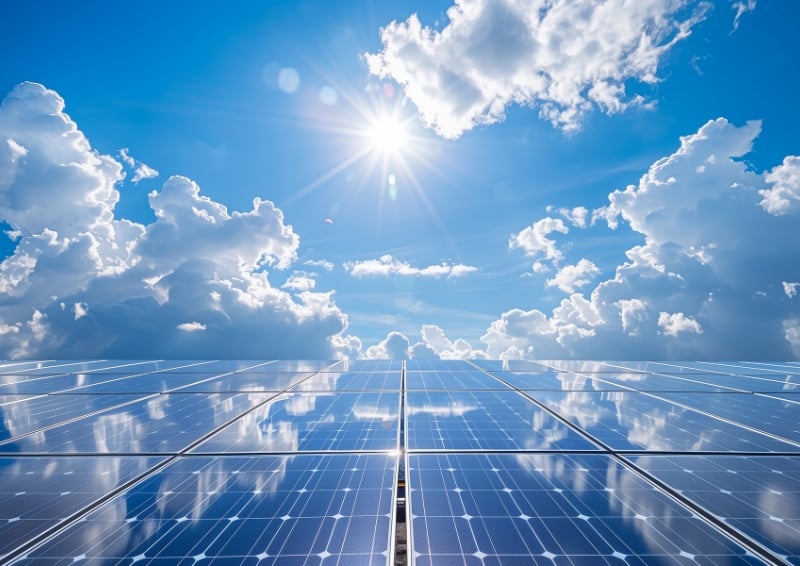
As demand for electricity rises – driven by hotter weather, electrified transport and heating – the question is no longer whether we will use solar, but how quickly we can scale it up.
Scientists estimate that we could obtain 300,000 terawatt hours (TWh) of power from solar panels every year. In 2024, humanity used around 650 exajoules (EJ) of energy, which in power would be roughly 181,000 TWh.
In other words, solar panels alone could more than meet global demand for power, making them a very important part of the net zero transition.
Understanding energy units
Power (watts) is the rate of energy use. Energy (kWh or joules) is the total used over time.
- 1 watt = 1 joule per second
- 1 kWh = 3.6 million joules
- 1 exajoule (EJ) = 1 quintillion joules
- 1 EJ/year ≈ 31.7 gigawatts (GW)
- 1 GW = 1 billion watts
- 1 TW = 1 trillion watts
What is solar power?
Solar power means capturing energy from the sun and turning it into useful heat or electricity.
Today, we do this in three main ways: photovoltaics (PV), solar thermal and concentrating solar power (CSP).
Each has distinct uses, but all rely on incoming solar radiation.
1. Photovoltaics (PV)
Photovoltaic panels turn sunlight into electricity using semiconductor materials such as silicon.
When light hits the material, it frees electrons and creates an electric current.
An inverter then converts it from direct current (DC) into alternating current (AC) for use in homes, businesses and the grid.
Today, panels are often installed on rooftops or in ground-mounted arrays in fields and other open spaces, otherwise known as a solar farm.
Their output depends on a few key factors:
- how much sunlight the site receives
- the tilt and orientation of the panels
- any shading from nearby buildings or trees
- local temperature
- the efficiency of the technology itself
Motorised trackers that follow the sun can boost yields, but they add cost and complexity.
By the mid 2020s, global installed PV capacity had passed roughly 2 TW, with hundreds of gigawatts being added each year.
It’s becoming a major source of electricity in many countries.
2. Solar thermal
Solar thermal technology uses the sun’s energy to produce heat rather than electricity.
Collectors absorb sunlight and transfer it into a working fluid (usually a water–glycol mix), which circulates through a heat exchanger in a storage tank.
The tank then provides hot water for washing, space heating or, in some cases, industrial processes.
Collectors are usually installed on rooftops, close to where the heat is needed, helping to limit losses.
Globally, solar thermal supplies a smaller share of energy than PV, but it’s very effective when the demand for hot water is steady.
By the end of 2023, installed capacity reached about 560 GWth (GW thermal), providing roughly 440–450 TWh (TW hours) of heat each year.
3. Concentrating solar power (CSP)
CSP systems use mirrors or lenses to concentrate sunlight onto a receiver, heating a fluid such as molten salt that then produces steam to drive a turbine and generate electricity.
Although far less common than PV, CSP has a key advantage: built in thermal storage.
By storing heat in insulated tanks, CSP plants can keep generating for several hours after sunset or through short cloudy periods (typically five to seven hours, and sometimes more).
Because they require large sites and strong direct sunlight, CSP plants are usually built in dry, sparsely populated regions.
Globally, it remains a niche technology, with around 7 GW of installed capacity by the end of 2024. But interest is growing where grid operators value dispatchable low-carbon power.
Solar farms and grid integration
As solar capacity grows, the main challenge is no longer just connecting them to the grid but making sure they help keep it stable.
Traditional power stations provide inertia, which resists sudden changes in frequency.
Solar systems don’t unless specifically designed to do so.
High levels of solar therefore make it harder to maintain the system’s frequency and resilience.
Large solar parks can also affect voltage, with levels rising on sunny, low-demand days and dropping quickly when clouds pass.
Implementing more resilience and flexibility into the grid to address this comes with a price tag – one that some don’t consider when thinking of the costs of solar.
Events such as the Iberian blackout have highlighted the scale of the issue.
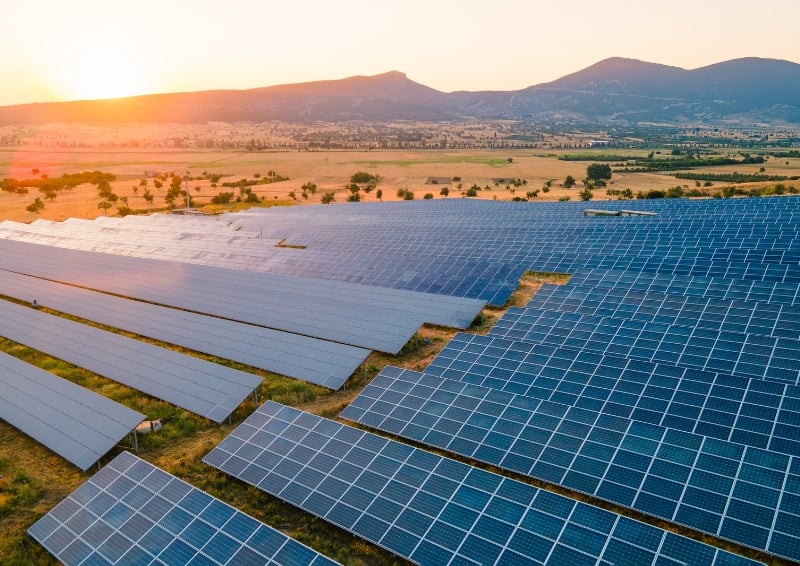
Battery storage is increasingly being built alongside solar, helping to smooth output by storing electricity when supply is high and releasing it when demand increases.
And, well-planned solar sites can offer biodiversity benefits by providing space for grazing, wildflower meadows or habitat corridors between the panels.
Advantages and disadvantages of using solar energy
Solar energy comes with a clear “for and against” case, but the balance depends on how and where it is used.
Pros:
- It draws on a renewable resource, with the panels producing electricity without direct greenhouse gas emissions or air pollution.
- Most systems have a relatively small carbon footprint compared with fossil fuels, especially as manufacturing becomes more efficient.
- Once the upfront investment is made, solar can cut energy bills for homes and businesses.
- Rapid falls in the cost of panels and inverters have also made installation easier and cheaper.
Cons:
- Output is variable: cloudy days, time of day, location in the world all affect levels of generation, so it must be combined with storage or other forms of electricity.
- Large solar farms occupy significant land and, if poorly designed, can obstruct farming or harm local habitats.
- The manufacture of panels and batteries involves emissions and use of resources that must be addressed through whole-life assessments and better recycling.
Global growth and future outlook
Solar energy is now one of the fastest growing sources of electricity worldwide.
Many countries are building large solar farms, backing rooftop programmes and integrating PV into the fabric of buildings through roof tiles, facades and glazing.
In 2024, solar again added more electricity generation than any other source and it continues to increase.
Global solar output more than tripled between 2019 and 2024, with China contributing more than half of the increase in 2024. The United States, India, Japan and Brazil also made record additions.
In early 2026, the UK government secured 4.9 GW of new solar capacity from 157 projects across England, Scotland and Wales, alongside support for many smaller installations.
Declining costs and future challenges
The cost of PVs has fallen sharply, driven by economies of scale, technological innovation and global competition.
In many regions, solar is now among the cheapest sources of electricity ever developed.
These rapid falls in cost and swift market uptake have far outpaced projections made 10 to 20 years ago, showing that we have significantly underestimated solar's potential.
Nevertheless, several challenges remain. These include supply chain pressures, the need to upgrade and digitise grids, and managing the full life cycle of panels and batteries, including recycling.
Still, solar energy is evidently becoming central to the global energy landscape.
Decisions made today regarding technology, regulation, and investment will be pivotal in determining the extent to which solar energy can provide secure, affordable, and low-carbon electricity.
Historical timeline
- 1839 – photovoltaic effect discovered
- 1954 – first silicon solar cell
- 2000s to today – rapid global expansion

You may also be interested in

- Type
- Civil Engineer blog
Linking data to value: 5 priorities from the ICG's data and digital benchmarking report
The Infrastructure Client Group's 2026 benchmarking survey shows progress, but greater focus is needed on value, data quality and delivery outcome.

- Type
- ICE Community blog
What's the foundation of flood resilience? Information
ICE President David Porter explains why being informed about flood risk is so important for the public and civil and infrastructure engineers.

- Type
- Awards and competitions
It’s electrifying! South Wales Metro track transformation bags top award
The electrification of the Core Valley Lines impressed the judges at the 2026 British Construction and Infrastructure Awards.