





The gap between ‘knowing’ and ‘doing’ took eight years to close, writes Dr Alexander Budzier, Fellow at the University of Oxford’s Saïd Business School and CEO at Oxford Global Projects.
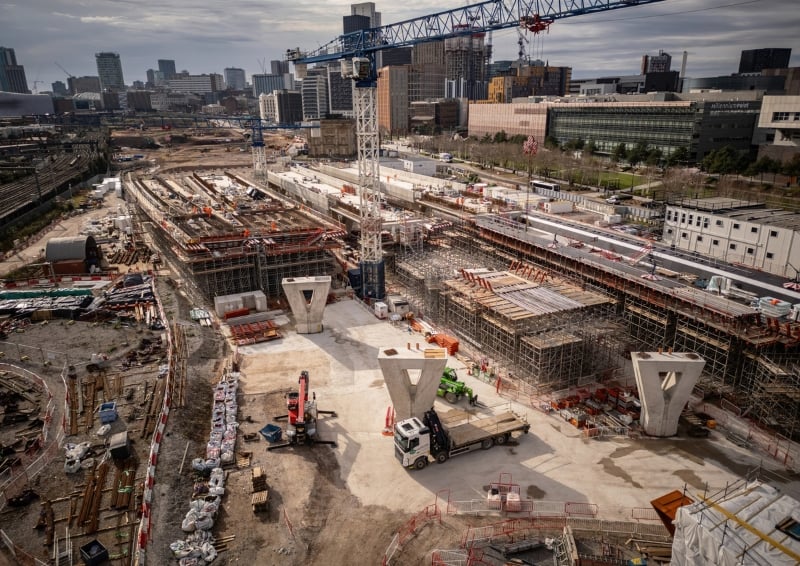
On 19 May 2026, the transport secretary told MPs that finishing HS2 will now cost between £87.7bn and £102.7bn, with the first trains running no earlier than 2036.
That’s far above the £35–45bn (in 2019 prices) the previous government budgeted for.
It was a grim update. But it wasn't a surprise. It confirmed what four official reviews have been circling since 2019.
And when four independent reviews keep reaching the same conclusions, the problem is no longer one project. It's a pattern.
The same diagnosis, four times over
The Oakervee Review (2019), Lord Berkeley's dissenting report (2020), the Stewart Review (2025), and now the Lovegrove Review (2026) have all found broadly the same faults.
The scope kept changing, which pushed up cost. Pressure to hit deadlines came before cost control. The early estimates were simply too low. Accountability was blurred. And the team delivering the work lacked the commercial skills the job demanded.
The ICE reached strikingly similar conclusions in its 2024 report on lessons from the cancellation of HS2's northern leg: unclear goals, shifting priorities, and too little time spent developing the project before committing to build.
It wasn't the maths that failed
Here's the part that often gets lost.
Before the project was committed to build, the Department for Transport used a technique called reference class forecasting to set how much money to hold back for risk. Oxford Global Projects provided that analysis.
The idea is simple. Rather than trusting a project team's own optimistic guess (the ‘inside view’), you look at what similar projects actually cost in the end (the ‘outside view’), and adjust accordingly.
The Stewart Review fairly argued the figures chosen were too low, but missed the deeper issue.
The method adds an uplift to a starting estimate. If that starting estimate has already been squeezed through immature designs, long lists of exclusions, and hopeful assumptions, then no percentage added on top will fix it.
A correction applied to a number that's too low still gives you a number that's too low.
So the real question for any major project is whether the base estimate is honest, or whether it’s simply affordable?
Contingency needs a fence around it
The second problem was governance. Even sensible contingency is useless if nothing protects it.
On HS2, costs that had been ‘excluded’ quietly crept back in without the budget rising to match.
Inflation was deliberately left outside the budget until it arrived, at over 11%, in 2022.
Stable, multi-year budgets were replaced by annual settlements, which made cost control almost impossible.
The Lovegrove Review describes how HS2 Ltd's board developed a ‘fortress mentality’: championing the project, rather than challenging it.
Bad news travelled slowly, and ministers heard a rosier story than the figures justified.
This isn't really an HS2 problem. It's the risk in any arm's-length model where the body delivering a project also controls the information its sponsor sees.
We knew, we just didn't act
Perhaps the most uncomfortable point is this.
The recommendation to publish cost as a range (rather than a single, falsely precise number) was made by the National Audit Office back in 2018. It reappeared in the Stewart Review in 2025. It’s finally been adopted in 2026.
That gap, between knowing and doing, took roughly eight years and tens of billions of pounds to close.
The ICE has been making the same case for years: the most value is won or lost in a project's earliest stages, when costs are lowest and the client has most control.
Commit too early, on numbers that are too low, and everything after is damage limitation.
How to break the cycle
The fixes aren't radical and they're largely the ones the ICE has long argued for.
Start with the outcome you want, and a clear national strategy, rather than defaulting to a row about cost.
Build an honest base estimate first, then apply the outside view. The government's own Green Book guidance already points this way.
Publish costs as ranges, not single numbers that imply a confidence no one really has.
And give the new National Infrastructure and Service Transformation Authority (NISTA) real authority on assurance, so this discipline becomes routine.
HS2 will be built. The trains will run. The open question is whether the next megaproject treats these reviews as a record of what went wrong or as a brief for doing it differently.
Want to see how these lessons can shape future projects? Read the ICE's lessons from the cancellation of HS2's northern leg.
*The ICE welcomes guests to share their views about infrastructure policy issues on the Infrastructure Blog. These views are the views of the individual.
If you're interested in writing for the Infrastructure Blog, please email [email protected]. The ICE reserves the right not to publish articles that have been submitted.

You may also be interested in

- Type
- Infrastructure blog
Can AI help keep major infrastructure projects alive?
The UK’s infrastructure challenge is also a continuity challenge, writes ICE Policy Fellow Dr Samer Ali.

- Type
- Infrastructure blog
Rewiring the State: what does England’s devolution mean for infrastructure?
These reforms would change where decisions are made, who holds influence, and how infrastructure and other investment priorities are determined.

- Type
- Infrastructure blog
CCC report shows it’s time to supercharge the UK’s electrification ambitions
The UK must speed up the electrification of transport, homes, and industry to reap the benefits of reducing emissions.