

Year
2017-2025Duration
8 yearsCost
HK$42 billionLocation
Hong KongProject achievements
Area improved
Reduces travel time from 30 minutes to 5 minutes during peak hours
Connected communities
Serves as a crucial corridor across central Kowloon
Used engineering skill
Completed the works in a highly dense urban environment
Connecting historic communities with vibrant new developments in Hong Kong
Nestled within the vibrant heart of Kowloon in Hong Kong, a district steeped in local tradition and urban energy, the need for east-west connectivity has long been a defining challenge.
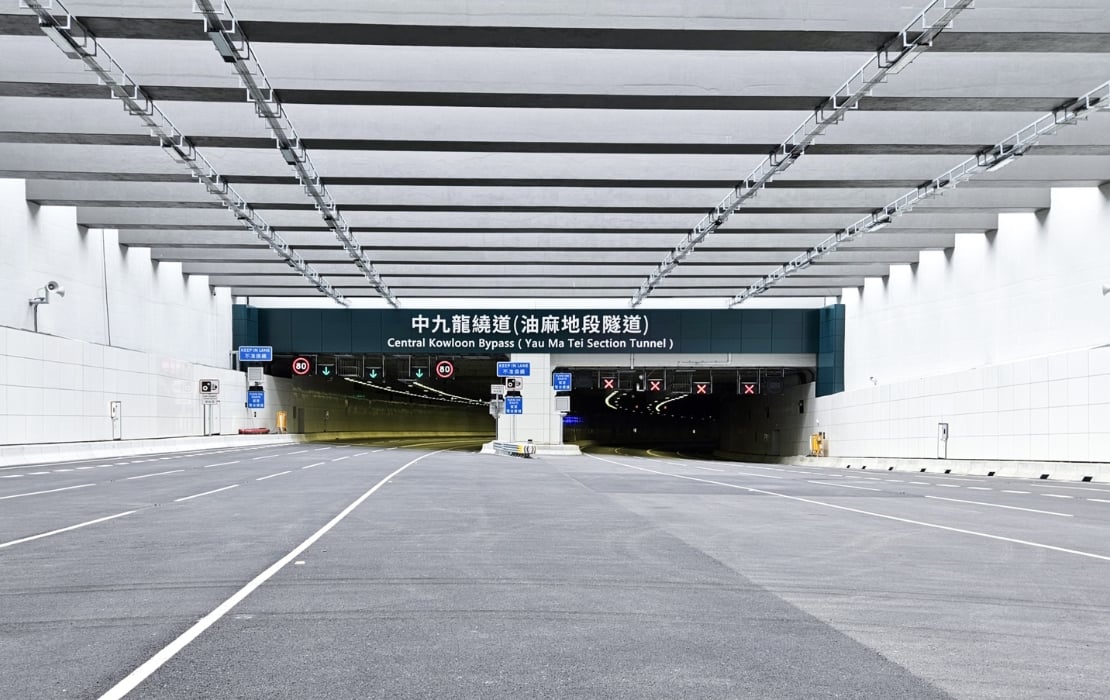
Bridging the historic community of Yau Ma Tei in the west with the blooming Kai Tak Development Area in the east, the Central Kowloon Bypass (Yau Ma Tei Section) emerges as a vital 4.7-kilometre link.
Upon commissioning, this dual three-lane expressway will dramatically cut peak-hour travel time between Yau Ma Tei and Kowloon Bay: from about 30 minutes to just 5.
The bypass has a capacity of approximately 5,400 passenger car units per hour per tube.
It's estimated to save 120,000 passenger hours per day by 2030.
The project seeks to transform urban infrastructure through the five Cs:
- Convenience: significantly reducing peak travel time between Yau Ma Tei and Kowloon Bay to just 5 minutes
- Connection: seamlessly linking the historic charm of Yau Ma Tei with the emerging Kai Tak district
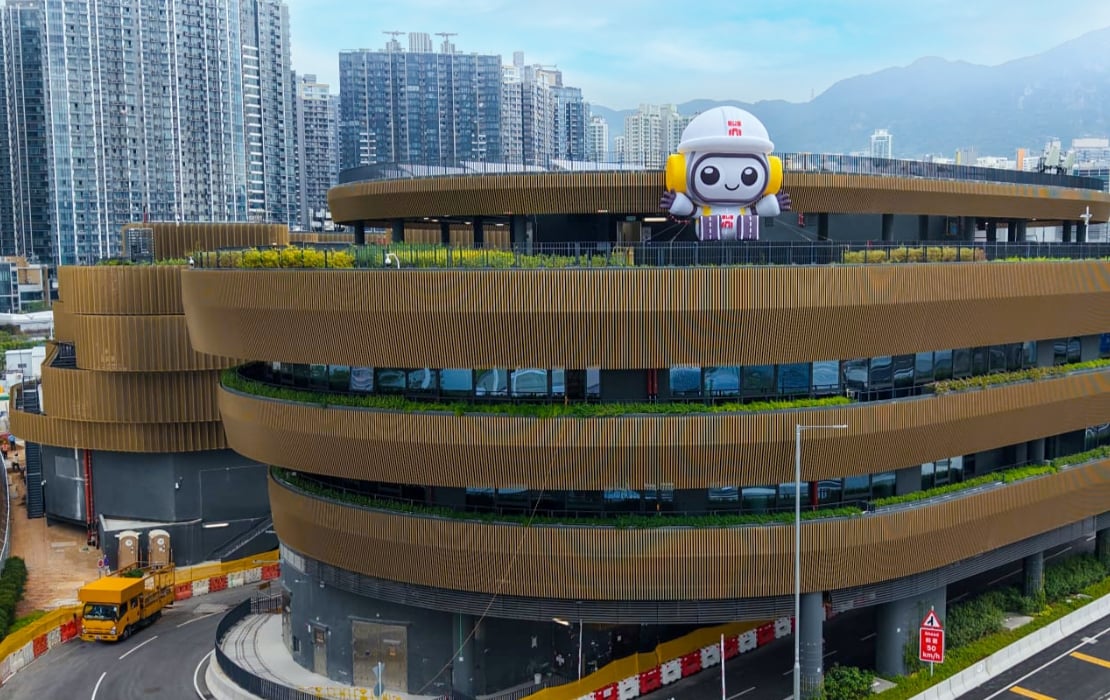
- Community: integrating over 44,000m² of landscaped decks at Yau Ma Tei and Kai Tak portals that provide green seating areas and direct pedestrian links to key amenities
- Conservation: protecting the unique local culture of Yau Ma Tei and the area's vibrant heritage
- Challenge: overcoming the congested urban environment in Yau Ma Tei, constructing a drill-and-blast tunnel beneath hundreds of sensitive structures, and building an underwater tunnel section at Ma Tau Kok
Did you know …
-
The minimum clearance between a cut-and-cover tunnel section in Yau Ma Tei and two 50-year-old residential buildings is only 3.5 metres.
-
To ensure the tunnel alignment avoided building foundations, the drill-and-blast construction was carried out deep into the underlying rock strata, reaching a depth of about 150 metres below ground at its deepest point.
-
Due to limited urban space, construction access was restricted to three vertical shafts at Yau Ma Tei, Ho Man Tin, and Ma Tau Kok. The Ho Man Tin shaft, which extends down 107 metres, presented significant logistical challenges for tunnel operations, including the removal of spoil and the delivery of materials.
How challenging was it to build the Central Kowloon Bypass (Yau Ma Tei section)?
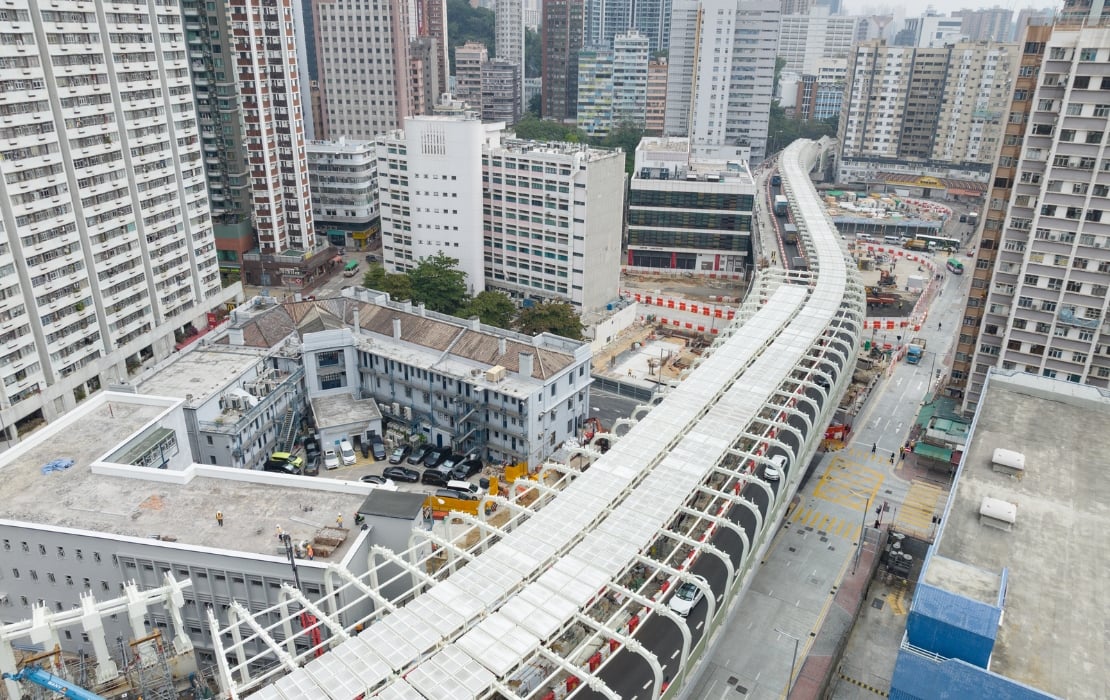
The bypass was constructed in a busy urban area, aligning close to seven Mass Transit Railway (MTR) lines and surrounded by old structures.
A key challenge was the tunnel alignment conflicting with the Gascoigne Road Flyover, a major traffic route that needed to stay open.
The project team maintained traffic flow by planning staged diversions and demolishing the Yau Ma Tei carpark building.
Underpinning was adopted to support the former Yau Ma Tei Police Station using newly constructed piles, so that the Grade II historical building can be fully preserved.
The 2.8-kilometre drill-and-blast section involved about 2,400 controlled blasts under 240 structures, including hospitals and schools.
The team used the drill-and-break method under the MTR lines to minimise impacts.
The Ma Tau Kok underwater tunnel required careful environmental management.
This included using temporary land reclamation and a two-stage approach while ensuring nearby facilities remained operational. The seabed can be reinstated after the project is completed.
Difference the project can make
The Central Kowloon Bypass (Yau Ma Tei section) significantly improves Kowloon's transportation network while setting new standards for sustainable development.
The project integrates community facilities, preserves cultural heritage, and incorporates digital innovations.
It showcases how major infrastructure can fulfill broader urban goals beyond just achieving the primary objective of making transport more efficient.
The bypass is primarily a tunnel, which can effectively reduce traffic volumes and alleviate congestion on surface roads, thus decreasing vehicle emissions.
Once operational, the bypass is expected to reduce carbon dioxide and nitrogen oxides emissions by approximately 20,000 tonnes and 18 tonnes per year, respectively.
Project milestones
Project begins
Start of drill-and-blast tunnel construction, demolition of Yau Ma Tei carpark building and beginning of underwater tunnel construction
Breakthrough of the drill-and-blast tunnel section
Road commissioning (ensuring it meets requirements)
People who made it happen
Client: Highways department, HKSAR government
Consultant: Arup - Mott MacDonald Joint Venture
Contractors (in alphabetical order):
- Alchmex – Paul Y Joint Venture
- Bouygues Travaux Publics
- Build King - SK ecoplant Joint Venture
- Build King – Tung Lee Joint Venture
- Gammon Construction Limited
- Nishimatsu Construction Co.