

Year
2024-2025Duration
1 year, 2 monthsCost
£21m on constructionLocation
EnglandProject achievements
Solved the problem
Protects 600 properties from coastal erosion
Used engineering skill
Placed 68,000 tonnes of rock on the shoreline to absorb wave energy
Area improved
The schemes generated over £1.7 million in social value
Protecting one of the most vulnerable coastlines in Europe
Norfolk in England has part of the fastest eroding coastline in north-west Europe, according to research by the county council.
Without action, the council estimated that 1,030 properties could be lost by 2105.
Cromer and Mundesley, two popular seaside towns in North Norfolk, contribute to the tourism economy that brings in £512m to the area every year.
To safeguard locals and visitors alike, a coastal protection scheme began in March 2024 to bolster the towns’ sea defences and prepare them to withstand erosion and extreme weather conditions.
Completed in May 2025, the two schemes protect 600 homes and businesses in the area.
The scheme emerged victorious at the ICE East of England Merit Awards in 2025, winning in the Best Infrastructure Project (Large) and People’s Choice categories.
Did you know …
-
The project employed 65 local people.
-
The schemes were organised so that beaches could remain open for visitors to enjoy.
-
The team worked with local fisheries to agree a 150m-wide shipping corridor for the rock deliveries.
How were the works done?
The Cromer scheme involved constructing a new rock armour revetment west of the town pier.
Revetments are barriers made up of resistant material – such as rocks – that are applied to banks or walls to absorb wave energy and protect from erosion.
For the Cromer scheme, the team placed 38,000 tonnes of rock on the shoreline. It also included concrete apron works and access improvements.
In Mundesley, 30,000 tonnes of rock were put in place. The works also involved restoring existing sea walls to manage the sediment flow.
Sustainability was crucial for these coastal protection efforts.
The 68,000 tonnes of rock armour placed along the shorelines were sourced from the Glensanda quarry in Scotland. They were transported over 600 nautical miles via barge to site.
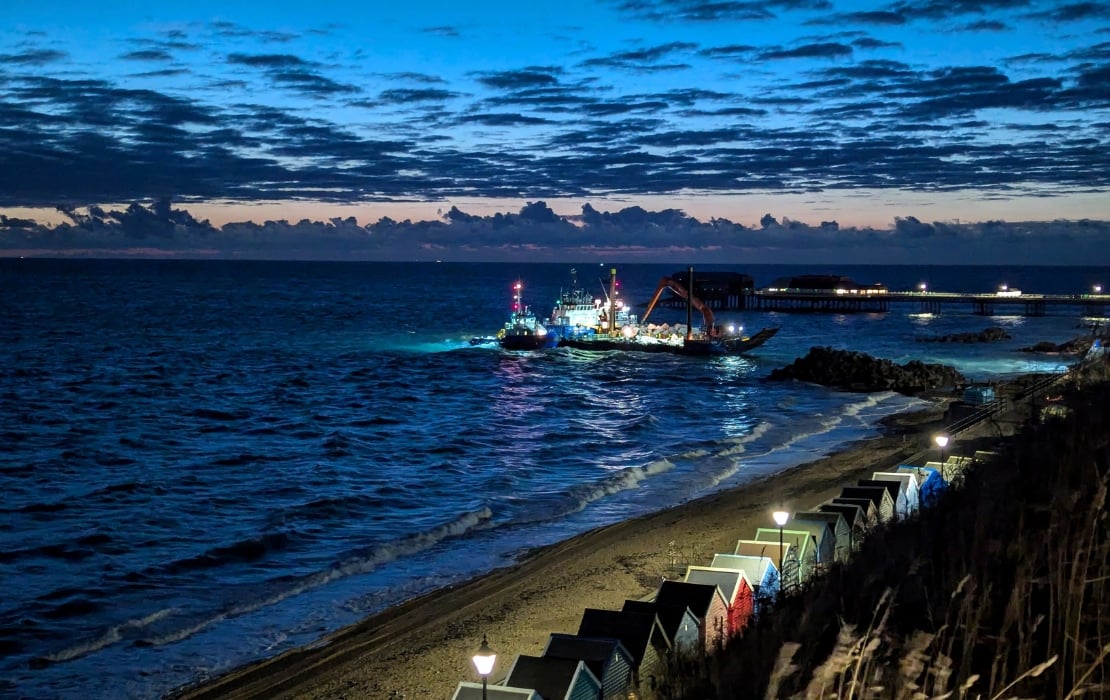
The rocks were stored offshore to avoid disrupting use of the beach during the summer season.
Two barges transported 1,000 tonnes of rock at a time to the foreshore. Deliveries took place 24 hours a day, seven days a week, making use of every high tide between June 2024 and November 2024.
This approach ensured the team minimised the number of trips needed, reduced fuel use and the associated carbon emissions, and decreased disruption to marine life.
Difference the schemes have made
The schemes generated over £1.7 million in social value.
The project team developed a bespoke social impact plan focusing on key areas, including local regional spend, creating job opportunities, career mentoring, and volunteering to support community projects.
The team engaged with over 250 students and employed 65 local individuals, including six apprentices.
Through these efforts, the schemes have not only enhanced coastal protection but also contributed significantly to the local economy and workforce.
By involving local businesses and community members, the project ensured that its benefits were widely distributed, supporting the long-term resilience and prosperity of the area.
People who made it happen
- Tamzen Pope, North Norfolk District Council
- Fiona Keenaghan, North Norfolk District Council
- Anthony Chilvers, Balfour Beatty
- John Bannister, Balfour Beatty