





Year
2002Duration
OngoingCost
UnknownLocation
IndiaProject achievements
Solved the problem
Develop an efficient transport system to serve the millions of people that live in Delhi
Used engineering skill
Build underground and overground railways in and around the city
Environment benefitted
Cut traffic pollution by an estimated 630,000 tonnes a year
Build an underground railway network to serve the millions who live in or near Delhi
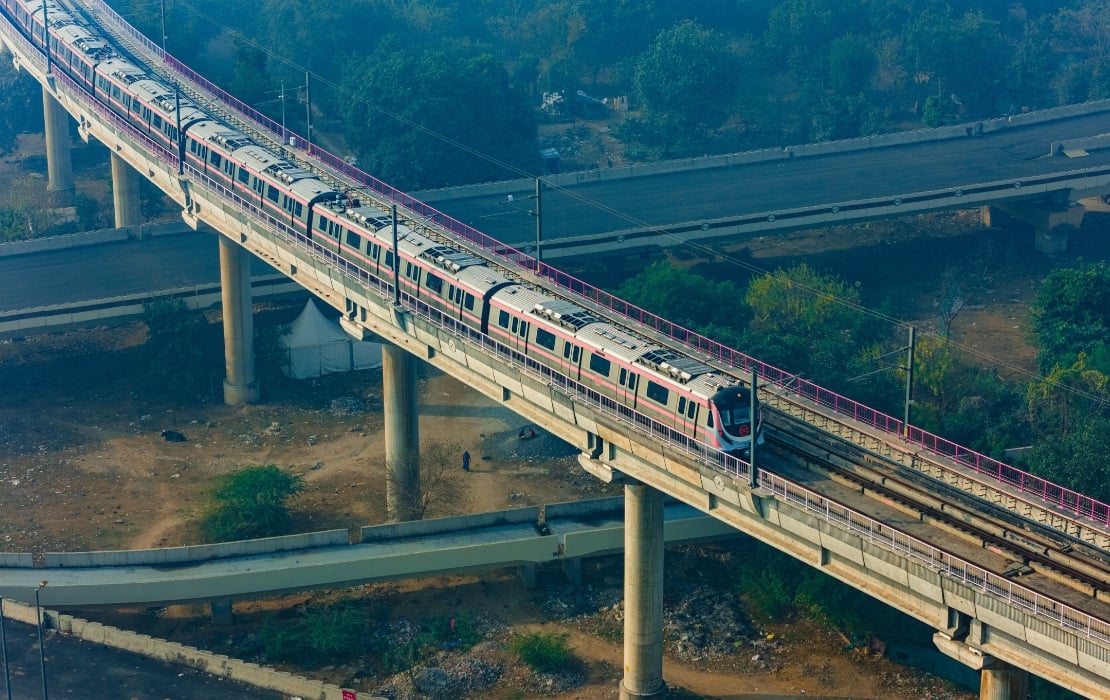
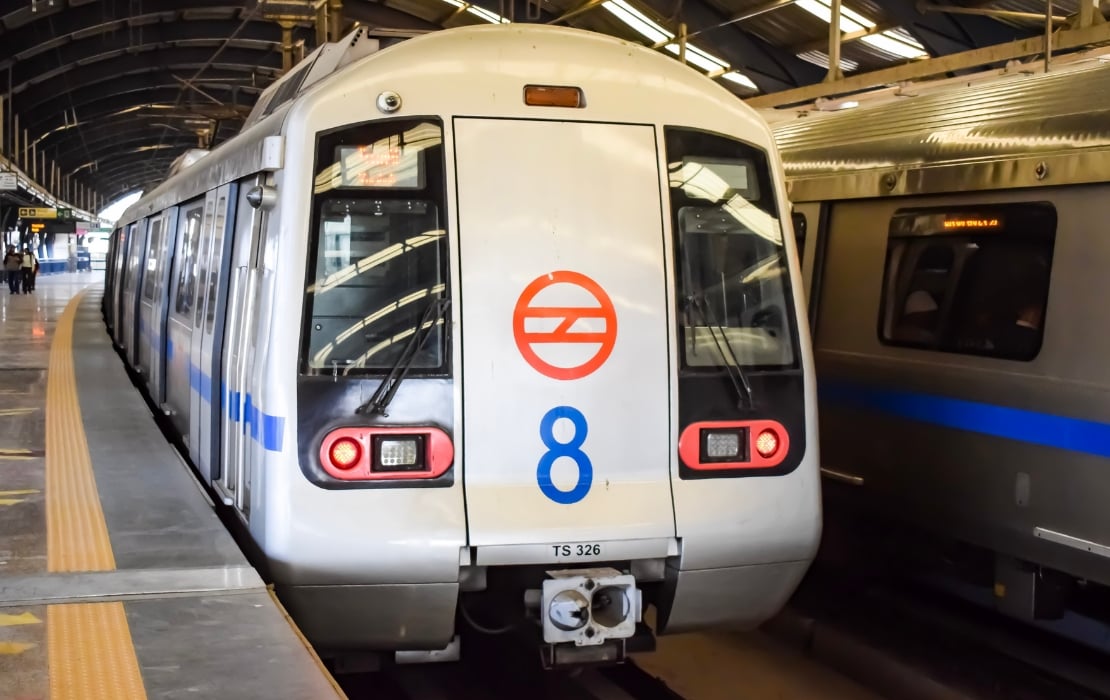
The Delhi metro is an underground railway that serves Delhi in northern India – a city of almost 34 million people. The railway also serves the nearby cities of Faridabad, Gurgaon, Noida and Ghaziabad.
The railway is the world’s 16th longest metro system. It’s the 10th largest in terms of yearly passengers. The metro is the second oldest in India after the Kolkata metro.
The Delhi network is made up of 10 colour-coded lines and a faster Airport Express line. It has 289 stations and a total length of 395km (245mi).
With both underground and overground lines and stations, the network services millions of passengers every day. In August 2025, it broke a record by completing 8.1 million journeys in one day.
Although plans for a mass transit system in the city had been under discussion since the 1960s, construction work on the scheme was prompted by a population boom – the number of people living in Delhi doubled between 1981 and 1998.
The growth spurt brought an increase in private vehicles and pollution on Delhi’s streets as well as bad overcrowding on the city’s bus services and existing railways.
The Delhi Metro Rail Corporation (DMRC) started work on the metro’s first section – the Red line – in 1998. It opened in 2002.
Further sections of the system started running trains in 2006 and 2011. Construction is underway to add another 61.7km (38.3mi) of railway and 46 underground and overground stations.
Did you know …
-
The metro’s Rajiv Chowk station has a mural devoted to India Nobel Prize winners. The portraits include poet Rabindranath Tagore and missionary Mother Teresa.
-
The rail network has its own debit card. Launched in 2018, the ‘Metro Plus’ card allows passengers to put money on their travel pass direct from their bank accounts.
-
The Delhi metro was recognised by the UN in 2011 as the first rail system in the world to get carbon credits for reducing greenhouse gas emissions.
Difference the metro has made
The Delhi metro carries an average of 4.6 million people around the city every day. It’s reduced the numbers of private vehicles on the road and cut traffic pollution by an estimated 630,000 tonnes a year.
In 2021, the Delhi Metro Rail Corporation (DMRC) said that the network cumulatively saved passengers 269 million hours of travel time that year.
The metro is also credited with reducing the number of road accidents on Delhi’s streets.
How the work was done
The Delhi metro was constructed by the Delhi Metro Rail Corporation (DMRC). Construction work started in October 1998.
The DMRC was a purpose-built organisation, created in response to problems with the Kolkata metro. The Kolkata scheme was badly delayed and went 12 times over budget.
The Delhi project team consulted engineers who’d worked on the successful Hong Kong mass transit system before starting work – swapping notes on construction techniques, as well as how to run a metro.
Line 2 of the metro – the Yellow line – presented major challenges for engineers as it had to run underground for its entire 11km length.
The project team built the line’s stations below ground using the cut and cover method. This saw workers digging a U-shaped trench for the railway line and covering it over with a roof of earth.
Only one station – Chawri Bazar – needed tunnelling, as it was deeper than the rest.
Mandi House station on Line 3 – the Blue line – presented another challenge for engineers. As the site was under busy roads, the structure had to be built from ground level down.
Engineers equipped many of the network’s stations with rainwater collection equipment as part of the DMRC’s environmental policy.

People who made it happen
- Client: the Indian government
- Constructed by the Delhi Metro Rail Corporation (DMRC)


