





Year
2021-2024Duration
3 yearsCost
£146mLocation
United KingdomProject achievements
Area improved
Eases traffic congestion in the town centre
Economy boosted
Offered employment and training opportunities for the local area
Used engineering skill
Features the world's largest hydraulic rolling bascule span
Build a record-breaking bascule bridge
Gull Wing Bridge is a £146m link across Lake Lothing in Lowestoft, Suffolk.
Built to ease congestion in the area, the structure features the world’s largest rolling bascule span to be lifted by hydraulic cylinders.
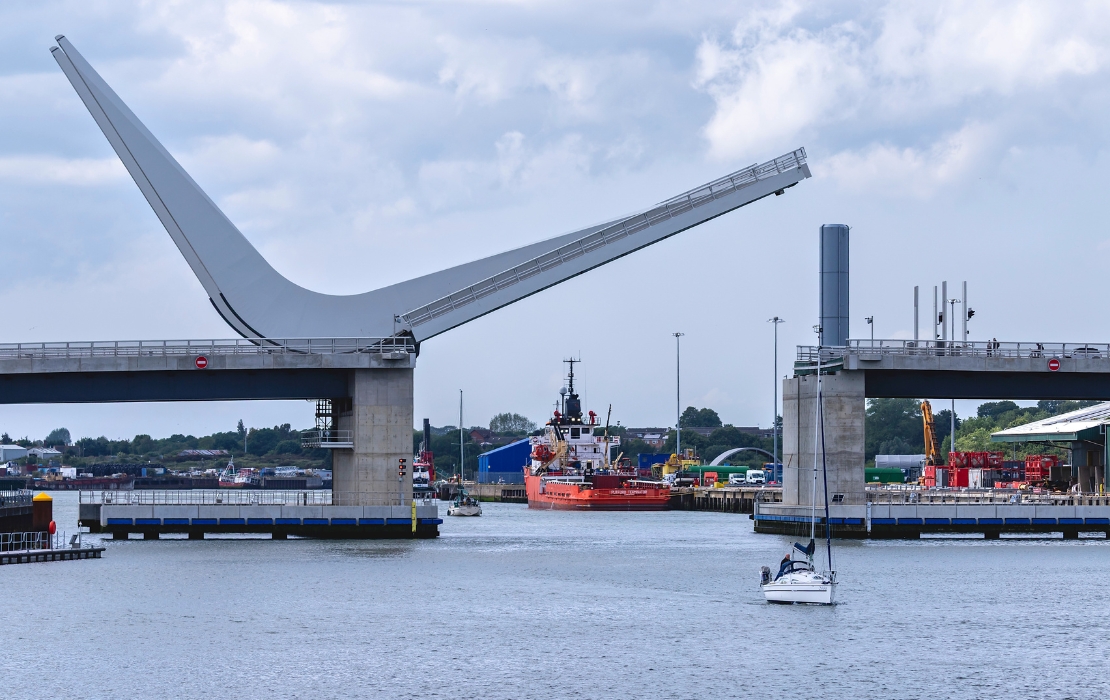
This makes the crossing a moveable bridge, with the main span rolling backwards like a wheel to create an opening for maritime traffic to pass through.
It takes less than two minutes for the bridge to lift (116s) and even less to close (106s).
Two other crossings serve Lake Lothing: the A47 Bascule Bridge and the Mutford Lock Bridge. The idea to build a third bridge had been around since the early 20th century.
Construction started in spring 2021 and was completed by autumn 2024, with the bridge opening to traffic and pedestrians in September.
Her Royal Highness The Princess Royal, a patron of the ICE, formally opened the bridge that November.
Did you know …
-
Gull Wing Bridge was highly commended at the 2025 British Construction and Infrastructure Awards (BCIA), in the Transport Project Award category.
-
Its name takes inspiration from the bridge’s resemblance to the wings of gulls, which are popular in the area.
-
The name was chosen from a competition for local schools, with Eva, Jack and Hayden from Somerleyton Primary School coining the term.
Difference the project has made
Before the Gull Wing Bridge was built, the other two crossings over the lake struggled with traffic congestion.
A year since opening, an average of 19,000 vehicles use the new bridge every day.
This has eased pressure on the other bridges and improved connectivity between the north and south sides of Lowestoft.
In its first year, it performed over 1,000 lifts, with 350 vessels travelling under it.
How was the bridge built?
Gull Wing Bridge spans 345m in total. Its main bascule span is 39.5m long and sits 12m clear above high tide when closed. It can make room for marine vessels up to 32m wide.
The main bascule span was built in the Netherlands and delivered to Lowestoft in March 2024. It was transported by barge.
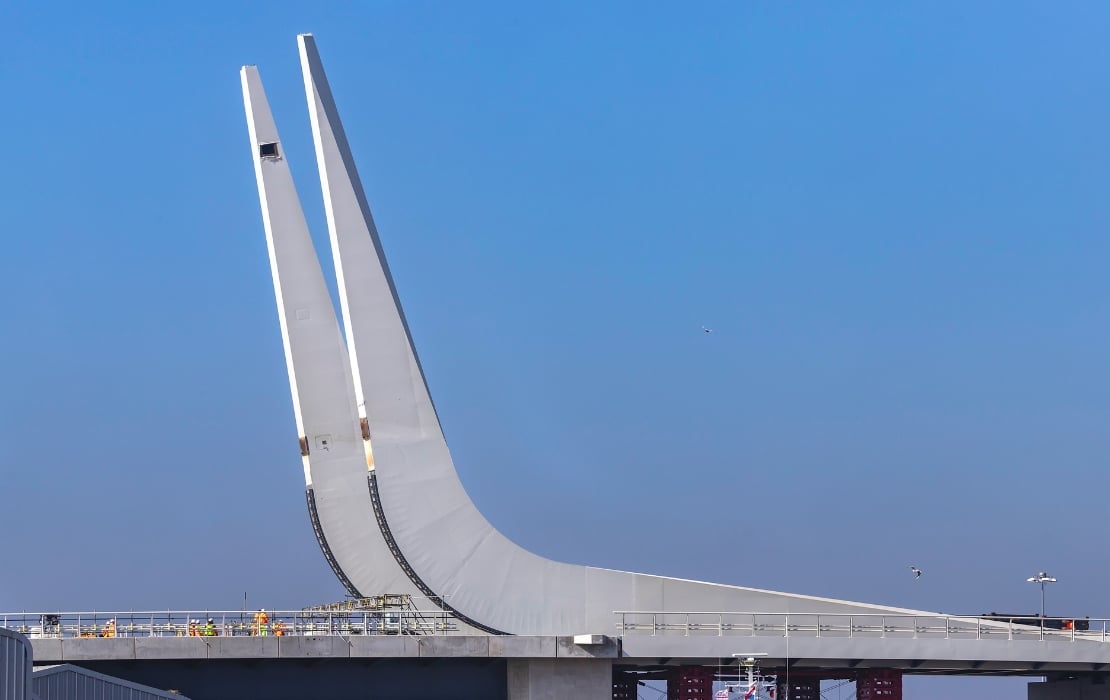
The J-beams, shaped like gull wings, act as the counterweights the bridge needs for balance. They’re made of ultra-dense concrete.
The bridge's movement is powered by two huge hydraulic cylinders which are housed within a pier.
The structure also features a tail lock mechanism, which ensures the bridge is locked into place when it’s lifted. This is an important safety element, particularly for when there are high winds.
People who made it happen
- Client: Suffolk County Council
- Structural designer: Arup
- Architect: Moxon Architects
- Contractors:
- Farrans Construction (principal)
- BAM Construction
- Eadon Consulting
- Oilgear
- WSP
- Victor Buyck Steel Construction
- LKAB Minerals
- Quinn Piling
- De Meyer NV


