

Year
2016-2021Duration
5 yearsCost
£4.5millionLocation
EnglandProject achievements
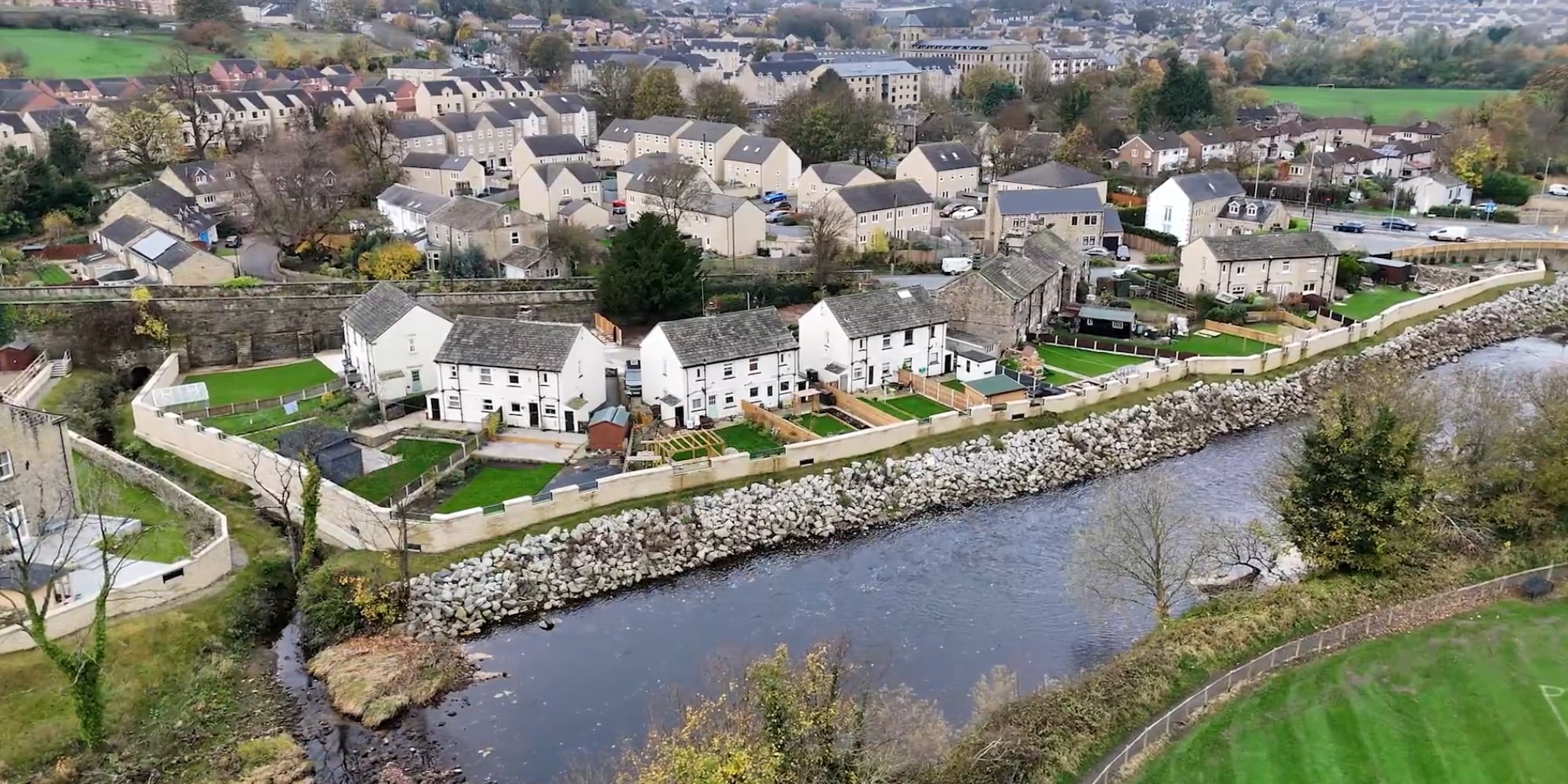
Protecting a historic town from future floods
The market town of Otley, West Yorkshire has long been vulnerable to flooding, particularly from the River Wharfe.
Following the devastation caused by Storm Eva in December 2015, which left homes and businesses underwater, the need for a robust flood defence system became urgent.
The Otley Flood Alleviation Scheme (FAS) was developed in response and was completed in late 2021.
This award-winning project has dramatically reduced the annual risk of flooding in the area from a 20% (1 in 5-year) to just a 4% (1 in 25-year) chance.
It was engineered with input from locals and designed to balance flood protection with environmental and heritage considerations.
The project was recognised for its achievements at the ICE Yorkshire and Humber Civil Engineering Awards in 2022, winning the prestigious Smeaton Award.
Did you know …
-
The scheme transformed a former cattle market site into a beautifully landscaped flood defence area. By “daylighting" the Kell Beck watercourse (bringing it back above ground), it not only improved flood resilience but also boosted local biodiversity with new plants and habitats.
-
One of the engineering challenges was installing 130-meters of steel sheet piling right next to Otley's historic 13th-century bridge over the River Wharfe. The team managed to do this sensitively, preserving the structure while increasing flood resilience.
-
Before the scheme, Otley had a 20% chance of flooding in any given year. Thanks to the new embankments and watercourse management, that risk has dropped to just 4% - a major win for residents and businesses in the area.
Engineering innovation in a sensitive setting
The scheme features a 130-metre flood embankment – built using steel sheet piling - upstream of Otley’s 13th-century listed bridge.
The flood bank plays a critical role in protecting 53 homes and local businesses. It also keeps a vital road link open in the event of a flood. Without it, the town would be split in two, and access to the local hospital would be compromised.
In addition to the embankment, the project involved the daylighting (bringing above ground) and diversion of Kell Beck watercourse.
This transformed a previously hidden stream into a visible and ecologically vibrant feature. The stream was rerouted to create a more natural flow path for excess water.
The project required detailed ground investigations, hydraulic modelling, and coordination with heritage and environmental bodies.
The works were carried out on a brownfield site, formally Otley’s cattle market, allowing for sensitive landscaping and improvements that enhance the town’s riverside character.
Community-focused design
Otley’s riverside is a cherished part of the town. It includes Wharfemeadows Park and a 12th-century weir that’s important historically and visually.
The flood scheme needed to protect the town without spoiling these features.
Engineers considered building higher defences, but taller flood walls would have blocked views of the river and made the park feel enclosed. Instead, they chose a lower embankment and used natural landscaping to blend it into the surroundings.
This approach reduced the flood risk while keeping the riverside open and attractive. It also allowed space for walking paths, seating areas, and planting that supports local wildlife.
The result is a flood defence that protects people and property without sacrificing the character of the town.
A legacy of resilience
Beyond flood protection, the Otley FAS has delivered long-term economic and environmental benefits.
By safeguarding key infrastructure and reducing the need for emergency response and recovery efforts, the scheme has saved resources and improved the town’s resilience to climate change.
Visitors to the site can also view the Archimedean screws-driven hydropower station, constructed in 2016 next to the weir. This renewable energy installation complements the flood scheme’s ethos of sustainability and innovation.
People who made it happen
The scheme was led by Leeds City Council in partnership with the Environment Agency. WSP, Bam Nuttall and Mott Macdonald also worked on the project.