





Year
2024Duration
5 yearsCost
€1 billionLocation
SpainProject achievements
Solved the problem
Upgraded the structure to turn it into a modern digital stadium
Economy boosted
The redevelopment includes leisure and entertainment facilities
Used engineering skill
Features an innovative retractable grass system
Install cutting-edge technology in one of the world's most iconic stadiums
Many people will be familiar with Real Madrid football club and its iconic home in the heart of the Spanish capital, the Santiago Bernabéu Stadium.
Originally opening its doors in 1947, from 2019 to 2024, the structure underwent a series of renovations to modernise it through several cutting-edge, engineering innovations.
The works increased stadium capacity to 83,000 people and introduced the latest amenities to ensure fans have an optimal experience. This includes a retractable roof, sheltering visitors from any unforgiving weather.
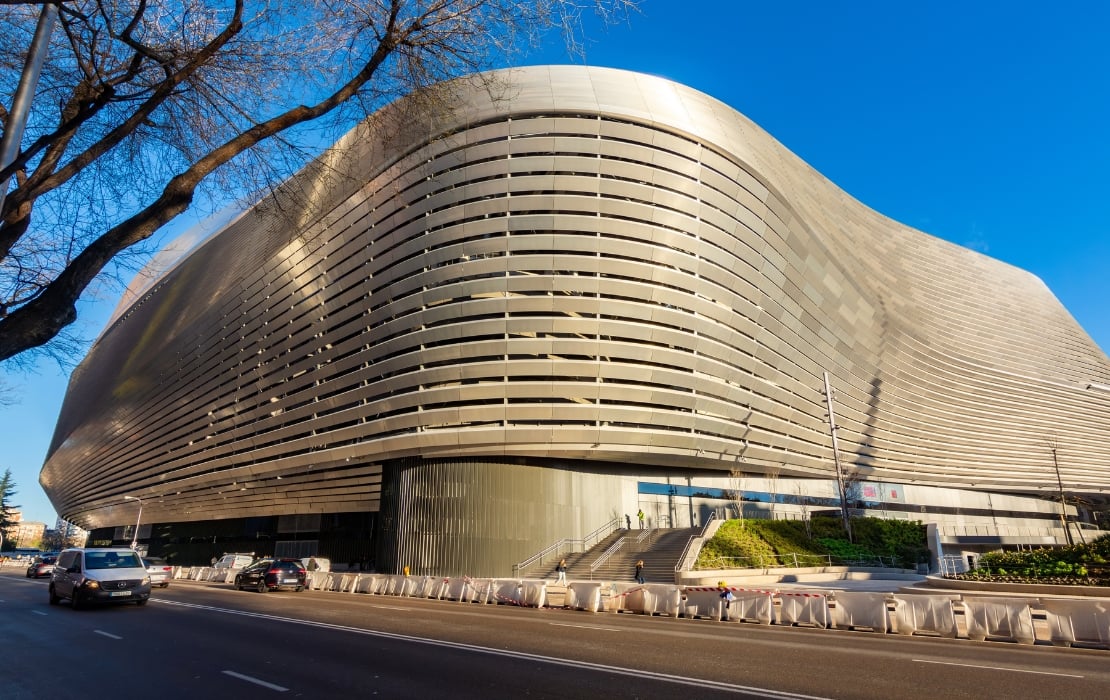
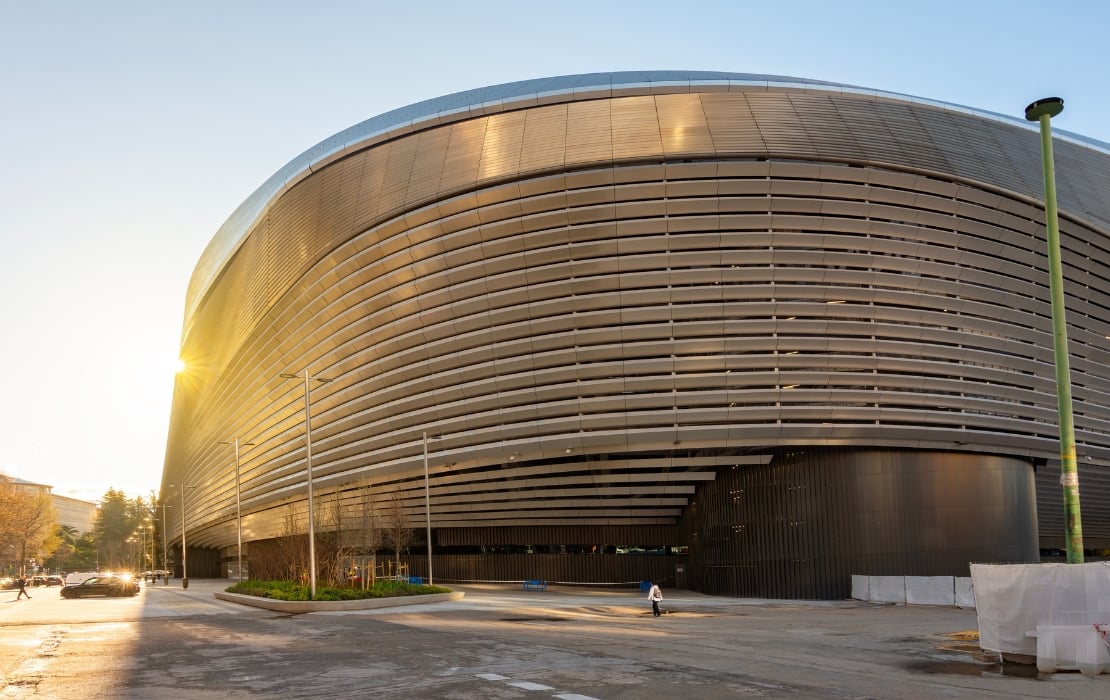
By far the most noticeable change is the building’s façade, wrapping its original Brutalist concrete structure with approximately 7,500 V-shaped stainless steel slats.
Aside from giving the stadium a new sparkling exterior, the slatted steel design enables the stadium to maintain outdoor ventilation.
The renovations have also introduced a skywalk offering breathtaking views of the city and a 360-degree video scoreboard.
Standout among its innovations is the stadium’s new retractable pitch system, which divides the turf into trays that can be removed and safely stored.
This enables Santiago Bernabéu to open its doors to other non-sporting events, such as the Taylor Swift concert in 2024.
Did you know …
-
Each tray of the moving pitch weighs 1,500 tonnes, coming to a total of 9,000 tonnes.
-
The retractable pitch system converts the stadium from match-mode to non-sport use in less than five hours.
-
The new façade can project images through a LED lighting system. In the future, fans could watch matches from the street!
Not just a sports venue: Santiago Bernabéu’s fully automated pitch
Engineering and technology company, Sener, developed Hypogea: an innovative retractable pitch system that can automatically, quickly and safely remove and protect the natural grass in a stadium.
It uses a set of mechanisms that reposition and move the trays that divide the playing field.
This solution maximises the amount of space available in sports stadiums for multiple events and non-sports uses, such as concerts, conventions and shows.
Plus, it can be installed in stadiums located in developed urban centers where it’s impossible to remove the field from inside the stadium.
This was certainly the case for the Santiago Bernabéu, which is surrounded by a major road as well as houses, offices and roundabouts.
The system also had to account for the 70-year-old stadium structure and the railway tunnel that crosses the pitch from north to south.
The system enables the continued care of the lawn by moving the trays with the natural grass to an underground storage chamber.
This space is called the Hypogeum, in reference to the chamber under the arena of the Roman Colosseum.
This area, provided with ventilation, air conditioning, grow lighting, control and irrigation, can be used to set up the ideal ambient conditions to preserve the grass.
Landscapers can continue to maintain the grass, regardless of the events that may be taking place in the stadium.
Difference the project can make
The stadium already provides a substantial economic boost for the city of Madrid.
The stadium tour alone welcomes between 1.3 to 1.8 million visitors per year, generating approximately €73 million.
These numbers are expected to rise now the renovations have been completed, which included 66,000m2 of leisure and entertainment facilities.

People who made it happen
- Architects: L35 Architects, gmp Architekten, Ribas & Ribas
- Construction: FCC Construccion
- Lead consultant: Ayesa
- Retractable pitch: SENER
- Architecture, façade engineering, acoustic and lighting design: Arup


