





Year
1999-2004Duration
5 yearsCost
US$1.76 billionLocation
TaiwanProject achievements
Used engineering skill
Designed to withstand some of the highest seismic activity in the world
Area improved
Stands as one of the most recognisable skyscrapers in the world
Environment benefitted
One of the tallest green buildings in the world
Taipei 101: a design rooted in culture
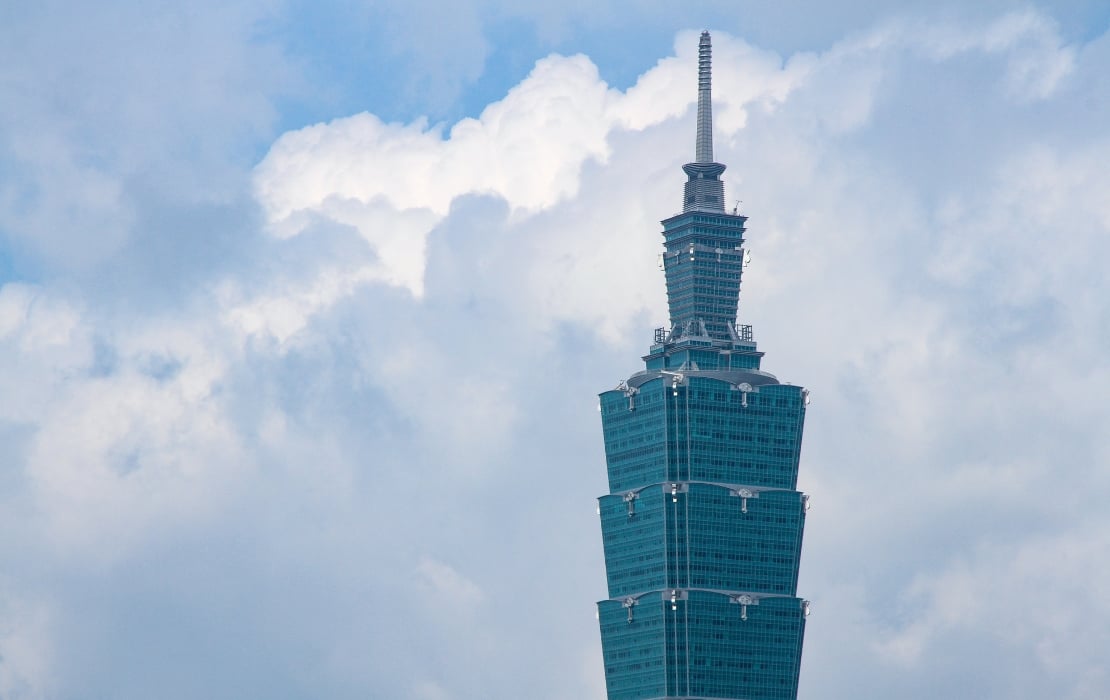
Taipei 101 stands as one of the most recognisable skyscrapers in the world. Not just for its height, standing at 508m (1,667ft) tall, but for the way it weaves Taiwanese culture, environmental resilience and future thinking into a single structure.
Once completed in 2004, it held the title of the world’s tallest building for six years and remains a benchmark for how cultural identity can shape major infrastructure.
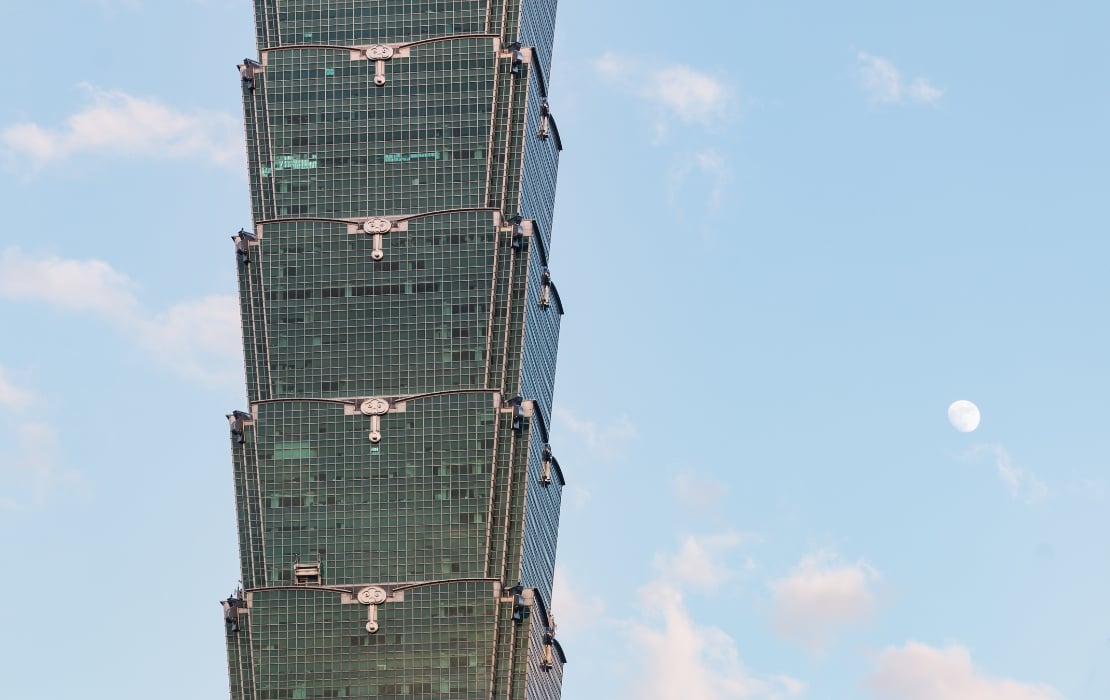
Taipei 101’s design is instantly distinctive: eight stacked modules, each shaped like a traditional pagoda pier.
The number eight is considered a lucky omen in Chinese culture, symbolising prosperity and good fortune. Architect C.Y. Lee intentionally drew on this kind of symbolism to ensure the structure embodied cultural continuity in a city that was rapidly modernising.
Other cultural motifs appear throughout the structure including tapering that resembles bamboo, a plant linked with resilience, growth and flexibility.
Ruyi patterns, traditionally used as symbols of protection and good fortune, appear several times on the outside of the structure.
Feng shui principles guided the tower’s orientation, reflecting a belief that building should work in harmony with their environment rather than dominate it.
Did you know …
-
In a moment that captured worldwide attention, climber Alex Honnold completed a free climb of Taipei 101’s exterior in early 2026.
-
When it achieved LEED platinum certification in 2011, it became one of the tallest green buildings in the world.
-
The building's bamboo-inspired form helps to make it more resilient against earthquakes by distributing seismic forces more evenly.
Engineering for a seismically active island
Taiwan experiences some of the highest seismic activity in the world.
Minor earthquakes can occur several times a day, and major earthquakes are a regular part of the island’s history.
Designing a tall building in this environment required engineering solutions far beyond standard practice.
One of the most important features is a huge, ball-shaped weight at the top of the tower that acts like a pendulum.
It moves opposite to the building’s sway, helping to steady the building during strong winds and ground movement.
The buildings core is made of reinforced concrete, and the exterior wall’s columns are designed to flex rather than fracture.
The tiered, bamboo-inspired form also helps distribute seismic forces more evenly.
Sustainability as a guiding principle
Long before sustainability became a standard expectation, Taipei 101 incorporated energy-efficient systems.
In 2011 it achieved LEED platinum certification, becoming one of the tallest green buildings in the world.
Its features include:
- High-efficiency chillers and HVAC systems
- Smart lighting and building management controls
- Water recycling and rainwater capture systems
People who made it happen
Project led by C.Y. Lee & Partners.
Structural engineering carried out by Thornton Tomasetti and Evergreen Consulting Engineering.


