





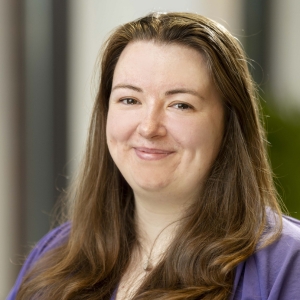
Kit Wolverson
Senior design manager, Mott MacDonald
Expertise
Design, Project ManagementLocation
North WestMy highlights
Being part of the 2022 Nyabihunyira Trailbridge Bridge project with Bridges to Prosperity
Achieving my professional membership with the ICE (CEng MICE) and being a James Rennie Medal finalist
Empowering others on projects to get the most out of opportunities
I would recommend a career in civil or infrastructure engineering because…
We get to shape the world around us!
I became an engineer because I wanted to help people and solve problems, which I naturally have had the opportunity to do on so many projects.
Civil engineering is broad, and you can work across a variety of sectors from buildings, bridges, rail, highways, water – plus many more!
For me, being professionally qualified was a direct route to promotion and recognition within my organisation.
What inspired you to become a civil engineer?
I grew up in London, where at the age of seven, I got to go on the London Eye for my birthday. I was also aware of the Millennium Bridge (wibbly wobbly bridge).
These were hot topics at the time and opened my eyes to how things worked.
I was incredibly fascinated by how things worked, and would spend time building mini lighthouses and circuits with my dad in the shed (he worked as a lighting technician).
My secondary school didn’t have many students that went into engineering, let alone women that did it. But I had a fantastic physics teacher that spotted my interest, pointed me towards taster courses held at a local university and really supported my passion.
I was also lucky to have a supportive art teacher, who during my A-levels encouraged me to direct all of my final pieces to be about London architecture and engineering.
We asked Kit…
A day in my life
My day typically starts with a cup of tea and a review of emails, messages and my diary for the day ahead.
Some days there may be early team calls (from 9am) or I might be straight into tasks such as writing reports, reviewing design information and planning resource (people) for our projects.
I’m quite sociable so I love to make time for queries from colleagues and to check in on people within our project teams, even if it’s a quick “hey how’s it going” message or a brief phone call.
A little can go a long way.
Complete this phrase: I’m a civil engineer, but I’m also...
A friend, a sister, a daughter, a wife, an avid reader, a swimmer, a bridge enthusiast, and lover of live music and Zumba.
Name one civil or infrastructure engineering myth you’d like to bust.
That we become engineers because of our parents.
This is the second most popular question I’m asked (after “ah an engineer, do you fix cars!?”)
Anyone can be an engineer and it’s not because of your background, where you grow up or who your parents are.
If you have an interest in problem solving, helping people or wanting to shape the world, it’s a fantastic career to consider!
How does your role contribute to addressing climate change?
When I speak to schoolchildren I describe my role as like a doctor.
We fix and extend the life of bridges and structures so they can keep working, getting us to places and keeping us safe.
By not building more and instead looking after, repairing and re-using what we have, we save huge amounts of material.
This would otherwise have a negative impact on the environment, where we live and on future generations.
How does your role contribute to making the industry more diverse and inclusive?
Within my day job at Mott MacDonald, I also co-lead our Early Career Professionals Network in the UK and across our European offices.
Through this network we have some fantastic people who undertake school outreach, STEM engagement and work experience.
Encouraging more people into the engineering industry is a passion of mine and so while it might not be part of my day job, I make time to mentor others.
I give them support, mentor externally and volunteer with the ICE on committees and through STEM Ambassadors.
When I was growing up and researching engineering, there were a few female engineers that I looked up to.
I hope we can continue to encourage more people into civil engineering and the wider industry.
What role does digital technology play in your job?
Digital technology plays a role in everyday life, from emails to calls.
I can work with global teams but easily contact them on a video call for project work.
Likewise, AI software such as Co-pilot can take some of the menial tasks out of my working day, freeing me up to use that time to do more designing, thinking and building client relationships.
If we’re able to use digital technology well and with care, it is a real asset that will save us time across the industry.
What motivated you to become professionally qualified?
I was motivated to become a chartered member of the ICE (CEng MICE) by the recognition and kudos that it earns you.
Sometimes you can feel as though you're not good enough, but attaining that professional qualification showed those that may have doubted me that I could do it.
It's also a massive sense of achievement.
For those working towards your professional qualifications – keep going, you’ve got this! But also, please don’t be afraid to ask for help.
What does being professionally qualified with the ICE mean for your career?
For me, being professionally qualified was a direct route to promotion and recognition within my organisation.
Since achieving my chartership I have used it as a springboard to move my career from a background in rail and bridges into the healthcare sector, working on projects that help those that are sick or are in need.
Once I became chartered I was also able to stand as the ICE North West junior vice chair, unlocking more opportunities within the industry.
How did the ICE and your employer support you to become professionally qualified?
My employer supported me to become professionally qualified by having an approved training agreement from when I joined the business.
They set me up with a delegated engineer and a supervising civil engineer.
I received support from the ICE from our local membership development officer, the committees I was part of and from the CPD events and courses that I attended.
From evening lectures to lunchtime attribute sessions – there's plenty to discover on the ICE website.
What’s the biggest/most complex thing you’ve made out of Lego?
I’ve not built complex things out of Lego but I have built a bridge (the Millau viaduct) and my university building (Parkinson Building) out of cake!
Mikado sticks make great reinforcement!
Kit's career path
I did the former traditional route in the industry (apprenticeships were quite new when I applied).
I did my GCSEs, then opted for four A-levels (maths, physics, art and French).
I then did a pre-university year in industry organised through the Engineering Development Trust where I worked in a small historic engineering company, Hockley and Dawson.
Here I learned the ropes and experienced office life for the first time before doing a four-year integrated master's degree at the University of Leeds, which included a year studying abroad in Canada.
I also made the most of summer placements, using my previous experience to gain summer placements at Yorkshire Water, a preconstruction internship at Skanska and then a site placement at Battersea Power Station with Skanska.
Following this experience, I made the decision that site engineering wasn’t for me, and I was happier to work in consultancy.
Major projects
- Northern Powerhouse Rail (NPR)
- High Speed 2 (HS2)
- East West Rail (EWR)
- the New Hospital Programme (NHP)



Related Content

- Type
- ICE Community blog
How Bridges to Prosperity creates life-changing connections
Kit Wolverson, senior bridges engineer at Mott MacDonald, shares her experience helping build the Nyabihunyira Trailbridge in Rwanda.

- Type
- ICE Community blog
What's the foundation of flood resilience? Information
ICE President David Porter explains why being informed about flood risk is so important for the public and civil and infrastructure engineers.

- Type
- Awards and competitions
It’s electrifying! South Wales Metro track transformation bags top award
The electrification of the Core Valley Lines impressed the judges at the 2026 British Construction and Infrastructure Awards.