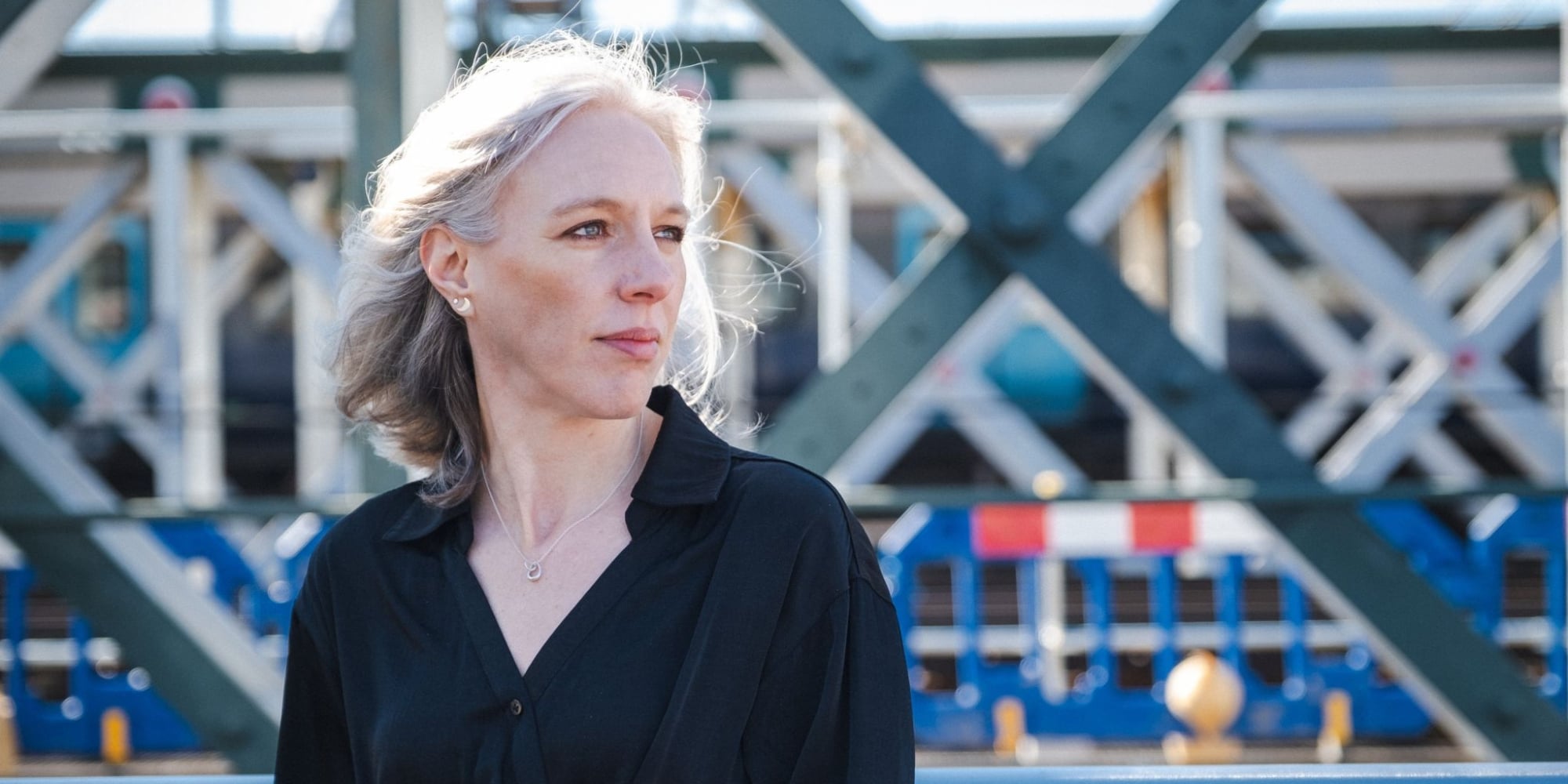


Wendy White-Finnigan
Founder, The Way Forward 2045
Expertise
Project Management, Water, SustainabilityLocation
ScotlandMy highlights
Developing a tailored behaviour change programme which resulted in the status of a river being satisfactory for the first time in 25 years
Winning the ICE Scotland Sustainability Champion Award in 2025
Becoming a Fellow of the ICE
A day in my life
My roles are exciting because I can be onsite assessing how infrastructure is working, or developing a systems approach to improve how organisations operate in response to climate challenges.
Being onsite can involve following signs of pollution and using dye tracing and other investigative methods to identify the cause, so we can work together on solutions to address it.
I also develop behaviour change processes and procedures within organisations, embedding these into their climate adaptation and mitigation work.
As well as this, I deliver peer-to-peer, executive-level leadership and climate-focused training to forward-thinking organisations.
Delivering training is immediately rewarding, as it focuses on creating practical “Monday morning” solutions that organisations can put into action straight away to move forward with a stronger climate focus.
What inspired you to become a civil engineer?
I wasn't interested in engineering until my sixth-year physics teachers handed me a prospectus for Strathclyde University.
They dismissed my interest in environmental engineering (this was in 1990), and suggested gaining a broad learning in civil engineering which could lead to specialisms afterwards.
We asked Wendy…
I would recommend a career in civil or infrastructure engineering because…
The depth and breadth of what all society needs to live, work and play require access to safe homes, clean water and places to thrive.
As engineers, we are uniquely placed to improve how we create the built environment, using nature-based solutions more proactively to protect and enhance the lives of all people.
Complete this phrase: I’m a civil or infrastructure engineer/technician, but I’m also…
...a human being and part of a wider natural ecosystem, within which we must learn to live.
Name one civil or infrastructure engineering myth you’d like to bust.
That we are NOT boring and can be very creative!
How does your role contribute to addressing climate change?
The new businesses I founded are solely focused on embedding future-fit technical and organisational behaviours to address climate change.
How does your role contribute to making the industry more diverse and inclusive?
My perspectives on user-based design come from my lived experience.
My various roles across multiple organisations and across many sectors, all fostering leading edge innovation, exposes me daily to bringing diverse perspectives.
My role at the university and my own research into neurodiversity and specific patterns of behaviour support my thinking around inclusivity in the workplace and the built environment.
What role does digital technology play in your job?
Running my own businesses, digitalisation and digital transformation is key, necessary for productivity and competitive advantage.
While never in the early adopter’s category, it's important that efficiencies and innovation in this area can support sustainable businesses.
What motivated you to become professionally qualified?
I've recently become a Fellow of the ICE.
I was motivated by a conversation with a peer about the roles the built environment has in supporting climate mitigation and nature-based solutions.
I considered that by becoming a Fellow, I would be able to influence and speed up the changes we need to live more sustainably.
What does being professionally qualified with the ICE mean for your career?
I'm certain that being a Fellow will have as much influence as being chartered.
How did the ICE and your employer support you to become professionally qualified?
My support came from the organised Women in Fellowship events.
These helped me find another sponsor and understand the process.
Having two sponsors who were able to support me through this journey was also of great value.
What do you value most about being an ICE member?
The ability to contribute beyond my day-to-day role - across think tanks, policy and educational steering groups as well as at a government level.
All made more accessible by my membership and professional qualifications.
Any personal causes?
I love leadership programmes and the focused networking these create.
I was selected as part of a competitive entry onto the Homeward Bound Leadership project.
This was a 12-month leadership programme culminating in 109 women and non-binary individuals involved in STEMM travelling to Antarctica for a symposium at sea for four weeks.
Wendy's career path
I studied a bachelors of engineering honours degree in civil engineering. Throughout university, I worked at a specialist environmental consultancy during the holidays.
Following a merger, the consultancy started an environmental division, which I worked in.
I then took on a resident engineering role in a waste management company across the UK.
The implementation of the Environmental Protection Act was driving changes in the way we were approaching waste. I specialised in waste collection, treatment and the co-mingling (mixing) aspects.
I was promoted to a group-wide role where, for the most part, I managed the delivery and budget of multiple million pound contracts.
The first business I started was built around being a specialist contractor in this industry.
Then, I moved into leadership development and started teaching about sustainable business at university.
I've started two new business where I help organisations improve how they operate and work, while building climate adaptation into what they do.
Major projects
- A behaviour change programme that resulted in the status of a river being satisfactory for the first time in 25 years. This included technical improvements of a shared wastewater system.
- Creating an accredited climate programme with a focus on the built environment, which was recognised in the Scottish parliament.
- Developing a patent and solution for a circular approach to the removal of silt underneath a water head.