






Arup
Arup is a global collective of designers, engineers and technical experts. We use imagination, technology and rigour to shape a more sustainable world.

ICE have sponsored an update to PAS 2080, the BSI standard for managing carbon in buildings and infrastructure. The standard looks at the whole value chain and aims to reduce carbon and cost through intelligent design, construction, and use.
The new, freely available PAS 2080 has an integrated approach to the built environment, with the scope widening to buildings, not just infrastructure. There’s also a focus on systems thinking in the wider network, taking a whole life view, and collaboration across the value chain.
The revision also urges users to consider co-benefits with climate resilience and nature-based solutions, alongside carbon reduction.
In this event, we’ll hear about the importance of these changes from the PAS 2080 Technical Authors themselves and discuss adoption of the new document. We’ll also hear from key stakeholders of two of the case studies which feature in the revised guidance document.
Arup is a global collective of designers, engineers and technical experts. We use imagination, technology and rigour to shape a more sustainable world.

We’re a global engineering, management and development consultancy focused on guiding our clients through many of the planet’s most intricate challenges.
Registration and refreshments
[Registrations start at 08:30 BST for those attending in person. For those joining online, we recommend logging in at 08:45 to test connections]
The new PAS 2080 – Welcome and introduction from ICE President Keith Howells
Presentation - What is PAS2080 and what has changed with the update?
Case studies - PAS2080 in practice and showcasing how to apply PAS 2080
Panel discussion - The benefits and application of PAS 2080
Closing remarks
Session close

Institution of Civil Engineers
past president 2022/23
Keith Howells served as the 158th President of the Institution of Civil Engineers (ICE).
Having graduated in civil engineering in 1974, Keith joined one of the founding members of the Mott MacDonald Group and spent the first 10 years of his career in infrastructure design and project management, primarily in the water and transport sectors. After completing an MBA in 1986, he expanded his focus to planning, feasibility, and financial and economic analysis of projects, mainly in the water and environmental sectors. Over the following decade, he contributed to numerous projects funded by international finance institutions as well as UK government bodies.
Keith has extensive experience in the planning, study, and design of hydraulic structures, hydropower, urban drainage, sewerage, water supply, and river engineering schemes. He has worked both in the UK and internationally. He led the firm’s Water and Environment business from 1997 to 2002, before becoming Group Managing Director in 2004, guiding the company’s expansion in North America and Australasia. Keith chaired the Group’s Executive Board from 2011 until mid-2019, overseeing company performance and strategic direction.
Keith’s leadership roles also include serving on the board of the Association for Consultancy and Engineering from 2011 to 2015, including a term as Chair in 2013, membership of the CBI’s Construction Council from 2013 to 2019, and participation on the Cranfield School of Management Advisory Board from 2012 to 2020. He is a Fellow of the Institution of Civil Engineers, the Chartered Institution of Water and Environmental Management, and the Royal Academy of Engineering.

Mott MacDonald
global technical lead for net zero
Maria Manidaki is Mott MacDonald’s global technical lead for net zero. A chartered engineer with more than 18 years’ experience in investment planning and carbon and asset management, she has led several strategic infrastructure decarbonisation projects.
Manidaki has helped water companies and other asset owners in the UK, Australasia, North America and the Middle East to plan and implement decarbonisation solutions.
A member of the Green Construction Board in the UK, she co-wrote HM Treasury’s 2013 Infrastructure Carbon Review and worked on both versions of PAS 2080.
Manidaki is a visiting lecturer on low-carbon infrastructure at Cranfield University and a technical adviser on net zero in several industry forums, including the ICE’s Carbon Project.

Arup
associate director
An enthusiastic advocate of infrastructure decarbonisation, Dr Heleni Pantelidou advances and coordinates sustainable development and whole-life carbon strategies for the built environment at Arup’s infrastructure group in London.
Pantelidou combines her deep engineering knowledge with the belief that the construction industry is key to achieving net zero. She is convinced that climate change and ecological degradation are linked and that solving these problems requires a greater understanding of complex natural systems and how they interact with the built environment. She retains close links with academia and has acted as the industrial supervisor for several studies.
A member of the Green Construction Board and the ICE’s Carbon Project, Pantelidou is also a co-author of the updated PAS 2080:2023 standard for carbon management in buildings and infrastructure.
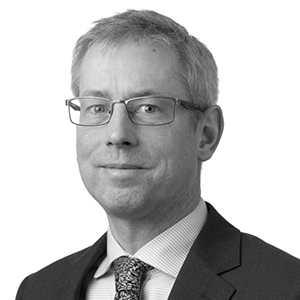
Stantec
executive technical director
An ICE Fellow with 30 years’ professional experience, Adrian Johnson has worked mainly in the water sector, specialising in climate risk and resilience, sustainable development and carbon management.
Also a member of the Chartered Institution of Water and Environmental Management, he has supported several capital programmes for water companies and led consultancy and research commissions on topics including carbon accounting, renewable energy appraisals and natural capital assessments.
Johnson provides consultancy support and training for several of Stantec’s water clients in the UK and Ireland, focused on their net zero commitments. This has included developing tools and guidance; embedding sustainability criteria into decision-making; and helping them to assess climate risks and formulate adaptation plans.
He co-chairs the technical advisory panel (TAP) for PAS 3090, having previously chaired the TAP responsible for the development and subsequent update of carbon management standard PAS 2080.
An honorary professor at Heriot-Watt University’s School of Energy, Geoscience, Infrastructure and Society, Johnson is also a member of the UK Green Construction Board’s infrastructure working group.

Transport for London
environment & sustainability engineer
Jane is a systems engineer leading the development of environment and sustainability tools, training and processes in Transport for London's capital delivery office. She sits on the Institution of Civil Engineers Decarbonisation Community Advisory Board.

Anglian Water
head of carbon neutrality
David Riley is the Head of Carbon Neutrality within Anglian Water responsible for developing and implementing energy and carbon strategies for one of the largest water companies in the UK and also chair of the Water UK Carbon Working Group and member of the Green Construction Board Infrastructure Working Group.
In 2013 he chaired the steering group that developed the HM Treasury Infrastructure Carbon Review and more recently was part of the steering group that delivered PAS 2080:2016 Carbon Management in Infrastructure.
David is a graduate from the University of Bath with a Master of Science in Integrated Environmental Management. Having worked in both finance and the manufacturing sectors, David joined the water industry in 2000 focussing on both energy and carbon management.

Environment Agency
project manager
With a background in Mechanical Engineering and a passion for working with others, Ross is a project manager with 5 years’ experience working in the infrastructure sector. He has worked across several major key infrastructure projects at various stages of the project lifecycle. Most recently, has led the detailed design and construction phases of the Low Crosby Flood Risk Management scheme, successfully delivering a sustainable solution to flood risk management.

Jacobs
senior associate director & head of BIM & digital engineering - water & environment
David is a chartered civil engineer and environmentalist with over fourteen years’ experience operating within the water and environment sector, and a passion for delivering sustainable civil infrastructure projects and digital innovation.
He has delivered multiple flood risk management schemes for the Environment Agency and other Risk Management Authorities, and is now Head of Discipline for Information Management and Digital Engineering in Jacobs’ Water and Environment business sector.

This ADHD awareness month, we shine a light on how ADHD can manifest and what support is available to ICE members and their families.

As part of Black History Month, we're bringing together an exemplary panel of Black engineers from across the profession to share their experiences, achievements, and reflections in celebration of the contributions of Black engineers to the industry.

Join ICE President David Porter for an inspiring discussion with members across the MENA region. Hear reflections from his presidential year, explore the ICE 2030 Strategy, and take part in a live Q&A shaping the future of our profession.