





British Dam Society
The BDS covers the technical aspects of dams and reservoirs, including planning, design, construction, maintenance, safety, and environmental impact.

Free
Free
This is a joint meeting of the British Dam Society (BDS) and the British Geotechnical Association (BGA).
Bateman reservoirs, designed by and named after English civil engineer John Frederick Bateman, were constructed in the 1850s and soon after. The unnamed reservoir that was the subject of the Fleming Award presentation is the largest of a chain of reservoirs east of Manchester.
The project reservoir experienced a significant amount of movement on first filling 150 years ago. Following concerns about recent changes in the rates of settlement in the dam, United Utilities determined that work to maintain and stabilise the reservoir was necessary.
The project involved extensive ground investigations (GI) and monitoring to determine the geotechnical parameters of the embankment, the foundations and the clay core. A ground model that was developed using the GI data showed that a high plasticity clay in the foundation layer was initiating a deep-seated slip.
The team sought a second opinion from Stantec, who came up with a similar understanding of the mechanisms behind the slip.
This led the team to consider several engineering solutions. These included a structural shear resistance and retaining approach with piles that would go through the clay horizon and socket into the rock at the base of the embankment. Another approach was to modify and improve the soft clay properties by jet grouting.
The team opted for the piling solution. This involved installing a 65m length of piles, which would anchor into the dam and avoid the central clay core – the water retaining element.
2025 Fleming Award winner
The British Geotechnical Association (BGA) awarded the 2025 Fleming Award to United Utilities, Stantec, and Keller for their work on maintaining a Bateman embankment dam.
The BDS covers the technical aspects of dams and reservoirs, including planning, design, construction, maintenance, safety, and environmental impact.

The BGA is the UK's main association for geotechnical engineers, organising key events annually.

United Utilities
principal engineer
Andrew is a Fellow of the ICE and Chartered Geologist with a 20+ year career involved in water and infrastructure projects across the UK. Appointed on the Reservoir Supervising Engineer panel since 2016 and currently working at United Utilities as a Principal Engineer in the Ground Engineering team.

United Utilities
principal engineer
Pamela is a Fellow and Chartered Civil Engineer and Geologist with a 30+ years’ career involved in water, embankment dams, infrastructure, power, petrochemical and railway projects, both in the UK and overseas. Currently working at United Utilities as a Principal Engineer in the Ground Engineering team.
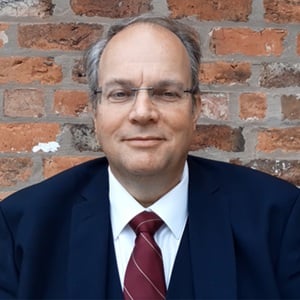
United Utilities
chief engineer
David is a Fellow of the Institution of Civil Engineers, a Fellow of the Geological Society, a Member of the IOM3 (IMMM), and a RoGEP Adviser, with over 40 years of experience working on numerous interesting and challenging Ground and Civil Engineering projects internationally and in the UK. Chief Engineer at United Utilities responsible for Geotechnical, Geoenvironmental and aspects of Reservoir Safety, Risk Evaluation and Engineering.
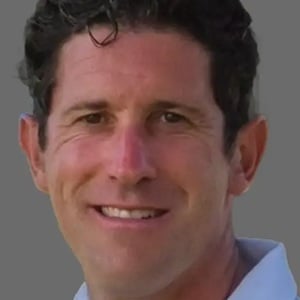
Keller
general manager
Bruce is the General Manager at Keller Geotechnique overseeing specialist ground engineering operations like anchors, mini piles, and grouting and has extensive high-level contractor experience managing massive complex infrastructure projects.

We bring you a webinar on The Wales National Travel Survey, launched in March 2025, which collects representative data on how and why people travel in Wales, with early findings to be published in April 2026 and full annual results from Autumn 2026.

Join the July 2026 Engineering Excellence Community Forum online to hear updates on key Safety Risk Advisory Group workstreams, from tackling gaps in the provision of safety risk management guidance to operating specialist professional registers.

To move towards healing, we must first understand what trauma is (and isn’t).