





Offshore Engineering Society
The OES acts to promote interest and scholarship in both the scientific and applied aspects of offshore engineering.

Free
Fatigue is one of the main drivers in the design of offshore wind structures, and moving from the design stage to operation, its accurate evaluation is key in ensuring that the best value may be achieved from the structure.
Current fatigue codes and guidance documents used in design have evolved over time, which involves various assumptions and approximations that have been necessary to provide useful (and robust) calculation outcomes. These have developed to include additional features, such as the effects of corrosion and thickness.
The presentation seeks to provide a review of the background to the legacy features of the current fatigue codes, and in this process to highlight the expected accuracy and possible shortfalls.
Possessing a working knowledge of fatigue assessment is beneficial but not necessary in order to follow the key points of the presentation.
The OES acts to promote interest and scholarship in both the scientific and applied aspects of offshore engineering.
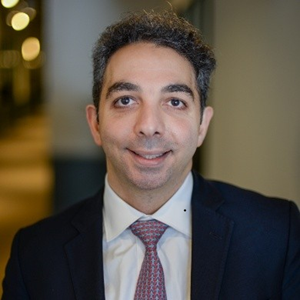
Kent Energies UK
chief engineer
Amir has been supporting offshore operators for over 15 years with integrity management including inspection planning, life extension, and repair operations. He’s worked with most major offshore operators in the O&G and Offshore Wind sector.
His work has led to updates in key standards and guidance documents including DNV-RP-C203 and NORSOK N-005. He is currently a Technical Lead and Global Subject Matter Expert in fatigue and fracture mechanics in offshore structures in Kent (formerly Atkins Offshore). He has developed guidelines for the Energy Institute on life extension of offshore wind foundations and integrity management of offshore structures in the splashzone.
Amir sits on the BS7910 panels on offshore structures, fatigue, and weld residual stresses (since 2014).
Prior to jointing Kent/Atkins Amir held an academic post at Cranfield University’s Department of Offshore Engineering and Naval Architecture.
Outside of Kent, Amir is a member of the Council of the Engineering Integrity Society (https://e-i-s.org.uk/) and was recently elected as its Secretary. He has been on the editorial board of Fatigue and Fracture of Engineering Materials and Structure (FFEMS) journal since 2011.

Join this interactive workshop to help you prepare for the IEng Communication Task. A guest speaker will provide an overview of the commercial attribute and you'll have the chance to discuss the topic with peers during a breakout session.

The aim of this session is to introduce participants to the ICE, its membership pathways and the benefits of joining a global professional engineering institution.

A series of web-based workshops aimed at graduate, student and technician members who are working toward EngTech, IEng or CEng with the ICE. These workshops provide advice and guidance on recording Initial Professional Development (IPD), broken down by attribute.