





Society for Earthquake and Civil Engineering Dynamics
SECED promotes the study and practice of earthquake engineering, dynamics, and vibration issues like blast and impact.

Free
Free
As seismic design increasingly emphasises not only safety but also community resilience, engineers are seeking structural systems that can efficiently achieve enhanced performance objectives.
Controlled rocking systems offer one such solution: simply by allowing targeted structural elements to uplift from the foundation under large lateral loads, peak seismic forces are limited in a way that avoids structural damage and residual deformations.
This rocking behaviour can then be controlled using post-tensioning and/or energy dissipation.
This seminar will draw on examples from both research and practice to illustrate the opportunities and challenges of implementing controlled rocking in steel, mass timber, and reinforced masonry.
While each material requires unique detailing considerations at the rocking interface and the diaphragm connections, their global dynamic response is remarkably similar.
Key design challenges include: (1) peak displacements that often exceed the equal displacement assumption, and (2) higher mode effects that reduce the ability of rocking to limit the internal forces.
The seminar will introduce easy design tools that allow engineers to predict these effects without nonlinear analysis, allowing the benefits of controlled rocking to be harnessed while keeping the design process as simple as for other common seismic force resisting systems.
Attendees will learn about not only the structural behaviour of controlled rocking systems, but also how these systems affect the demands on non-structural components, including comparisons with other seismic force resisting systems in terms of expected seismic losses.
The seminar will conclude with an overview of the current state of prescriptive design requirements and codification.
SECED promotes the study and practice of earthquake engineering, dynamics, and vibration issues like blast and impact.
McMaster University
endowed chair in effective design of structures
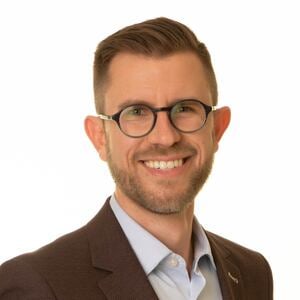
Lydell Wiebe is Professor and Chair of the Department of Civil Engineering at McMaster University in Hamilton, Canada, where he also holds the Endowed Chair in Effective Design of Structures.
His research aims to develop economical ways of enhancing seismic resilience, with a focus on designing steel structures to minimise the time and cost of post-earthquake repair.
He is a leader in Canadian code development, chairing the Seismic Design Working Group for the Canadian Standard on Design and Construction of Steel Structures and voting on the Canadian National Model Codes Committee for Seismic Design.
His awards include the HA Krentz Research Award from the Canadian Institute of Steel Construction, multiple Best Paper awards from the ASCE Journal of Structural Engineering, and the McMaster University Faculty of Engineering Teaching Excellence Award.

This talk explores low-cost portable Frequency-Modulated Continuous-Wave radar for remote, non-contact bridge vibration monitoring, covering measurement principles, signal processing, laboratory and field validation, and future applications in structural health monitoring.

Join this online session exploring the High Court judgment that quashed the A5 Western Transport Corridor consents. Hear expert insights on the implications for planning, design and delivery, and discover key lessons for future infrastructure projects across Northern Ireland.

An online CPD course for engineers, supervisors, and final year students, on route to ICE membership Pakistan.