





Railway Civil Engineers Association
The RCEA advances professional development and knowledge in railway engineering, including main lines, metros, and light rail.

Free
Free
The RCEA, in partnership with Young Rail Professionals London & South East, invites you to an evening exploring one of the most significant technological developments shaping the future of the rail industry: Artificial Intelligence.
We will examine how AI is already being applied to railway engineering, operations and decision-making, as well as the opportunities it presents for the future.
Presentations will cover:
Following the presentations, attendees are invited to continue the conversation and network with fellow professionals at an open bar, sponsored by the Railway Civil Engineers Association.
The RCEA advances professional development and knowledge in railway engineering, including main lines, metros, and light rail.

A volunteer-led, non-profit membership organisation for anyone in their first 15 years of rail experience.
Arrival & Registration
Introductions by Jian Li Chew, RCEA Chair, and Robin Guo, YRP L&SE Chair
Automated Railway Wheel Flange Measurement from Images Using Deep Learning – Mujadded Alif
I haven’t written any code this year – Jonathan Ryan
AI, Rail and Engineering – The Why, What and How – Bill Guo
Beyond Railway Capacity – AI, Integrated Operational Planning and the Engineer Across Boundaries – Jiaxi Li
Q&A
Thanks & close out
Networking

IRR
research associate
Mujadded Al Rabbani Alif is a research associate specialising in computer vision at the Institute of Railway Research, University of Huddersfield. His work focuses on applying artificial intelligence and computer vision to railway inspection, condition monitoring and measurement, with an emphasis on developing practical solutions that can operate reliably in real railway environments. His research spans deep-learning-based inspection, automated measurement and intelligent monitoring of railway vehicles and infrastructure.
Presentation: Automated Railway Wheel Flange Measurement from Images Using Deep Learning
The presentation will explore how computer vision and deep learning can be used to automate railway wheel flange measurement from images. I will discuss the motivation behind the work, the computer vision methodology developed, key experimental findings, and some of the practical challenges involved in translating AI-based measurement from controlled research environments towards real railway applications. I will also briefly reflect on the wider potential of computer vision for automated railway inspection and condition monitoring.

Rail Safety and Standards Board (RSSB)
principal data engineer
Jonathan Ryan is a principal data engineer at RSSB, where he leads the design and development of large-scale data platforms that support safety, operational, and strategic decision-making across the rail industry.
With extensive experience in data engineering, cloud platforms, analytics, and software development, Jonathan has worked at the intersection of technology and business transformation for several years. His current focus is on applying modern AI capabilities, including generative AI, coding assistants, and agent-based systems, to solve real-world challenges within engineering and data teams.
Outside of work, Jonathan enjoys practising Tai Chi, valuing the opportunity to slow down, switch off, and spend an evening learning how to handle a sword. He is passionate about technology, continual learning, and exploring how people and organisations adapt to change. Jonathan regularly speaks about AI, software development, and data engineering, combining practical experience with a healthy scepticism for technology hype.
Presentation: I haven't written any code this year

AutomateX
founder
Bill Guo FICE CEng MEng is a Fellow of the Institution of Civil Engineers, a Chartered Civil Engineer and founder of AutomateX, which exists to accelerate AI adoption across the UK rail sector. He works with rail teams on AI transformation, from finding where AI genuinely fits in an operation through to implementing changes that last, combining railway domain knowledge, an engineering background and AI-native skills. Bill is also vice chair (informing opinion) on the ICE London Regional Executive Board.
Presentation: AI, Rail and Engineering – The Why, What and How
I will open with why this matters to a young engineer's career, move into what actually changes in the job, then close on how to find and start automating the work worth automating. Aimed squarely at those early in their civil or rail career, kept high level, with a couple of real examples woven through.
University of Southampton
PhD researcher
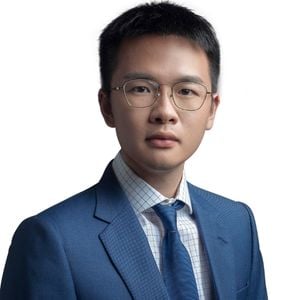
Jiaxi Li is a PhD specialising in railway capacity, timetabling and operations. His doctoral research examines how infrastructure, operations and service commitment interact to shape capacity utilisation, and how this can inform service and infrastructure modification. Jiaxi has a strong track record of rail transport projects driven by optimisations (OR) and advanced analytics. His current work applies AI and automation across the railway planning process, from forecasting and revenue analysis to service planning and timetabling, with a particular focus on integrating traditionally separate planning clerks into joined-up decision-making workflows. He is also interested in how technical experience gained across academic, international and industry settings can be translated into tangible operational and commercial value.
Presentation: Beyond Railway Capacity – AI, Integrated Operational Planning and the Engineer Across Boundaries
I will explore AI in rail through the lens of railway capacity, planning and timetabling - areas where engineering judgement, operational complexity and data increasingly intersect. I will then step back from individuals to consider what this means for the next generation of engineers. I believe the differentiators will shift towards cross-disciplinary thinking, strong engineering fundamentals, the ability to challenge AI-generated answers, and the capability to connect technical analysis with wider operational and commercial decisions.

This course is designed to give developing professionals a strong foundation in sustainable engineering, equipping them with the knowledge and practical skills to effectively integrate sustainability into their work.

This event explores the future of Building Information Modelling (BIM), following the evolution from its origins in 3D modelling to the use of scripting and automation tools that are transforming design workflows. It will also explore BIM's role in supporting paperless project delivery.

Your brain is your most powerful asset. Are you doing enough to protect it?