





An Enabling Better Infrastructure (EBI) and UN Environmental Programme (UNEP) event explored how digital tools can aid recovery and make it sustainable.
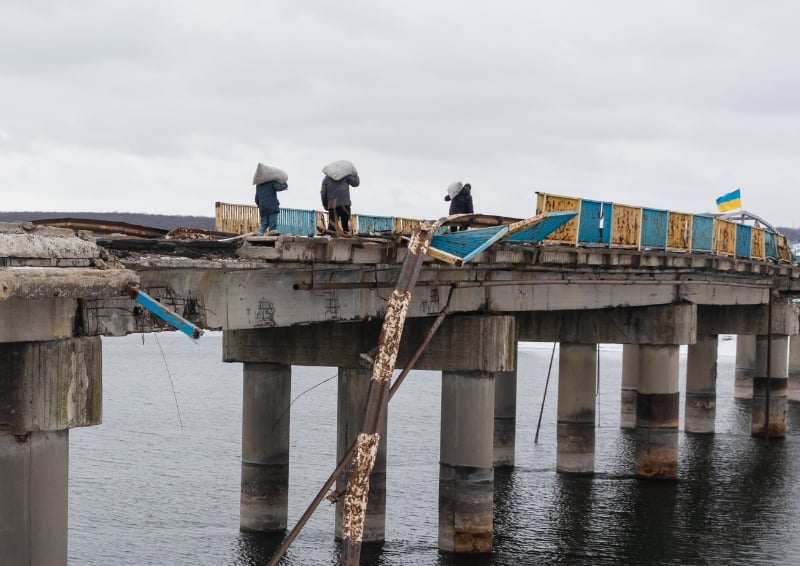
It’s been over three years since Russia invaded Ukraine.
Countless properties have been destroyed in the process, with damage currently calculated at around £126 billion.
Across the country, Ukrainian homes are in need of repair, while some need new houses altogether.
Being 2025, data and digital services are playing a huge part in this recovery.
An application called Diia is helping citizens repair windows, doors, roofs, and walls, buy a new home, or invest in new properties, depending on the damage.
People can also keep track of investment plans, projects and programmes aiming to restore infrastructure through an online system called DREAM (Digital Restoration Ecosystem for Accountable Management).
To find out more about these digital services, we spoke to Dr Anna Yurchenko, co-founder of We Build Ukraine, and Thomas Streinz, joint chair of the European University Institute’s Law Department.
Going digital
Back in 2019, the Ukrainian government made digitalisation a priority. It created a legal framework to make anything digital-related a matter of general policy.
Each ministry, state agency, and regional administration was assigned a deputy minister or deputy director in charge of digitalisation.
They even made sure that non-government individuals were available to support. Private businesses, such as IT companies, were hired within ministries and administrations to ensure services were operating smoothly.
To encourage the public to get on board, it established service centres in cities to help people understand and use digital technology, such as phones and laptops.
After the invasion, with the help of the World Bank and UN agencies, Ukraine published reports identifying the damage most in need of repair across transport, housing, and social infrastructure.
The government decided to use the digital services it had implemented to help restore this infrastructure.
Sustainability during wartime
Sustainable development goals fall down the priority list during times like these.
But Ukraine’s approach means that they’re not abandoned.
Each public investment priority listed on the DREAM platform must consider climate change and the environment.
This includes:
- climate mitigation and adaptation;
- the sustainable use and protection of water and marine resources;
- a transition to a zero-waste economy;
- pollution prevention and control; and
- the protection and restoration of ecosystems.
Developing lasting, sustainable infrastructure requires support and input from the public.
They’re the ones who use and depend on it to survive, and they’ll have ideas on how best to rebuild and maintain it.
This requires governments to set up national frameworks to obtain this public opinion, which, going forward, will help infrastructure last longer.
Using AI to help rebuild
To continue to rebuild Ukraine, the government is interested in using artificial intelligence (AI) to plan, collect data, and find sustainable solutions.
It would complement nicely with digital twins, which are virtual representations of physical assets such as buildings, roads and bridges.
This technology mimics how infrastructure operates now and in the future, allowing users to make smarter predictions about maintenance needs. This helps to make infrastructure more long-lasting and sustainable.
Across Europe, EuroStack is a suggested strategy and policy initiative that aims to build and develop this technology.
The Enabling Better Infrastructure (EBI) programme
Dr Anna Yurchenko and Thomas Streinz shared their insights as part of a joint event hosted by EBI and the UN Environmental Programme (UNEP).
Their discussion aligns with the following EBI principles:
- Principle 4: scoping ahead to consider delivery needs and avoid bottlenecks further down the infrastructure lifecycle.
- Principle 8: setting up data structures to regularly assess and monitor infrastructure needs.
Find out more about the EBI programme and its eight guiding principles.
About the ICE-UNEP joint event
The event is the final in a series of UNEP and EBI webinars on scoping ahead to drive success.
Watch the recording of the entire event:

Sustainable Development Goals:
You may also be interested in

- Type
- Infrastructure blog
Built to last: the infrastructure planning toolkit that outlives politics
The updated version of the Enabling Better Infrastructure (EBI) guidance can help governments make decisions that will benefit communities in the long term.

- Type
- Infrastructure blog
What the Netherlands can teach us about including the public in climate change plans
The Dutch government works closely with locals to identify and address their climate change concerns.

- Type
- Infrastructure blog
Why can climate resilience efforts fall through the cracks?
Without strong leadership, clear roles and joined-up planning, governments may fail to adapt to climate change. A new insights paper explores how governments can build climate resilient infrastructure.