From optimising aerodynamics and traffic flow to saving on resources and energy, nature has had billions of years to perfect these solutions.
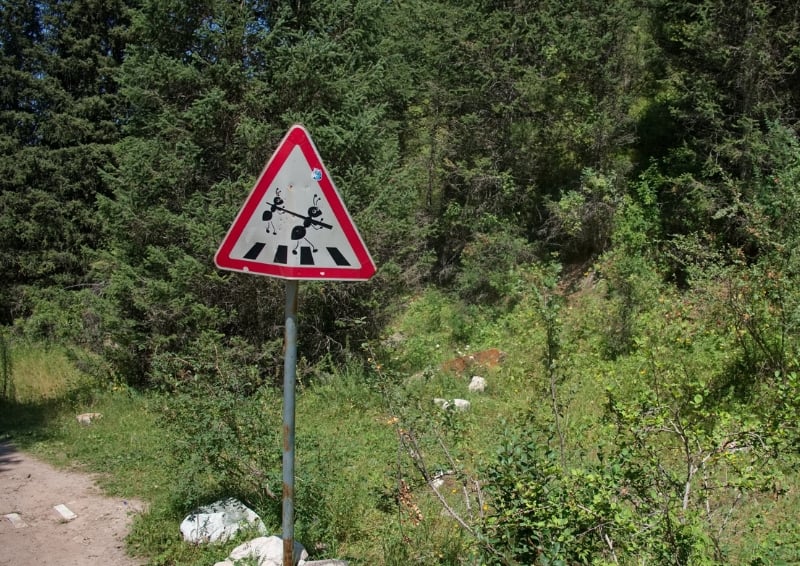
Ants find the best routes to food using swarm intelligence. What can engineers learn from that? Image credit: Shutterstock
From bullet trains shaped like birds’ beaks to self-cleaning building surfaces inspired by leaves, engineers and designers are increasingly turning to nature for answers.
This approach, known as biomimicry, is gaining traction as industries search for smarter and more sustainable ways to solve complex challenges.
But what exactly is biomimicry, and could it reshape the way we design infrastructure?
Credit where credit's due
Do you know of a person or project deserving of recognition among the wider civil engineering community?
Why not nominate them for any of the 2026 ICE Awards? The nominations deadline has been extended to 11.59pm on Thursday 8 October 2026.
Biomimicry is the practice of studying and mirroring nature’s time-tested patterns and strategies to solve human problems.
Rather than forcing solutions using traditional engineering approaches, biomimicry asks a different question: how has nature already solved this?
The concept is grounded in the idea that organisms and ecosystems, refined over billions of years of evolution, offer highly efficient, resilient and sustainable solutions.
Nature offers a vast library of design inspiration, whether it’s seen in the way spiders produce ultra-strong silk or how forests continually recycle nutrients.
Why is interest growing?
Biomimicry is attracting attention for several reasons, particularly as industries face mounting pressure to reduce environmental impact.
Sustainability demands
Traditional design methods can be resource-intensive and wasteful. Nature, by contrast, operates in closed-loop systems with minimal waste.
Mimicking these systems can help reduce carbon emissions, save resources and support circular design.
Efficiency gains
Natural systems are highly optimised. For example, birds and fish have evolved streamlined forms to minimise energy use which are principles that can be applied to transport and aerodynamics.
While it may sound futuristic, biomimicry is already influencing real-world innovation across sectors.
Transport
Japan’s Shinkansen bullet train famously redesigned its nose based on the kingfisher’s beak. This reduced noise pollution and improved efficiency, allowing trains to move faster while consuming less energy.
The flippers of humpback whales have bumpy ridges (tubercles) that improve lift and reduce drag. This has been applied to turbine blades and aircraft wings making them more efficient and quieter.
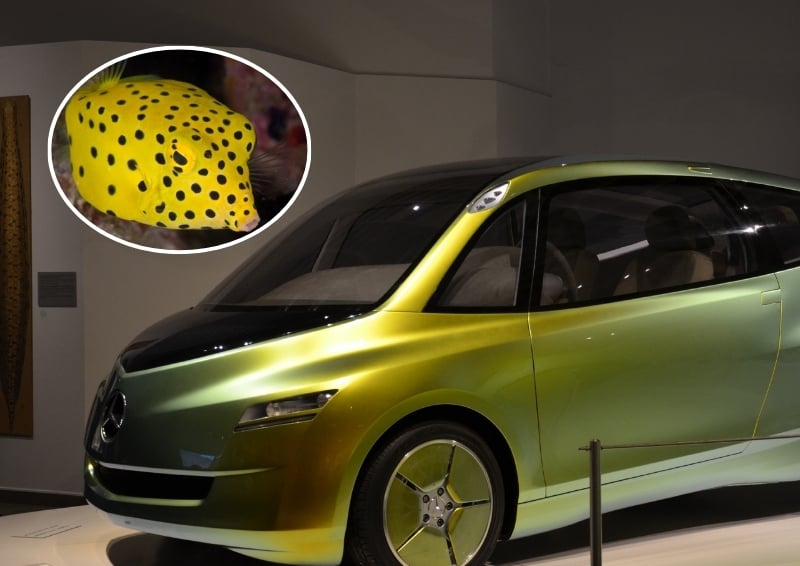
Boxfish have a surprisingly aerodynamic shape despite their boxy look. Mercedes-Benz used this design to create a concept car that is fuel-efficient and structurally strong.
Mercedes-Benz concept car was inspired by the boxfish. Image credits: Shutterstock (boxfish) and NatiSythen (for the car, licensed under CC BY-SA 3.0)
Architecture
The Eastgate Centre in Zimbabwe uses a ventilation system inspired by termite mounds. By mimicking natural airflow, the building maintains comfortable temperatures with far less reliance on air conditioning.
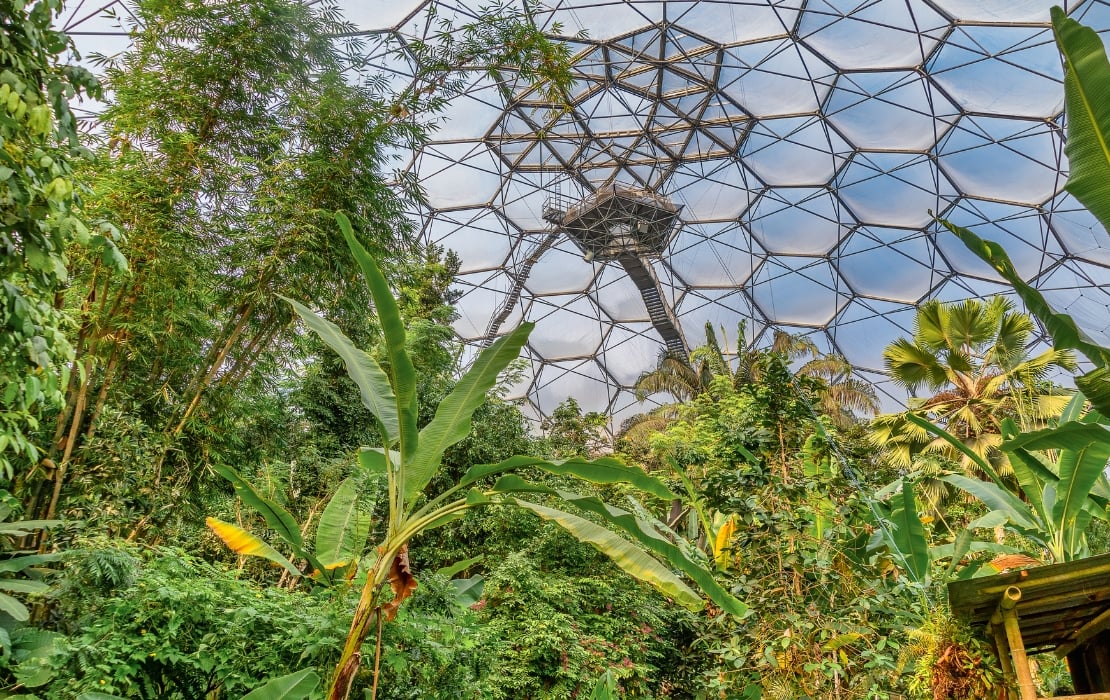
The geodesic domes at the Eden Project draw inspiration from natural forms such as pollen grains and soap bubbles, enabling large, enclosed spaces to be created using minimal materials and energy.
Mangrove roots dissipate wave energy and reduce erosion. Engineers are designing coastal defences that replicate these root systems to protect shorelines from flooding and storm surges.
The domes at the Eden Project draw inspiration from natural forms, like pollen grains and soap bubbles. Image credit: Shutterstock
Materials and surfaces
The 'lotus effect', where water beads and rolls off leaves taking dirt with it, has inspired self-cleaning coatings used in buildings, textiles and solar panels.
Certain bacteria can produce limestone when exposed to water and oxygen. Engineers embed these bacteria into concrete so that when cracks form, they activate and seal the cracks automatically.
Ancient Roman harbour concrete strengthens over time due to chemical reactions with seawater. Modern researchers are replicating this using volcanic ash and seawater chemistry.
Robotics and engineering
Octopuses use flexible, highly dexterous arms to navigate complex and confined spaces. This has inspired the development of soft robots that can move through tight or hard-to-access areas without damaging surrounding materials.
Ants find optimal routes to food using swarm intelligence. This behaviour has been applied to traffic flow systems, logistics and network optimisation.
Bats use echolocation to navigate in darkness. This has inspired advanced sensing systems for drones and autonomous vehicles.
Challenges to wider adoption
Despite its promise, biomimicry is not yet mainstream in most industries. This is because:
Biomimicry requires collaboration between biologists, engineers and designers - groups that don’t traditionally work closely together.
Translating nature-inspired concepts into commercially viable products or large-scale infrastructure can be expensive and technically challenging.
Biomimicry’s role in future infrastructure
As cities grow and climate pressures intensify, biomimicry could play an increasingly important role in infrastructure design.
For example:
buildings that regulate temperature like living organisms
water systems that mimic natural filtration processes
urban layouts that function more like ecosystems, improving resilience and biodiversity
These approaches align closely with the push towards nature-based solutions, which aim to integrate natural processes into engineering rather than working against them.
Biomimicry is unlikely to replace traditional engineering entirely. However, it offers a powerful complementary approach, especially as sustainability becomes an increasing priority.
By rethinking design through the lens of nature, biomimicry encourages innovation that is not only effective but also regenerative.
In a world facing environmental limits, that shift in mindset may prove just as valuable as any individual technology.
Nature-based solutions to try on your next project
From green walls and trees to sustainable drainage solutions, you may already be using some of these.