





At a time when many reservoirs are ageing and weather patterns are becoming increasingly unpredictable, the role of engineers has never been more important, writes Amy Henderson.
Most people rarely think about reservoirs unless something goes wrong.
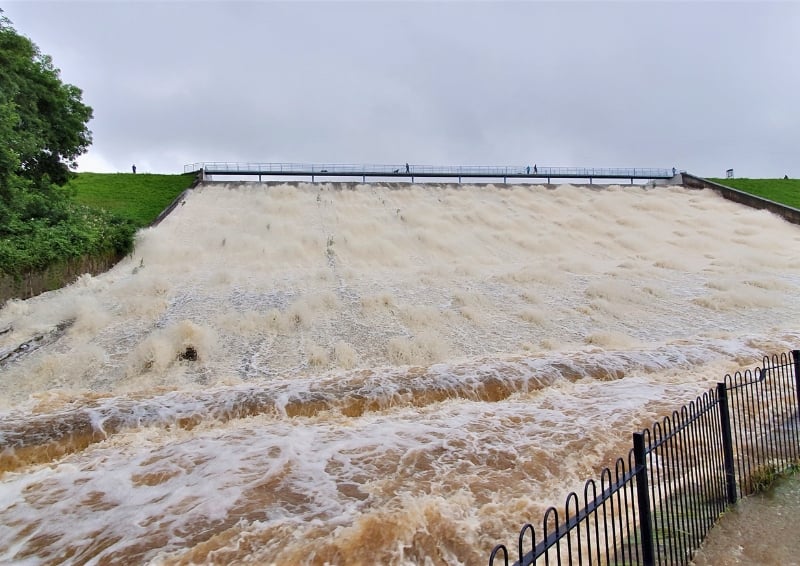
The 2019 Toddbrook Reservoir incident at Whaley Bridge dominated national news coverage and brought dam safety into public focus.
Following several days of intense rainfall, part of the reservoir’s backup overflow channel was damaged. Fears that the dam could fail led to a major emergency response and the evacuation of around 1,500 local residents.
The incident prompted a major review of reservoir safety across the UK, with ICE Past President Professor David Balmforth making 22 recommendations to strengthen safety practices, all of which were accepted by the government.
There were also wider reviews of reservoir legislation, site visit requirements and the way climate change and extreme weather are considered when assessing reservoir risk.
For graduate engineers like me, it wasn’t only a stark reminder of why we must maintain and monitor critical infrastructure – it highlighted why our work matters!
Working in reservoir safety comes with a real sense of responsibility
The Toddbrook incident showed us why public safety must always be the priority.
As a young engineer, and one of relatively few women in the sector, there have been times when stepping onto a construction site or raising concerns felt intimidating.
But I’ve been fortunate to join a company that has a strong culture of support.
Specialising in the water environment, safety is embedded into everyday activities – be it training, mentoring or established procedures.
My employer and the experienced engineers I have interacted with throughout the industry have consistently encouraged me to raise concerns, ask questions, and learn from others.
This has reinforced the importance of competence, professional development and ensuring concerns can always be discussed openly.
Good engineering depends on people being willing to speak up when something doesn’t look right, regardless of their level of experience.
What does a reservoir engineer actually do?
As a graduate reservoir engineer at JBA Consulting, I help assess, maintain and improve reservoirs across the UK.
Recently, I’ve been assessing risks at reservoirs to inform future investment decisions that support public safety and the long-term integrity of this vital infrastructure.
Reservoir engineering projects rarely begin and end within a single day.
Depending on their complexity, tasks can take anything from several days to months to complete, requiring detailed investigation, analysis and collaboration across multiple disciplines.
But if we were to take a snapshot of a single day in my life, it would look something like this.
A day in the life of a reservoir engineer
One day might involve visiting a reservoir to carry out a site visit. The next could be spent back in the office reviewing site information and assessing the findings.
This involves digitising measurements taken onsite (including survey data), examining and cataloguing photographs, and reviewing available drawings and historical records from desktop research and information provided by the client.
The aim is to build a clear understanding of the reservoir's condition and identify any areas requiring further investigation.
Site vs office
Desk-based work may not sound as exciting as standing on top of a dam, but these activities play an important role in ensuring reservoirs continue to operate safely.
The assessments, site visits and risk reviews we undertake help reservoir owners make informed decisions about maintenance and investment, ensuring these assets remain safe and resilient for future generations.
Reservoirs often have a long and sometimes patchy recorded history and understanding how a structure has changed over time can be just as important as understanding how it performs today.
That said, assumptions and inferences are often necessary in my specialism, as some information is simply unavailable or has been lost over time.
I’ll then meet with colleagues to examine my findings and discuss potential next steps.
One of the things I've learned since joining the profession is that engineering is rarely a solitary activity, and it’s okay to ask for help if you are unsure.
Developing effective solutions requires input from people with different skills and experience, and these discussions are often where the best ideas emerge.
By lunchtime, I’ll have a clear plan for how to present my findings through graphs, calculations and maps.
Towards the end of the day, I'll pack up my work, review progress across my projects and identify priority actions for the following day – often including planning the next site visit.
The specialism you might never hear about
Reservoir safety isn’t only about responding to major incidents. It’s also about the ongoing site visits, monitoring and maintenance of assets, often long before issues become visible to the public.
At a time when many reservoirs are ageing and weather patterns are becoming increasingly unpredictable, the role of reservoir engineers has never been more important.
But before university, I’d never even heard of reservoir engineering, a career that perfectly combines my interests in geology, infrastructure and the environment.
So, for anyone considering a career in engineering, my advice would be to stay curious and keep an open mind.
Some of the most interesting careers are the ones you don't learn about in the classroom.
Become a reservoir engineer
Reservoir engineering is a fascinating and rewarding specialism that offers the chance to combine science, engineering and problem-solving while helping to build a safer and more resilient future.
Explore the specialism
You may also be interested in

- Type
- News
Nominations open for ICE president
Candidates who meet the requirements are invited to stand to represent the institution as a future president of the ICE.

- Type
- Civil Engineer blog
Linking data to value: 5 priorities from the ICG's data and digital benchmarking report
The Infrastructure Client Group's 2026 benchmarking survey shows progress, but greater focus is needed on value, data quality and delivery outcome.

- Type
- ICE Community blog
What's the foundation of flood resilience? Information
ICE President David Porter explains why being informed about flood risk is so important for the public and civil and infrastructure engineers.