





ICE trustee Jonathan Spruce explores how planning transport alongside other networks can deliver better outcomes for people, the environment, and the economy.
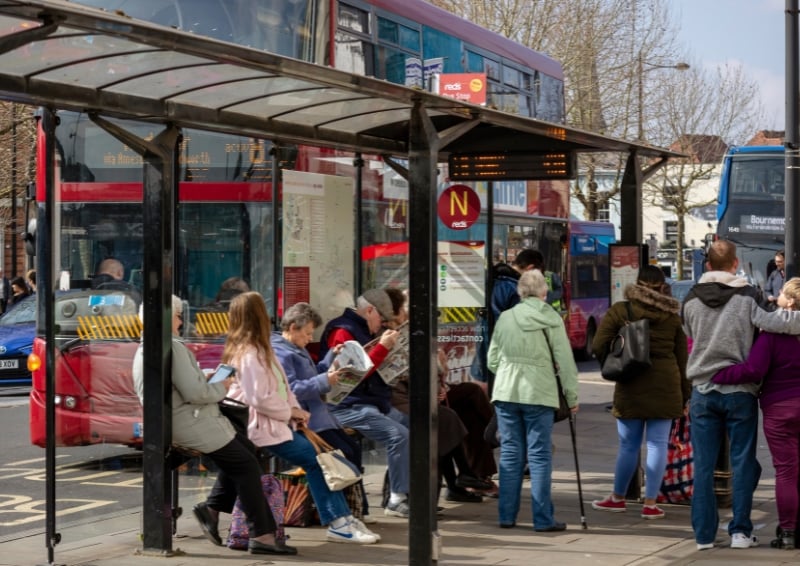
When planning transport, we often like to talk about big things: large, complex schemes, record-breaking speeds.
But often, some of the biggest differences can be made from very small things.
When I was visiting Australia, I remember we got the ferry over to the far side of Sydney Harbour.
The bus that takes you onward waits for the ferry. If the ferry is a little late, the bus waits to connect and meet you.
Those little practical examples make a massive difference in people’s lives in terms of a proper joined-up, integrated journey.
Transport systems that can cope with uncertainty
Most transport infrastructure was built decades ago, based on weather conditions that looked very different from those we see today.
Experts are gathering in Manchester this September to discuss how we can prepare our vital transport networks to cope with new extremes as structures continue to age.
Spaces at the Resilient Transport conference are limited and filling up fast.
There’s more to transport than a road, bus route, or train line
A journey is about more than getting from A to B.
A lot of the time, people will get on multiple modes of travel, they’ll make several decisions for a variety of reasons – whether that’s their health, how it fits around their work schedule, if they’re in a rush, or just out for leisure.
If we’re going to plan integrated transport that really works for people, then we need to change the questions we’re asking from just ‘how much will it cost?’ or ‘how long will it take?’.
We also need to be asking: have we made their journey easier? Safer? More enjoyable? Healthier?
The outcome is what we are trying to get to. The difficulty is that we are used to jumping to the solutions – the new roads, the cycle lanes, the railway bridges, and so on.
But it’s actually about lifestyle or wider achievements.
How do we integrate transport?
The UK government has aims to build 1.5 million new homes in England over the current Parliament.
But one of the main barriers to effective housing growth has been the lack of alignment between housing decisions and other strategies.
Building homes in locations with poor connectivity reinforces car dependency rather than unlocking the benefits of active travel and public transport.
As the government seeks to deliver its ambitious housing targets, and with a new National Planning Policy Framework (NPPF) in development, it’s important to understand how transport and planning integrate.
I recently gave verbal evidence to the UK House of Commons Transport Committee on what needs to happen on a practical level, and in governance and policy, to enable integrated transport.
It was part of the committee’s inquiry on Joined-up journeys: achieving and measuring transport integration, which the ICE has also submitted written evidence to.
1. It’s all about people
Joined-up transport planning means being more people-focused.
Rather than jumping straight to solutions, it’s about using that land to create a place where people want to live.
Before we go and design bus or cycle lanes, we need to listen to communities and understand what they want and how transport benefits their daily lives.
Polling commissioned by the ICE suggests that almost two-thirds of people (62%) feel that major infrastructure projects are poorly communicated to them. Only 19% believe they are well communicated.
I’m particularly pleased that the ICE will be undertaking work later this year on understanding the user experience of infrastructure and improving public engagement.
2. Better data can help us understand user needs
Data can improve decision-making about transport projects, but currently, the data we collect isn’t always what we need.
For example, the Department for Transport’s new outcomes framework still focuses too much on traditional transport outputs (things like journey time and cost).
These metrics are important. But we also need to measure the factors that influence people’s behaviour and choices about how to travel.
How confident, comfortable, and safe do they feel? How reliable are different services?
And we need new metrics linked to the wider impacts of transport investment, like environmental and social value and productivity growth.
3. Stability means certainty
A key barrier to joined-up journeys has been the lack of an overarching strategic plan for transport.
The upcoming Integrated National Transport Strategy is an opportunity to address this, and is something the ICE has long called for.
The strategy should be vision-led and consider the entire transport network as well as the social, environmental, and economic outcomes it should deliver.
It should enable stable infrastructure pipelines aligned with the government’s long-term objectives, as set out in the 10 Year Infrastructure Strategy.
Stability reduces uncertainty, enabling supply chain companies to build collaborative, long-term relationships with clients and invest in the skills, capacity, and innovation needed to deliver.
4. Strong local leadership is essential
Local and regional governments need stronger skills and capacity to get the most out of transport investment.
I believe that mayoral authorities offer the greatest opportunity to bring land use and transport planning together.
But their capability varies, and some will need additional support, time, and investment.
Spatial development strategies (introduced in the draft NPPF) and the recently updated Green Book can help deliver more joined-up growth and benefits for local communities.
Whether the Green Book’s welcome introduction of place-based business cases works in practice across multiple departments and local authorities is uncertain.
But it’s about getting all the right people in the right room and taking forward the vision of what the local authorities are trying to achieve.
Strong leadership will be essential to make this approach fully effective.
We need to understand the ‘why’
For me, joining up planning means understanding “why” we need new or enhanced infrastructure, and constantly referencing back to that through its lifecycle.
“Why there? What’s the purpose? What outcomes are we trying to get to?”
We need to understand that infrastructure is a system and encourage decision-makers to ask these questions.
Only then can we truly integrate transport and planning and avoid the mistakes of the past.

You may also be interested in

- Type
- Infrastructure blog
How much is climate resilience truly worth?
A new ICE report calls for a review into the value of infrastructure adaptation and climate resilience in order to boost investment.

- Type
- Infrastructure blog
Rewiring the State: what does England’s devolution mean for infrastructure?
These reforms would change where decisions are made, who holds influence, and how infrastructure and other investment priorities are determined.

- Type
- Infrastructure blog
CCC report shows it’s time to supercharge the UK’s electrification ambitions
The UK must speed up the electrification of transport, homes, and industry to reap the benefits of reducing emissions.