





The Royal Academy of Engineering (RAEng) has announced 75 individuals who are making outstanding contributions to the profession.
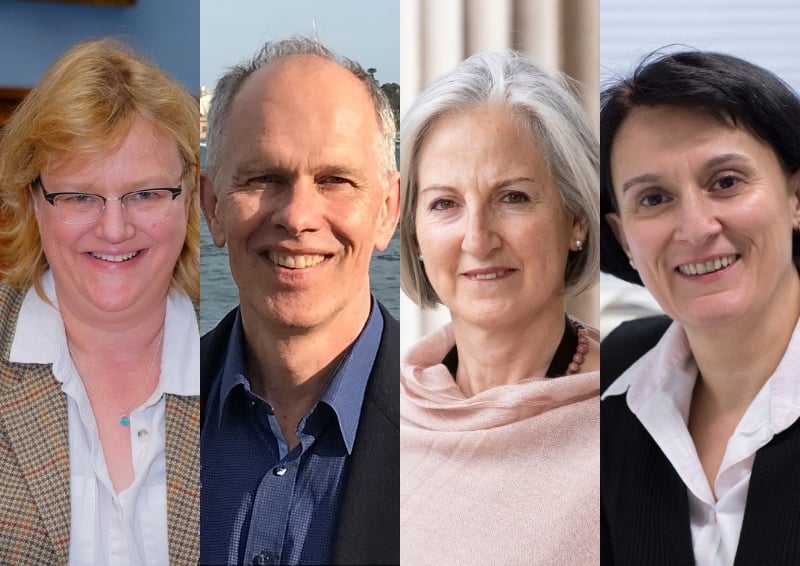
Four ICE Fellows recognised for shaping industry, academia and the public sector have been named Fellows of the Royal Academy of Engineering (RAEng).
Each year, the academy welcomes people who are making outstanding and continuing contributions to the profession to its fellowship cohort.
In 2026, the list featured four ICE Fellows:
- Alison Norrish, design director and Fellow, Arup
- David Coles, chief engineer, Department for Transport, UK government
- Dina D'Ayala, UNESCO chair in disaster risk reduction and resilience engineering and professor of structural engineering, University College London
- Lidija Zdravkovic, professor of computational geomechanics, Imperial College London
New RAEng Fellows are nominated and elected by existing fellows.
"It's fantastic to see ICE Fellows recognised for their expert leadership in their sectors," said Dr Janet Young, ICE director general.
"From cutting-edge research to the engineering expertise that shapes how projects are delivered and structures protected, our Fellows are genuinely at the forefront of our profession.
"Congratulations Alison, David, Dina and Lidija."
Meet the new RAEng Fellows
Alison Norrish is a major infrastructure projects leader across rail, road and aviation, specialising in tunnelling and underground construction.
She's led design teams on major schemes such as the Copenhagen Metro 5 and the tunnels for Crossrail, better known as the Elizabeth line in London.
She's also chaired the expert panel for the Thames Tideway Tunnel, London's new 'super sewer'.
Did you know?
As well as being an industry leader, Alison was a finalist for rowing at the 1988 Seoul Olympics and took home silver and bronze medals at the 1986 Commonwealth Games in Edinburgh.
David Coles is the first chief engineer at the UK's Department for Transport, with expertise across railway engineering and asset management.
In this role, David provides engineering evidence to major infrastructure projects, championing the role of engineers and the wider profession in government.
David has sponsored guidance to reduce construction's carbon footprint and the costs of infrastructure delivery, while improving productivity and raising safety awareness. His fellowship also honours his long-standing involvement with the ICE.
Professor Dina D'Ayala is a globally recognised expert in disaster risk reduction and resilience engineering.
Her methods for assessing the vulnerability of unreinforced masonry buildings to earthquakes are now embedded in national and international standards. She has also pioneered devices to protect heritage structures from seismic activity.
Dina advises the World Bank's Global Programme for Safer Schools and the UNESCO Disaster Risk Reduction Unit.
Professor Lidija Zdravkovic is an award-winning geotechnical engineering expert.
Her research contributions have acted as a bridge between academia and industry, particularly through the application of advanced numerical analysis techniques in engineering practice. Improving the sector's understanding of geotechnical structures has led to cost savings in design.
Lidija won the ICE Telford Medal in 2002 for best paper.

You may also be interested in

- Type
- Webinar
Careers talks
Aimed at students, this series of seven webinars which runs until May 2027 will enable you to learn about professional life from recent graduates from across the industry.

- Type
- Awards and competitions
It’s electrifying! South Wales Metro track transformation bags top award
The electrification of the Core Valley Lines impressed the judges at the 2026 British Construction and Infrastructure Awards.

- Type
- Infrastructure blog
Why the CMA's civil engineering market study is a once-in-a-generation opportunity
It will take more than a strategy paper to change the fortunes of the sector. Mike Reader MP explains why the Competition and Markets Authority's recent study could lead to real change.