





The annual awards saw some mega infrastructure projects from the region take centre stage.
An influx of mega project nominations at the 2026 Robert Stephenson Awards has led to the creation of a new category for schemes worth over £100 million.
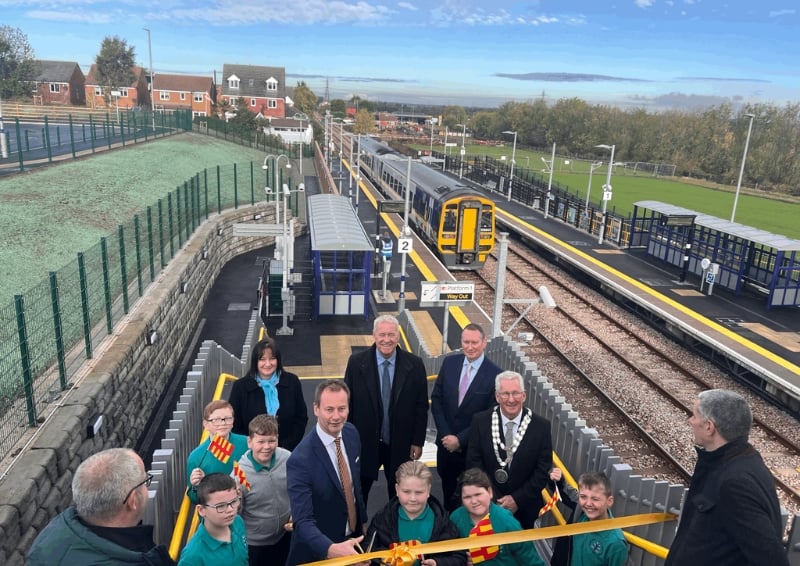
The Northumberland Line took home the inaugural Major Project Award on the night, with judges noting the local transformative impact of what's a nationally significant scheme.
The annual awards, which took place in Newcastle this year, celebrate engineering excellence from across the region.
The 2026 winners were:
Major Project Award: the Northumberland Line
The Northumberland Line restored passenger rail services between Ashington and Newcastle for the first time in more than 60 years, reconnecting six communities along an 18-mile corridor.
The £330m programme is one of the largest third-party funded rail upgrades in the UK and represents the most significant rail reopening in the North East for decades.
Top project facts:
- More than one million passenger journeys were recorded in the first year of operation.
- The line integrates with the Tyne and Wear Metro 'Pop' pay-as-you-go ticketing system, with fares from £1 for under-21s and around £3 between Ashington and Newcastle.
Highly Commended: Al Birtley to Coal House
The A1 Birtley to Coal House (A1B2CH) project is the last phase of the improvements to the Newcastle Gateshead Western Bypass (NGWB).
It seeks to unlock critical transport links to the North East and the Team Valley Trading Estate.
Top project facts:
- Over 2,500,000 hours were worked on the project by the delivery team, which consisted of over 90 subcontractors and around 400 people onsite in any 24hr period at the project's peak.
- Through social value funding, local community groups benefitted from grants totalling over £120k for community projects, including Kibblesworth Academy’s Forestry Sensory Garden project.
- A1B2CH involved a lot of complex engineering, such as the ground improvement works required for the new Allerdene Bridge. This required almost 7,000 piles, with the longest pile depth at 52m.
Large Project Award: Keel Crossing
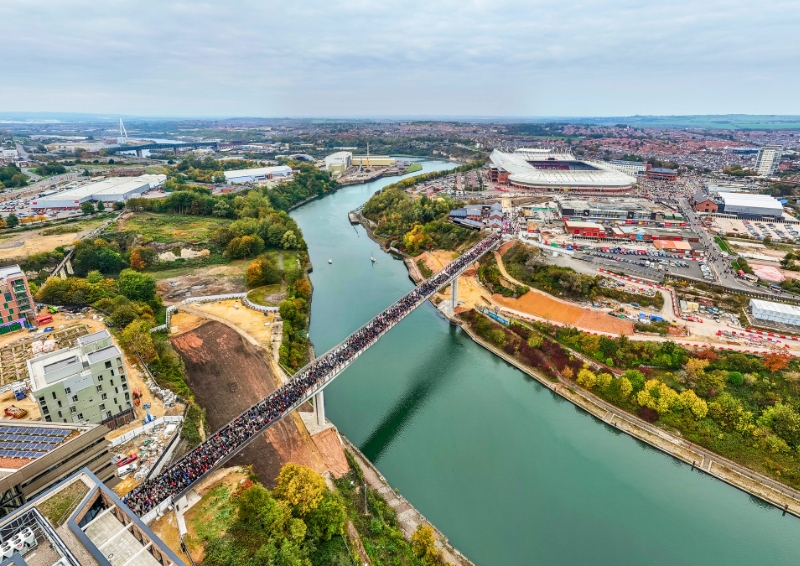
Taking home the award for projects costing over £5 million, Keel Crossing is an embodiment of the regeneration at Riverside Sunderland.
Connecting across the River Wear, the 250m, 9.5m wide bridge promotes active travel in the area.
Designed to incorporate the Keel Line, it has its own identity while complementing nearby bridges.
All parties collaborated to deliver technical excellence and value in a significantly constrained and challenging site.
The superstructure steelwork design achieved a 13% reduction in embodied carbon and reduced the number of lifts. Innovation included the pre-cast deck trolley system and cantilevered piling frame.
Temporarily opened for the Women’s Rugby World Cup, the project also delivered £4.18 million in social value.
Top project facts:
- Keel Crossing pays tribute to the area’s shipbuilding history. Its alignment and name are linked to The Keel Line artwork: granite slabs engraved with the names of every ship built in Sunderland. Its full length represents the biggest ship, the Naess Crusader.
- An upcycled piling gate from HS2 was used to fabricate a piling frame for works on the north and south piers.
Highly Commended: Redcar Bulk Terminal Upgrade
Located on the Tees Estuary within the Teesworks industrial zone, Redcar Bulk Terminal is one of the deepest terminals in the UK. It can accommodate vessels with a draft of up to 17m.
This design and build contract involved upgrading a section of the existing quay, ensuring the terminal is equipped to service the construction of a world-first carbon capture power plant.
By upgrading the quay, the structure will be able to achieve a load bearing capacity of 10t/m2, with the ability to handle components of up to 3,500 tonnes.
This will significantly reduce the impact of transporting materials on the surrounding highway network.
Top project facts:
- At its peak, the carbon capture power plant will have the capacity to generate 742 megawatts of low-carbon power.
- The terminal's innovative design is based upon transferring loads directly from the deck slab into the bedrock via piles measuring up to 65m in length, reducing overall loadings across the quay.
Certificates of excellence
The judges awarded certificates of excellence to the A19 Corridor Improvement Project and NEP 1 QUAY – Ash Barge Dock.
Medium Project Award: North and South Shields Piers
The North and South Shields Piers took home the prize for projects costing between £1 and £5 million.
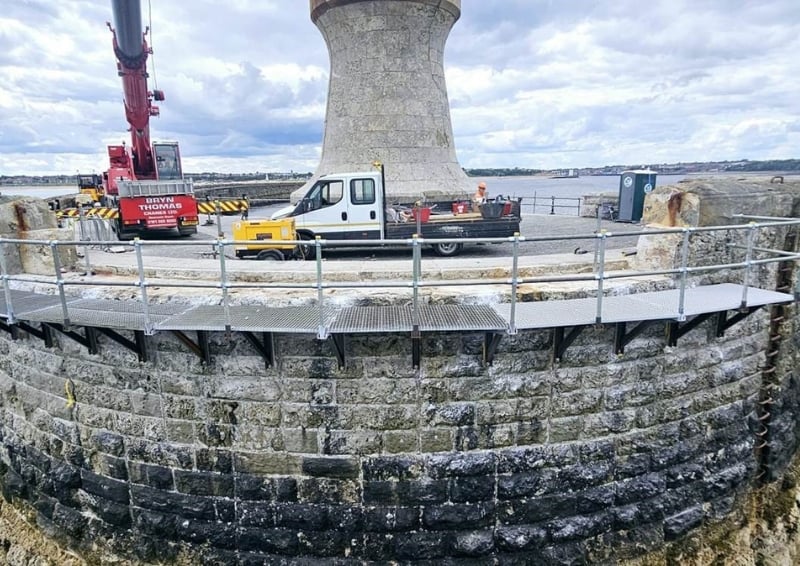
The piers were built to shelter the mouth of the River Tyne from the full force of the North Sea.
The first foundations of the North Pier were laid in 1854, one of the most challenging projects of its time.
These Grade II-listed landmarks were badly damaged by Storm Babet in 2023 and were closed to the public.
Delivered by a local team, the project involved restoring the piers using civil engineering techniques that, while preserving heritage, will provide protection from future storm events.
This ensures the public can enjoy these iconic structures for many years to come.
Top project facts:
- Delivered within a challenging marine environment, innovative temporary works were used to prevent further damage to both structures while ensuring safe access when undertaking repairs.
- The project employed collaborative working to design, price, procure and deliver the proposed works within an eight-month period. This involved early engagement of specialist delivery partners.
Highly Commended: Coundon Burn Pollution Risk Reduction
Northumbrian Water Group (NWG) identified this capital investment project to mitigate the pollution risk to Coundon Burn, a small watercourse tributary to the River Wear in the Durham region.
The main problem was that the local sewers couldn't carry enough water, with an deteriorating pipe bridge crossing making things worse.
The most efficient way to resolve this was to add underground storage, divert sewers from the watercourse and improve resilience by relining over 1km of existing combined sewer in an ecologically sensitive area.
Top project facts:
- To eliminate the risk of complex temporary works, about 400m of trenchless technology (no-dig) was used within ancient woodland, crossing a 10m-high embankment, passing a Grade II-listed former railway archway, and down a steep embankment.
- A detailed strategy meant the work caused no environmental damage despite the challenging site.
Small Project Award: West Park Flood Alleviation Scheme
The West Park Flood Alleviation Scheme took home the award for projects costing less than £1 million.
The scheme improved drainage, culvert operation and access to assets within a densely populated catchment.
Delivered over a 20-week programme with a value of £849,000, it addressed critical flood risk for 89 residential properties and key local infrastructure.
Through collaborative redesign, innovative construction methods and community-focused delivery, the project also upgraded landscapes and parks, leaving a positive legacy for residents.
Top project facts:
- When unrecorded utilities and tighter working spaces were discovered, the team redesigned the plan to install 1,350mm culverts within the existing structure. This prevented major excavation, road closures and programme delays.
- Using 9,466 litres of HVO (hydrotreated vegetable oil) cut down emissions by 22,800 kg CO₂e. This was supported by eco-cabins and biodegradable oils that minimised environmental impact.
- The team also delivered high impact social value, including woodland path improvements, allotment access upgrades and sensitive restoration of heritage features in Ward Jackson Park.
Highly Commended: Mitford Dam MIOS
In February 2024, a Measure in the Interest of Safety (MIOS) was raised at Mitford Flood Storage Reservoir (FSR) near Morpeth.
The inspecting engineer (IE) identified that mastic joints (where sealant is applied) between pre-cast concrete box culvert units had deteriorated. This meant water could leak out from the culverts, which could potentially erode the inside of the structure if left unaddressed.
The team worked quickly to replace the deteriorated joints within a strict 10-month legal deadline, despite poor weather and the added challenge of safely removing fish and crayfish from the culverts for the duration of the works.
Top project facts:
- Collaborative working was at the heart of the project. Specialist teams from the Environment Agency and framework partners carried out the project at speed to comply with a legal deadline and protect the ecological environment.
- The reservoir stores up to 1.4 million cubic metres to reduce the risk of flooding from the River Wansbeck to over 1,000 properties in Morpeth.
Certificate of Excellence: Don Valley Rising Main Rehabilitation
The judges awarded a certificate of excellence to the Don Valley Rising Main Rehabilitation project.
Special Award: Gateshead Viaduct Emergency Stabilisation and Pier Strengthening Works
The Gateshead Viaduct, linking the Tyne Bridge and A1 southbound route, had seriously deteriorated over its 50-year lifespan.
Water damage and concrete delamination (where thin layers of surface mortar become detached from the main body) meant that one failure could trigger collapse.
In December 2024, a test revealed a hollow pier with severely degraded reinforcement, turning a maintenance issue into an emergency.
The viaduct closed on 13 December, followed by the Metro line running directly beneath the compromised pier.
BAM was urgently appointed, and what followed was an excellent display of delivering a critical project in an emergency scenario.
Faced with significant time pressure and access limitations, the team adopted a pragmatic and “surgical” engineering solution that prioritised safety, resilience, and rapid delivery.
The works were completed within an extraordinary 12-week period, with zero HSE incidents despite the high-risk environment.
Individual Awards
The 2026 individual awards went to:
- North East STEM Ambassador of the Year Award: Andrew Walker
- Sustainability Champion Award: Paul Eckersley
- Fairness, Inclusion, and Respect Champion Award: Jessica Clark

Read more about the 2026 winners
The Robert Stephenson Awards 2026 were sponsored by CDM Recruitment.

Sustainable Development Goals:
You may also be interested in

- Type
- News
'The supply chain accounts for 90% of our carbon emissions,' contractor reveals
To decarbonise procurement, project teams can’t rely on engineers doing it ‘as a hobby’ – they need specialists.

- Type
- Infrastructure blog
Fewer potholes but more traffic jams – the future of England's roads
There’s much to welcome in the long-awaited third road investment strategy, writes former National Highways CEO Graham Dalton – but plenty to worry about, too.

- Type
- Awards and competitions
From highways schemes to eel screens, variety marks the 2026 North East awards shortlist
The annual Robert Stephenson Awards showcase civil engineering excellence from across the region.