





Global industry leaders gathered to discuss why it's crucial to have diversity in senior positions – and how to enable it.
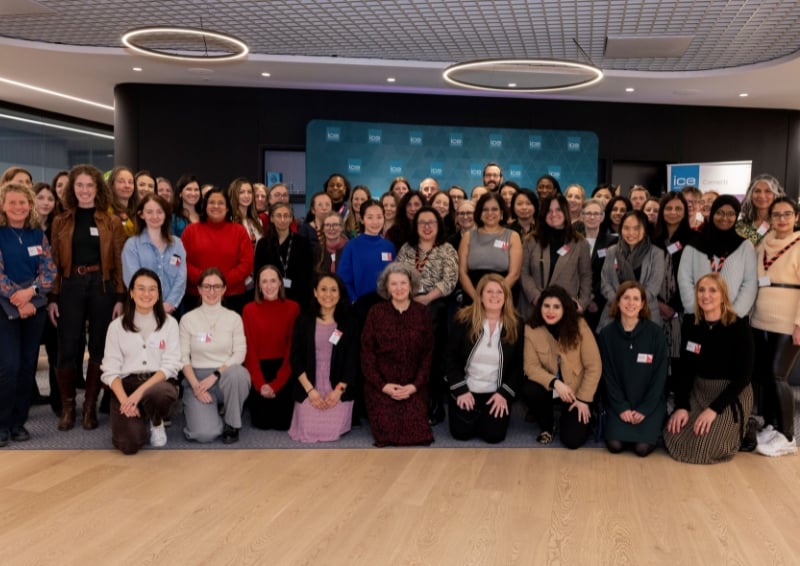
Successful and confident women don't appear out of nowhere. They are fostered and nurtured when organisations intentionally create space for them to thrive.
That was the main takeaway of this year’s ICE Connects: Women in Fellowship international webinar.
Marking International Women in Engineering Day (INWED), the panel event brought together leaders from across the world to discuss the importance of diversity in senior positions.
Panel chair Melinda Lutton, civil lead at Tonkin, pointed out that, when measures are in place to support women, the impact is undeniable.
Since launching in 2021, the ICE Connects: Women in Fellowship programme has seen an 88% increase in female Fellows, bringing the overall proportion of women in fellowship from 5% to 9%.
Studies show that getting women into these positions of influence has a positive impact on organisational outcomes.
Research from the Universities of Glasgow and Leicester found that companies with more than 30% female executives are more likely to outperform those with lower gender balance.
Furthermore, McKinsey has reported that organisations in the top quartile for gender diversity are 25% more likely to achieve above-average profitability.
It’s clear that women are a valuable asset in leadership positions, and the panel explored how the industry can support them getting there.
'Visibility matters'
For many women, leadership begins with mentoring and sponsorship.
Susána Ramjit, head of engineering, excellence and development at John Sisk & Son Ltd, reflected on the importance of stepping forward.
She noted: “Integrity for me means that you can’t ask your team to aim for something that you yourself haven’t reached, and visibility matters.”
Fellowship, she said, gave senior colleagues the confidence to back her ideas and helped turn her leadership impact into something her organisation could formally support.
She described the Fellows cohort as “a group that embodies diversity of thought by its very nature”. The value, for her, lies not only in recognition, but in the responsibility to bring others with her.
'If we don't show up at the top, we can't change what it looks like'
ICE Fellowship provides a platform to challenge established norms.
As Nicola Henderson-Reid put it: “If we don’t show up at the top, we can’t change what the top looks like.”
A recurring theme across the discussion was the shift in how leadership is understood. Nicola described becoming more deliberate in her approach, focusing less on individual performance and more on creating the conditions for others to succeed.
Leadership, she said, is about clarity, accountability and ensuring that people who are not yet in the room have space to contribute.
Susána said Fellowship affirmed her leadership style, strengthening her combination of warmth and technical authority, while connecting her to a wider network of professionals committed to ethical impact.
Anne Kerr, Asia executive advisor for Mott MacDonald, emphasised the importance of actively supporting others to step forward. This ensures leadership is not limited to those who already feel confident.
Across the panel, leadership was framed not as control, but as the ability to shape an environment where others can thrive.
'Employers control job titles, not credibility'
For Anne, Fellowship offered a new way to contribute to the institution.
Her advice was straightforward: “Just go and do it!”
She spoke about the importance of creating a professional voice, particularly in environments where the loudest voice is often the one that is heard.
Anne demonstrates this by regularly asking women in her network if they have achieved Fellowship yet.
These conversations often reveal women who were underestimating their capabilities or capacity to contribute, giving Anne the opportunity to challenge these limiting beliefs and encourage them to “just get on with filling in the form”.
When asked when they felt ready to apply for Fellowship, the panel agreed that readiness is not felt but decided upon.
They urged women to aim to demonstrate one chosen attribute rather than waiting to feel ready to demonstrate three or four.
Susána reminded attendees that employers control job titles, not professional credibility, and that an unconventional route to Fellowship does not make someone any less worthy.
The panel noted that waiting for permission remains a key barrier for many women.
Creating those moments of encouragement is therefore crucial, whether by reaching out to someone considering Fellowship or simply being the kind of person others feel able to approach for support and advice.
'Just go and do it'
If you're ready to take Anne's advice and "get on with filling in the form", then visit our Fellowship page to find out what you'll need.

Sustainable Development Goals:
You may also be interested in

- Type
- Webinar
Careers talks
Aimed at students, this series of seven webinars which runs until May 2027 will enable you to learn about professional life from recent graduates from across the industry.

- Type
- News
ICE Wales Cymru publishes manifesto amid ‘unprecedented and deeply concerning’ flood risks
Flood risk management was a top concern in the new Infrastructure in Wales 2026-2031: prosperity, growth and jobs report.

- Type
- News
RAEng names 4 leading ICE members as Fellows
The Royal Academy of Engineering (RAEng) has announced 75 individuals who are making outstanding contributions to the profession.