





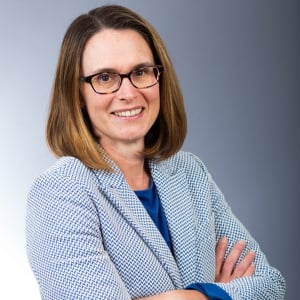
Emma White
Head of programme controls and management, Network Rail
Expertise
Project Management, DesignLocation
North WestMy highlights
The people that I've met along the way
The 'random' opportunities that have come along my career that keep pushing me as a professional
Exploring some amazing structures and projects, most recently, the Standedge Tunnel
I would recommend a career in civil or infrastructure engineering because…
It’s incredibly varied.
My career has gone in a different direction to that which I expected when I first started working.
There's something for everyone and so many opportunities regardless of strengths, areas of interest and personal circumstance.
Being an ICE member and therefore demonstrating commitment to the profession and your level of competency is widely recognised and respected. It’s always helped me to stand out.
What inspired you to become a civil engineer?
I was always curious about the world around me and the built environment.
I grew up in Nottingham with has lots of industrial heritage.
My grandad and dad also loved all things rail – we spent a lot of time as kids at the National Rail Museum in York and I think that stoked my interest in engineering generally.
I did work experience at school with Railtrack (as it was) and with a telecommunications company.
I much preferred rail as I was out and about, not stuck in a lab or an office all day.
This pushed me towards civil engineering as it looked like the career that would get me out onsite.
We asked Emma…
A day in my life
No two days are the same, which is why I enjoy what I do.
I could be preparing and giving reports to the board, working with my team on our next innovation or improvement project, solving delivery problems, mentoring and supporting colleagues or exploring our amazing rail heritage.
I love to see the whole picture, understand the why and how it all comes together.
My role really suits me and was a natural next step from project management.
I work at a programme level and can see all the individual component parts of major infrastructure improvements.
Not just the engineering, but also how schedules need to integrate, the impact on budget and resource and most importantly, how we can improve and do things better.
Complete this phrase: I’m a civil engineer, but I’m also...
A leader, colleague, friend, mentor, coach, line manager, programme manager, learner, wife, mum and carer.
Name one civil or infrastructure engineering myth you’d like to bust.
That it’s all about maths, concrete and hard hats. It’s not at all.
It’s incredibly broad and wide reaching and for me, is mostly about people.
Those that we impact through our projects, and those that you work with.
How does your role contribute to addressing climate change?
I have predominantly worked on transport infrastructure so it’s about making sure we have viable, affordable and practical travel choices that minimise the impact on the environment.
How does your role contribute to making the industry more diverse and inclusive?
Personally, I recognise that I'm a role model in a senior position in what can still be a male-dominated environment.
I treat people the way that I would like to be treated and for the most part have been, throughout my career.
I try to be myself and bring a different perspective to the table.
I call out poor behaviour when I see it, and I offer my time and experience whenever I can.
What role does digital technology play in your job?
It plays a big role and is something we’re trying to develop further.
In my area of programme controls, we collate vast amounts of data each reporting period.
We’re trying to use digital technology to help us process the data more quickly and give us better insights so we can improve the way we deliver projects and programmes.
What motivated you to become professionally qualified?
Right from university when we were first introduced to the ICE and professional qualifications, it’s just something I always expected I would do and have never really questioned it!
What does being professionally qualified with the ICE mean for your career?
Recognition and the additional opportunities it brings.
As you progress through your career, if your CV shows how you've moved through the different professional qualifications, it demonstrates your commitment and makes you stand out – particularly so as a woman.
How did the ICE and your employer support you to become professionally qualified?
My employer supported me with time and experience to grow and develop.
The ICE was particularly supportive while doing my Fellowship. It offered advice and signposting to others who had been through the process so I could obtain some guidance and encouragement.
How has being a member helped your career?
Being an ICE member and therefore demonstrating commitment to the profession and your level of competency is widely recognised and respected.
It’s always helped me to stand out and gives credibility, especially moving into more of a supporting function like programme controls and management.
What has achieving Fellowship meant for your career?
It sounds really strange but it renewed my confidence.
I haven’t worked on particularly famous projects, but I’ve still had an incredible career. When I looked back at what I'd done and achieved, it really hit home.
It made me really proud as there are still so few female Fellows.
I know I have inspired others not necessarily because of what I’ve done in terms of iconic projects, but how I’ve gone about it and that means a lot to me.
I’ve packed a lot in and done many different roles, and going through the Fellowship process made me reflect on all of that.
It reminded me that I do know what I’m talking about and that it isn’t all about concrete and hardhats.
What’s the biggest/most complex thing you’ve made out of Lego?
Tower Bridge, built with my daughter!
It took ages because it was a second-hand set which wasn’t sorted so we had to find the pieces as we went along, some were missing and one of the towers got dropped when it was being moved one day...
Anything else? i.e. personal causes, hobbies
Over the years, I’ve used my professional skills to help a number of charities write funding bids, policy documents and project manage various schemes.
I mentor a number of people too and have supported lots of colleagues and team members through their professional reviews – paying it back.
Emma's career path
I studied civil engineering at university immediately after completing my A-levels.
After taking a year out to travel, I then joined a graduate training programme with a consultant, which took me through to becoming a Chartered Engineer six years later.
During that time I gained as much design experience as I could across highways, structures, light and heavy rail. I also spent time out onsite through the projects I worked on and a secondment to a principal contractor.
Once chartered I moved to focus more on project and programme management.
After another year out travelling, I wanted to gain some client-side experience and so took a role in a local government highways department. It was invaluable experience to learn about funding, governance, and stakeholder management.
I’ve stayed on the client side ever since, moving first to National Highways as a programme manager, then project director.
Then, I became the programme management office director for the Regional Investment Programme (North) and then finally moving over from highway to rail in a similar role for the Transpennine Route Upgrade (TRU).
In among my different roles, I have also completed further qualifications and training to reflect the direction my career has taken. I'm a Chartered Project Professional and member of the Association for Project Management (APM).
I studied for a postgraduate diploma in leadership and achieved ICE Fellowship in 2023.
Major projects



Related Content

- Type
- ICE Community blog
How Bridges to Prosperity creates life-changing connections
Kit Wolverson, senior bridges engineer at Mott MacDonald, shares her experience helping build the Nyabihunyira Trailbridge in Rwanda.

- Type
- News
Nominations open for ICE president
Candidates who meet the requirements are invited to stand to represent the institution as a future president of the ICE.

- Type
- ICE Community blog
What's the foundation of flood resilience? Information
ICE President David Porter explains why being informed about flood risk is so important for the public and civil and infrastructure engineers.