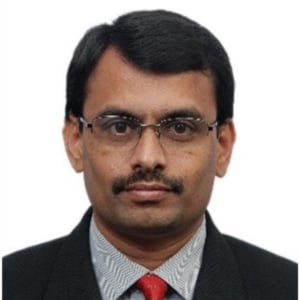


Kallol Saha
PhD scholar at the Indian Institute of Technology, Ropar (IIT Ropar)
Expertise
Construction, Design, GeotechnicalLocation
IndiaMy highlights
Working as a research scholar in a SERB-sponsored project in the field of rock engineering.
Working as an assistant professor at a centrally funded university, the National Institute of Technology, Sikkim
Working as an independent geotechnical engineering consultant for two years
A day in my life...
On a typical day, I start my morning at 7am with exercise, preparing for the demanding day ahead.
By 9am, I'm at my cubicle at IIT Ropar, where I dedicate my mornings to hands-on work.
My focus is on conducting crucial laboratory testing on rock joints, a core part of my research on shear wave behaviour.
After a lunch break at 12pm, my afternoon is dedicated to advanced numerical simulation.
I use 3DEC (three-dimensional distinct element code) to simulate wave propagation (distribution) through jointed rock masses. This is a vital step for detailed risk analysis in complex underground projects.
This work, along with my hands-on testing, is what truly defines my expertise in underground rock mechanics.
I usually leave the office around 7pm, balancing my professional commitments with my personal and family life.
A civil engineering career offers exceptional job stability because it's always necessary to maintain and upgrade existing infrastructure.
The field is also incredibly versatile, with diverse career paths in public and private sectors, including structural, geotechnical, and environmental engineering.
What inspired you to pursue civil engineering?
A pivotal moment in my career path was discovering the work of Dr Manoj Verman, Dr Deepankar Choudhury, and Dr G L Sivakumar Babu.
Their ground-breaking projects fascinated me and cemented my desire to pursue civil and infrastructure engineering.
We asked Kallol…
I would recommend a career in civil or infrastructure engineering because…
With a growing global population and increasing urbanisation, there's a constant demand for new and modernised infrastructure, so it is a stable career choice.
The industry's shift towards sustainability is also creating new opportunities for engineers.
Professionals are needed to design ecofriendly structures and systems, use green building materials, and develop resilient infrastructure to address climate change.
Complete this phrase: I’m a civil engineer, but I’m also...
I’m also a passionate follower of global developments and innovations happening in the world.
Name one civil or infrastructure engineering myth you’d like to bust.
“Civil engineering is all about physically demanding, onsite labour.”
In reality, the field heavily relies on advanced technical and computational skills.
This blend of hands-on experience and advanced technical ability shows that modern civil engineering is as much a digital and intellectual pursuit as it is a practical one.
How does your role contribute to addressing climate change?
My academic work relates to the stability and geo-mechanical performance of rock masses during tunnelling.
This research helps to develop safer and more efficient underground construction methods, reducing the environmental impact of large-scale projects.
My research and experience with geotechnical characterisation and monitoring protocols enable the design of infrastructure that is safer and more resilient to ground movement and environmental factors.
This is crucial for long-term sustainability as the climate continues to change.
How does your role contribute to making the industry more diverse and inclusive?
I have directly mentored and taught aspiring civil engineers, transferring academic knowledge and practical skills in geotechnical engineering and surveying to a new generation of professionals.
What role does digital technology play in your job?
Digital technology is central to my role, mainly through numerical modelling and simulation using software like 3DEC, PLAXIS 3D, and RS2 to analyse geotechnical systems.
I also use digital tools for hands-on applications, integrating Arduino systems and advanced measuring devices to enable real-time monitoring and enhance tunnel safety and efficiency.
I also use a range of other software, including CAD tools, design software, and MATLAB. These are essential for every stage of my work, from design and data analysis to project management and documentation.
What motivated you to become professionally qualified?
My desire to integrate academic research with hands-on experience, specifically within the fields of underground structures and seismic geotechnics, motivates me.
My commitment is demonstrated by my status as a Chartered Engineer with the Institution of Engineers, India (IEI).
What does being professionally qualified with the ICE mean for your career?
Being an associate member of the ICE (AMICE) is a stepping stone in my professional career.
Attending ICE webinars on the latest advancements in my domain keeps me motivated.
How did the ICE and your employer support you to become professionally qualified?
The ICE helped me a lot in guiding me to get AMICE membership.
I’m very grateful to them.
Kallol's career path
I studied a bachelor's degree in civil engineering from 2012-2016 and a master's degree in geotechnical engineering from 2016-2018.
I worked as a research fellow for a government-funded project for three years.
Currently, I’m on the verge of completing my PhD.
Major projects
Working on a Scientific and Engineering Research Board (SERB) sponsored project.