





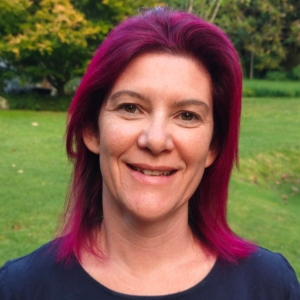
Tania Hyde
Technical director and circular economy lead, Beca
Expertise
Design, Environmental ManagementLocation
New ZealandMy highlights
Winning the Supreme Award under the Health and Safety at Work Act
Representing Aotearoa on a diplomatic visit to the Netherlands
Co-developing and gifting the Circular Design Framework to Engineering NZ to support how we embed circular and Te Ao Māori principles into infrastructure delivery
A day in your life
I often start my mornings cycling into work. I count myself lucky that I get to watch the sun rise over the nearby estuary, setting me in a good mood for the day.
My work spans across Aotearoa (New Zealand), Australia, and the Pacific. I help client bed indigenous circular economy principles into infrastructure projects.
One week could look like co-creating solutions with our Kaiwhakahaere (cultural advisors), mentoring colleagues, or presenting at a conference.
The next, I could be pulled into a bid or strategy session where a project needs a new way forward.
My focus is on shifting systems, not just solving problems. Challenging the status quo to create more connected, resilient outcomes for our communities.
A few days a week, I head to lunchtime Pilates to reset the body and mind.
Evenings and weekends are for reconnecting with my whānau (family), tending the garden, or sneaking off for a cheeky ride in the Redwoods.
If you want to be part of the transition, to help design a future that’s not only sustainable, but just, then this is a career where you can make real, lasting change.
What inspired you to become a civil engineer?
I always played with my brother’s Lego, not the Barbie dollhouse I got for Christmas. I never followed the instructions (much to my brother’s frustration), preferring to invent new worlds rather than build what was on the box.
When it came to careers advice, my best friend suggested I speak to her dad. “He builds stuff,” she said.
He was a chief civil engineer at an oil refinery, and I’m so grateful to him for opening the door. He arranged a two-week work placement when I was 16, and it changed everything. I was the third female onsite, a big deal at the time, and I absolutely loved it.
The scale, the problem-solving, the need for different thinking… I knew then this was where I wanted to be. That early experience gave me the confidence to pursue engineering, even when others told me to pick a “girl’s job”.
We asked Tania…
I would recommend a career in civil or infrastructure engineering because…
...we need bold, creative thinkers to lead climate action.
Engineers play a critical role in shaping how we live. From how we move to how we build and how we regenerate the natural systems we rely on.
In a warming world, that responsibility has never been more important.
Civil engineering gives you the tools to turn vision into action, to design infrastructure that’s resilient, low-carbon, and aligned with the needs of people and planet.
It’s not just about technical solutions, but about reimagining systems, listening deeply, and working in partnership with communities (and for me, indigenous communities).
If you want to be part of the transition, to help design a future that’s not only sustainable, but just, then this is a career where you can make real, lasting change.
Complete this phrase: I’m a civil engineer, but I’m also…
Dyslexic.
At the start of my education, I found this a challenge as I was seen as ‘slow, need to try harder, will march to her own tune’.
What I have discovered in later life is dyslexia is my superpower!
I get brough into conversations and problems because my team know I think differently, ask new questions and challenge the status quo.
Name one civil engineering myth you’d like to bust.
That engineers should focus only on finding the right answer/solution.
In reality, the most powerful engineering solutions come by asking the right questions, the ones that shift systems, challenge assumptions, and create space for new voices to be heard.
How does your role contribute to addressing climate change?
Climate change is a symptom of broken systems and engineering can be part of the cure, or the cause.
Everything I do now is focused on shifting the systems so that I leave my kids with a future they actually want to live in.
My role is about working with others to make sure the choices we make today lead to infrastructure that’s resilient, low-emission, and grounded in people and place.
That means embedding circular thinking, respecting indigenous knowledge, and asking the hard questions early. Not just about what we build, but why, how, and for whom.
How does your role contribute to making the industry more diverse and inclusive?
For me, diversity and inclusion isn’t a side project, it’s how I operate.
I’ve experienced firsthand what it’s like to be “the only one in the room” as a woman in engineering, as someone with dyslexia, and as someone who doesn’t always follow the expected path.
That perspective drives me to create space for others, especially those whose voices haven’t traditionally been heard in our industry.
True inclusion means questioning who’s at the table, how decisions are made, and what success looks like.
I see my role as making sure we keep asking those questions.
Innovation comes from when we make space for diverse ways of working and communicating.
I encourage others to bring their full selves to the table, and I actively mentor people to grow their confidence, find their voice, and shape their own path in the industry.
What role does digital technology play in your job?
Digital technology is a critical enabler, especially for accelerating the shift to circular economy.
In my work, digital tools help us map material flows, analyse mass data, and co-design better solutions, faster.
Whether it’s using data to inform reuse strategies, scenario modelling for infrastructure decarbonisation, or creating digital twins to support long-term adaptability, digital gives us the visibility and speed we need to rethink how we design, build, and regenerate.
I’ve recently worked with Planet Price to explore new metrics for assessing infrastructure, bringing full planetary boundary impacts to the table when decisions are made.
If we want to shift the system, we need to shift the conversation, and technology will help us do that.
What motivated you to become professionally qualified?
I always aspired to become a Chartered Engineer, but I wasn’t sure I’d make it.
I knew learning was difficult for me, and at times I doubted whether I could meet the standard.
But working with an organisation that supported and believed in me made all the difference.
It gave me the courage to stand out, back myself, and put my name forward, even when I wasn’t sure I ticked every box.
Becoming professionally qualified gave me confidence and credibility.
It helped me realise that my way of thinking, even if it didn’t follow the traditional mould, had value.
What does being professionally qualified with the ICE mean for your career?
At Beca, chartership and technical excellence are genuinely recognised and valued, and that’s helped me progress to technical director.
It’s enabled me to get involved in more complex, meaningful work and given me the platform to influence change across the organisation.
And whether you intend to or not, you do become a role model (especially for other women), and for those coming through who are looking to see what’s possible.
That’s a responsibility I take seriously.
I also feel a responsibility to the industry, to uphold and shape what professionalism looks like, and to help set the standard and different thinking for the next generation of engineers.
How did the ICE and your employer support you to become professionally qualified?
The ICE encouraged me to apply for Fellowship and I’m grateful they saw the value in my journey and contribution.
Beca fully supported my application, including acting as a sponsor, which meant a lot.
Chartership is genuinely valued across the organisation, and there are active support groups available to guide and mentor others through the process.
That culture of encouragement from the ICE and my employer gave me the confidence to put myself forward and share my story, even when I wasn’t sure I was at that level.
How has being a member helped your career?
Being a member of the ICE has given me access to a wealth of resources that have supported my professional growth, from technical papers and case studies to thought leadership on the future of infrastructure.
The ICE website has been an invaluable tool throughout my career (especially based in New Zealand), when preparing for chartership and Fellowship.
Whether it’s keeping up with best practice, exploring emerging topics like climate resilience and circular economy, or accessing structured learning. It’s helped me stay connected to the global profession.
It’s also reinforced the importance of lifelong learning, something that’s been central to my journey and how I support others coming through the profession.
How has achieving Fellowship changed your career?
Not sure yet, apart from lots of people saying congratulations!
I’m still getting used to the idea, to be honest. It’s one of those milestones you work towards quietly, and when it happens, there’s a moment of, “Oh wow… I actually did it”.
What I can say is that it’s prompted some great conversations with colleagues and reminded me that visibility matters (even when it makes me uncomfortable).
People notice, especially those coming through behind you.
It’s also made me reflect on the responsibility that comes with it, to use this recognition not just for myself, but to influence the industry in a positive way and help raise the bar for others.
What’s the biggest/most complex thing you’ve made out of Lego? How long did it take you?
The grey Lego castle, the one that opened up at the back, is still etched in my memory.
My brother got it for Christmas when I was about eight, but it took a few days to build… mostly because dad and grandad had to “check all the pieces were there” first.
Now I get to play Lego with my two boys, often just making things up as we go, no instructions needed.
It really is the ultimate circular toy. Lego is one of the best accidental circular economy case studies out there: durable, endlessly reusable, and never thrown away.
I’ve used it with CEOs and students alike to explain circular thinking, and I’ve yet to meet someone who doesn’t light up when they get to play with it.
Do you have any hobbies?
Outside of work, I’m happiest when I’m being creative or outdoors.
I love gardening, there’s something about growing your own food and tending to something over time. It connects me back to seasonality, patience, and care.
I also enjoy mountain biking with friends and family, especially in the Redwoods. It’s where I go to clear my head, challenge myself, and get a bit muddy.
A few times a week, I make time for Pilates to reset and look after mind and body.
And I’m always looking to learn, whether it’s through reading, online study, or exploring new ideas that challenge how I think and work.
These aren’t just hobbies, they’re how I recharge, reflect, and stay connected to the things that matter, especially when the scale of climate challenges feels overwhelming.
They help me stay focused on what I can influence, and keep moving forward.
Tania's career path
I’ve always taken the opportunities that have come my way, even when I wasn’t quite sure where they would lead me.
I’ve learned to say yes first, then work it out, using my values as a guide to shape where I’ve ended up.
I studied civil engineering at university and started out working on canal restoration projects in the UK.
Since then, I’ve moved to Aotearoa New Zealand, worked in infrastructure delivery and safety, and more recently shifted focus to circular economy and climate action across Aotearoa, Australia, and the Pacific.
My focus now is on indigenous-led climate action for the built environment, supporting approaches that are grounded in place, whakapapa (genealogy), and intergenerational wellbeing.
While my career path hasn’t been linear, it’s been values-led, driven by a desire to make a meaningful difference through the work I do (because my kids are holding me to account!).
That’s what I encourage others to do, understand your values and trust in them on your journey.
Major projects
- Collaboration with Engineering NZ to gift our Circular Design Framework. We developed the training module and reviewed the technical practice note to support its 22,000 members when considering climate action.
- Accessible streets - multi-modal interventions to support walking, cycling, micromobility, and public transport across Ōtūmoetai, Bellevue and Brookfield
- Western Bay of Plenty transport system plan - provides an accessible overview of the 30-year transport vision, NZ$4bn investment, project priorities, investment logic, multimodal access goals, and growth alignment
- Baypark to Baylink (B2B) Enabling Works: rail relocation


