





Society for Earthquake and Civil Engineering Dynamics
SECED promotes the study and practice of earthquake engineering, dynamics, and vibration issues like blast and impact.

Liquefaction assessments for tailings facilities have significant uncertainty, yet their results are typically presented as single-value deterministic factors of safety (FoSs) to compare against standard practice guidance. Some of the uncertainty is due to inherent material variability or measurement error associated with in situ testing techniques.
There is also a considerable – and often ignored – contribution from the transformation models used to convert in situ measurements to design parameters. For seismic liquefaction assessments, the key sources of transformation model uncertainty are from the empirical relationships relating standard penetration testing or cone penetration testing (CPT) results to cyclic resistance and residual undrained strength.
While the uncertainties associated with the material variability and measurement error will vary by site and can usually be reduced through additional investigation, the model uncertainties are constant and irreducible without further work.
This lecture will discuss how the transformation model uncertainties associated with CPT-based liquefaction assessments can be incorporated into design practice to estimate probabilities of failure and lead to very different outcomes than simply considering FoS alone.
SECED promotes the study and practice of earthquake engineering, dynamics, and vibration issues like blast and impact.
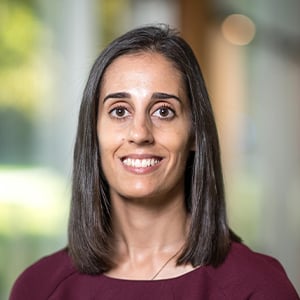
SRK Consulting
senior consultant

A series of web-based workshops aimed at graduate, student and technician members who are working toward EngTech, IEng or CEng with the ICE. These workshops provide advice and guidance on recording Initial Professional Development (IPD), broken down by attribute.

This is an opportunity for Technician members (EngTech MICE/FICE) and those wishing to become qualified at EngTech grade to come together to discuss issues that are important to technicians. This session explores becoming an ICE EngTech reviewer, with benefits and applying.

Join the ECNet for this technical webinar about the design of active travel infrastructure. Two Incorporated Engineers from Mott MacDonald will share key learning from a redevelopment scheme focusing on active travel, and a new layout for the design of CYCLOPS junctions.