





Offshore Engineering Society
The OES acts to promote interest and scholarship in both the scientific and applied aspects of offshore engineering.

Free
Free
This presentation explores the principles used to assess the stability of ships and floating offshore structures, drawing on the foundational concepts of metacentric height (GM), restoring moments and energy balance developed by Bouguer, Euler and Mosely.
These principles continue to underpin the intact stability criteria adopted by the International Maritime Organisation (IMO) and classification societies and form the basis of quasi-static stability assessments used across the marine and offshore industries.
The session will examine the role of mooring stiffness in stability assessments, highlighting the limitations of conventional commercial software that typically considers only buoyancy-related stability effects.
While this approach may be suitable for turret-moored FPSOs, where mooring stiffness has little influence on stability, it may not be adequate for other moored offshore structures where mooring systems can have a significant impact.
Focusing on floating offshore wind turbine structures (FOWTs), the presentation will review how catenary, semi-taut and taut mooring systems are incorporated into stability assessments under current industry rules and regulations.
It will also present intact and damage stability analysis results for a FOWT under various operating conditions, demonstrating that partial consideration of mooring effects can be detrimental to stability, whereas a full assessment can reveal a positive contribution from the mooring system.
The OES acts to promote interest and scholarship in both the scientific and applied aspects of offshore engineering.
Saipem Ltd
principal naval analysis engineer
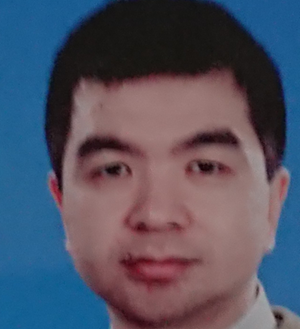
Hoi-Sang Chan is a Principal Naval Architect at Saipem Ltd. He has worked for various projects of transportation and installation/removal of jackets and topside modules since 2012.
He has been responsible for the development of in-house software for vessel response forecasting, intact and damage stability and scantling calculations of floating offshore wind turbine structures, ultimate limit state and fatigue limit state structural analysis.

A useful five session course delivered by industry experts focussing on key aspects of finance in Civil Engineering.

It is not unusual that project delivery teams are globally split, with different time zones and cultures. It is also not unusual that teams may come together at times to accelerate, consolidate and celebrate key projects.
Diverse teams feed into successful projects in many ways, but understand…

CIHT Cymru Wales is excited to offer this joint CPD webinar on Side Road Zebras in collaboration with ICE, CILT, TfW and Welsh Government. We will hear on how we go from policy to implementation on side road zebras and the benefits these can deliver in road safety and accessibility.