





ICE Knowledge Hub
Access the very latest and best CPD content to help you grow your knowledge and skills.
Sign in now

The ICE Research and Development Enabling Fund financially supports research that’s helping address global challenges – here are four examples to inspire you.

Every great engineering project started with a question.
Can we build the tallest skyscraper in the world? How about a tunnel that connects countries under water? Or railways that trains levitate on?
As the effects of climate change have worsened, and our structures have weakened with age, some of these questions have shifted.
Can we heat buildings more sustainably? Can we reduce the carbon footprint of construction? Can we better protect our historic structures?
Turning these questions into real-world solutions takes more than a few good ideas. It requires research, testing and often, funding.
For over 30 years, the ICE’s Research and Development Enabling Fund (ICE R&D Fund) has offered that support.
These four projects exemplify what can happen when you take a chance on your theory.
What if we told you that the foundations of your building could heat it, too?
When piles (long, slender columns) are constructed in the ground to support an overlying structure, you could also get them to draw on the heat stored under the surface (geothermal energy) and use that to warm or cool your home.
But to use these innovative piles effectively, heat needs to be able to travel through them quickly.
Supported by the ICE R&D Fund, researchers from the University of Leeds tested different concrete mixes to see how well they conducted heat.
They found that lower porosity (has fewer tiny holes and is more solid throughout) and higher strength concrete was more conductive. So were mixes that used quartz aggregates instead of limestone, and those using a composite slag cement.
By finding ways to make these energy piles more efficient, these researchers have taken us one step closer to more sustainable heating and cooling.
Steel is 100% recyclable, but is it reusable?
Producing it is a very energy and carbon-intensive process. It’s estimated that the global steel industry is responsible for 11% of all CO2 emissions.
Funded by the ICE, a research team from Expedition Engineering explored opportunities to reuse steel in bridge design.
Case studies show that it can be done – from entire spans reused with minimal changes (like for the Lucie Bréard footbridge in Paris) to components repurposed from other industries.
The team’s initial analysis suggests that reused steel is generally more cost-effective than new steel, despite added costs for testing, reconditioning, and transport.
Supply chains are also expanding, with companies like Cleveland Steel making reclaimed components more accessible.
To unlock the full potential of steel reuse, more guidance, testing and training will be essential.
If adopted at a wider scale, it could help the industry tackle one of the highest sources of emissions in the sector.
Some of the most beautiful ceilings in the UK are made from fibrous plaster - a mix of twisted jute fibres and plaster.
Decorative designs (including cornices and bas-reliefs) add character to iconic venues around the country, such as the Royal Opera House in London.
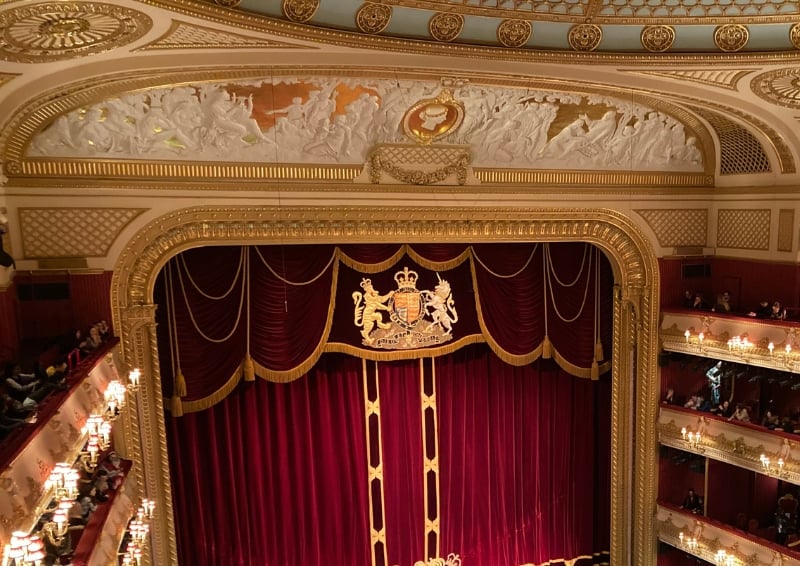
While many have survived for over 100 years, several recent collapses have highlighted how little we know about their strength and how they deteriorate over time.
ICE-funded research led by a University of Oxford team used lab testing and field monitoring to study how fibrous plaster behaves and fails, assessing how cracks form and grow inside the material.
They even tested the ceiling in the ICE’s own library, at One Great George Street in London, to check for any potential failures.
Their research helps us better understand fibrous plaster and offers new, non-destructive ways to monitor ceilings made from this material.
This can help owners and engineers identify problems early and prevent collapses so that we can safeguard them for future generations.
Skyscrapers like the Burj Khalifa aren't just designed to inspire awe. They are also made to withstand wind and natural hazards such as earthquakes.
In the past, engineers achieved this by making the structures bigger and stronger, but this uses more materials and has a higher carbon footprint.
There’s now a more efficient solution, where engineers incorporate systems that can move.
Researchers from Imperial College London, supported by the ICE R&D Fund, have explored the possibility of using a part of the building itself to achieve this.
This section is allowed to move slightly – with other elements called dampers and springs on hand to control and absorb that movement – which reduces overall swaying.
To test their idea, the research team used a scaled model of a 300m-tall building and ran it through wind tunnel and earthquake simulations.
The results were promising, presenting an opportunity to significantly save on materials and costs while still prioritising building safety and resilience to natural hazards.
Though these projects tackle very different challenges, they’re all helping guide us to a more sustainable and resilient future.
They also show that an idea you have today could turn into an industry solution in the future – all it takes is some support to get it off the ground.
When you’re ready, the ICE R&D Fund is there to help.
The ICE R&D Fund is now welcoming applications for research that focuses on artificial intelligence (AI).
“It’s essential that we explore ways of deploying AI ethically to boost productivity for the construction sector, deliver infrastructure and improve built asset management,” says Professor Priti Parikh, chair of the ICE Research and Development Enabling Panel.
Think AI can improve infrastructure design and delivery?

Candidates who meet the requirements are invited to stand to represent the institution as a future president of the ICE.

The Infrastructure Client Group's 2026 benchmarking survey shows progress, but greater focus is needed on value, data quality and delivery outcome.

Andy Burnham has brought an injection of energy into Britain’s top job. But what does his tenure spell for infrastructure?
