





There are six main types of bridges – how many do you know?

Few structures inspire as much awe as bridges. They sweep across seemingly impossible distances with structural elegance that leaves one wondering: how do they work?
The answer is a delicate dance of forces that enable the deck – where you'd walk, cycle or drive on – to transfer the loads placed on it to supporting elements, be they beams, arches or cables.
How they achieve this very much depends on the bridge. Here's our general knowledge guide to six of the most common types, starting from those that span shorter distances, to those that can go far.
1. Beam
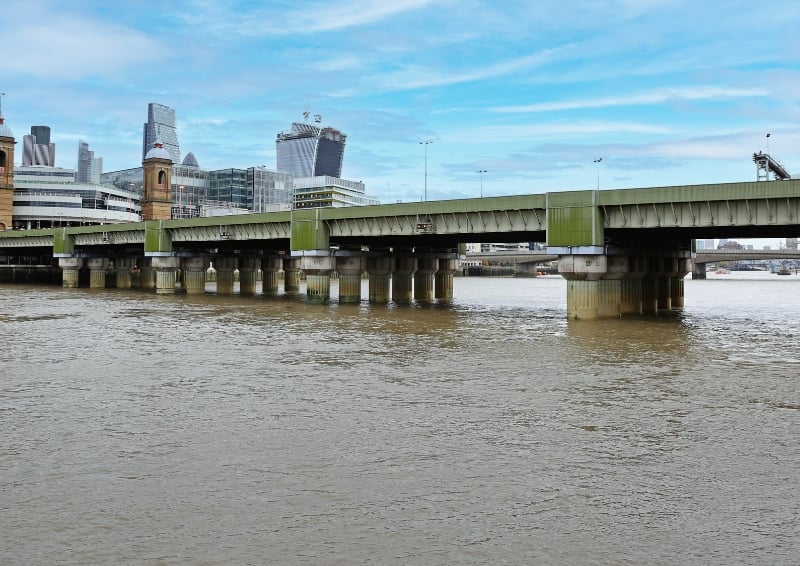
One of the oldest and simplest forms of bridges, they consist of a horizontal beam held up by supporting structures called abutments on either end.
To achieve greater lengths, vertical piers can be added throughout to support the structure – like a series of small bridges joined together.
The beams carry the loads to the piers and abutments, which then transfer them to the ground.
They're typically used to cross shorter distances, and are a common pick for footbridges, pedestrian walkways or motorway overpasses.
The Cannon Street Railway Bridge in London, which opened to traffic in 1886, is a type of beam bridge.
It was designed by two of the ICE's Past Presidents – Sir John Hawkshaw and Sir John Wolfe-Barry – to carry trains over the River Thames.
2. Arch
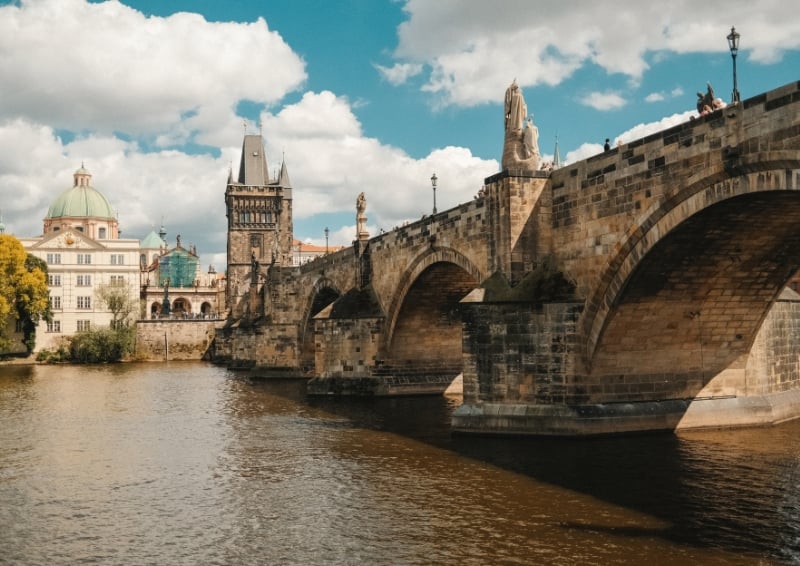
If you've ever visited Prague in Czech Republic, you likely marvelled at the almost-mystical Charles Bridge. Completed in 1402, this structure is known as an arch bridge.
These types of bridges employ one or more arches to distribute downward pressure on the deck towards the bridge piers or abutments through a type of force distribution known as compression.
Arch bridges have high levels of strength and resistance, but to build them at greater distances, longer or more arches are required. This can increase construction costs and complexity.
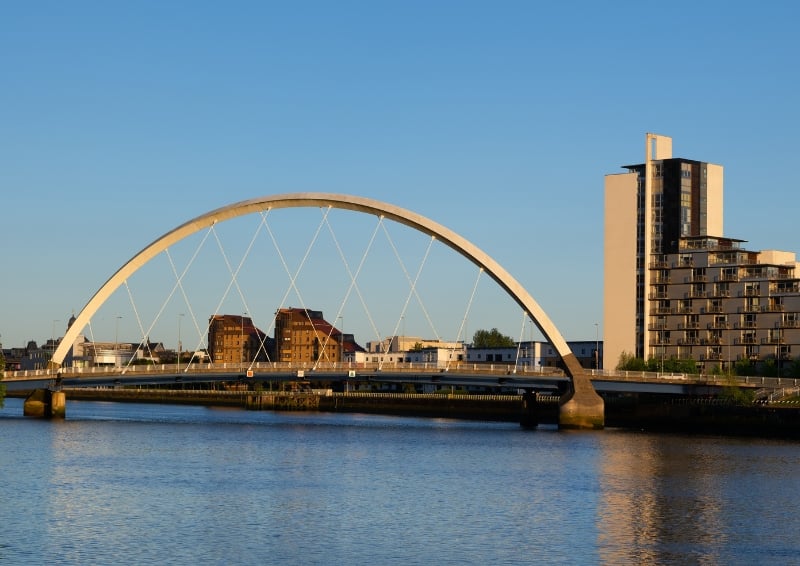
There's another type of arch bridge where the arch structure is on top of the deck, rather than beneath it. These are known as bowstring or tied-arch bridges, and as well as compression, they distribute force in tension through the ties between the ends of the arch.
3. Truss
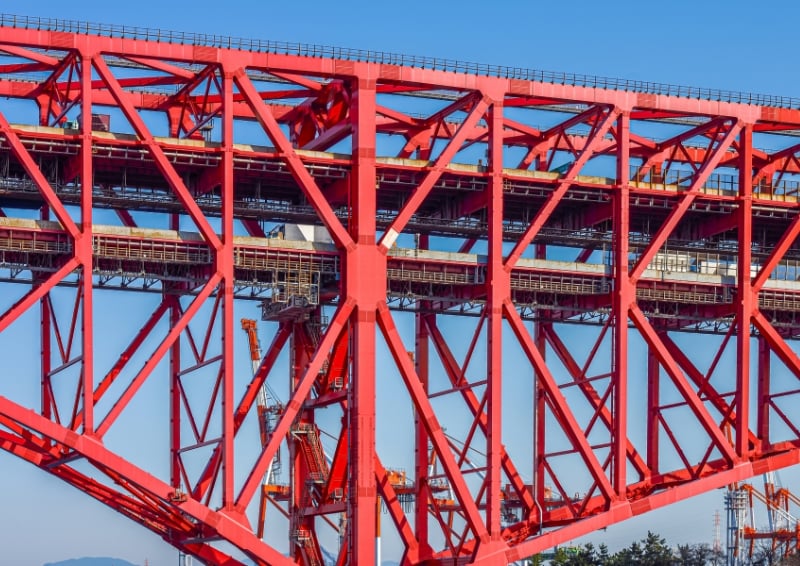
Truss bridges use one of the most structurally efficient shapes of all: the triangle.
Interconnected triangular sections, called trusses, flank the main deck to support it by distributing the forces applied on it.
Their structural arrangement means they can be built out of lighter materials, but they must be precisely constructed to ensure weight is distributed as intended.
This style of bridge has been around for centuries. Some famous examples include the Quebec Bridge in Canada and the Minato Bridge in Japan. These two bridges are also cantilever bridges.
4. Cantilever
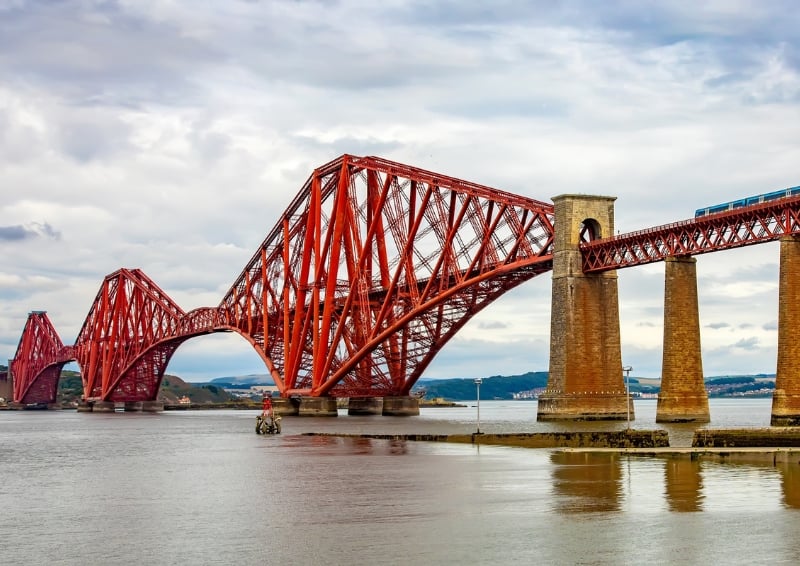
A cantilever is a structure that is only supported at one end. These form bridges by reaching towards each other from one end to the other.
They're suitable for deep gorges or other difficult terrains where constructing additional piers wouldn't be suitable.
Cantilever bridges can also be beam or truss bridges. For instance, the Forth Bridge in Scotland is a famous example of a cantilever trussed bridge.
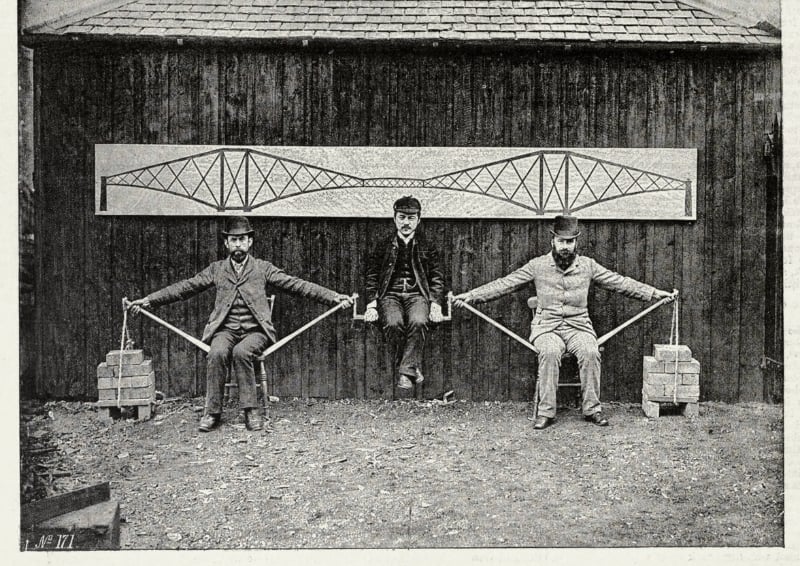
ICE Past Presidents Sir Benjamin Baker and Sir John Fowler once demonstrated how the mechanism works.
A famous photograph depicts them acting as the cantilevers, while Kaichi Watanabe – a Japanese civil engineer who studied and worked in Scotland – represents the load on the central span.
5. Cable-stayed
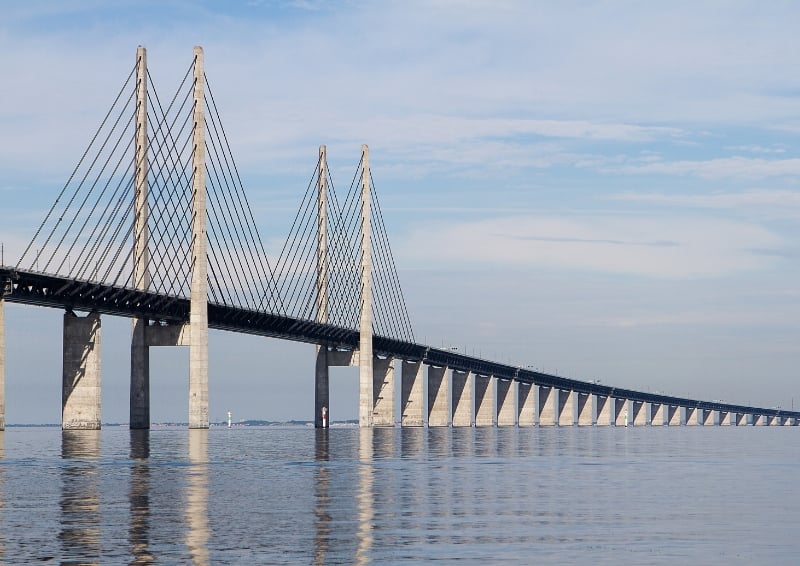
The awe-inspiring Øresund Bridge that connects Denmark and Sweden is partly cable-stayed, meaning it employs cables – usually made from steel hangars – to support the deck from above.
The cables fan out from vertical towers and attach directly to the deck, carrying the deck's weight and traffic loads to the towers.
Early concepts of these bridges date back centuries, while remaining a popular design today. They can span large distances – not quite as far as a suspension bridge – and can be relatively fast to build.
The tallest bridge in the world, the Millau Viaduct in France, is another example.
6. Suspension
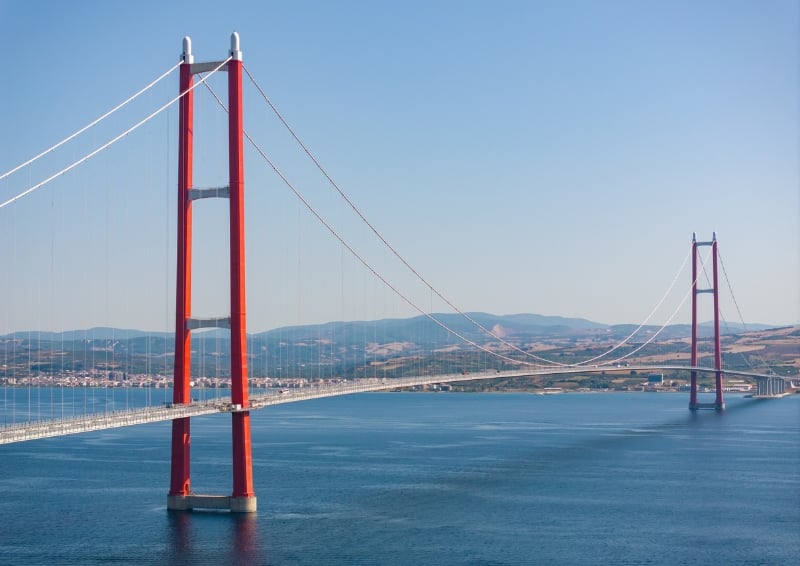
Some of the most famous bridges in the world are suspension bridges: the Golden Gate Bridge, the Brooklyn Bridge, the Akashi Kaikyo Bridge and the 1915 Çanakkale Bridge (the longest in the world).
Suspension bridges also use cables and towers to support the loads on the deck. But, unlike cable-stayed bridges, they feature a main cable that hangs between the towers, from which vertical cables are suspended to support the deck.
Cables are usually made from woven steel wires with zinc coating to protect them from rust.
The bridge towers transfer loads into the ground, while the main cables are anchored at either end of the bridge.
These bridges can span very long distances, as the cables enable them to go further with fewer piers.
The longest one proposed would cross 3,300m to bridge the gap between Sicily and the Italian mainland, across the Messina Strait.
The list continues
While these six types of bridges would cover the vast majority you'd meet on your journeys, the list doesn't end here.
There are bridges that move – like the drawbridges of old, or bascule bridges. The Tower Bridge in London is one of the most famous examples.
Some bridges have decks that lift vertically to allow ships to pass below, such as the Arthur Kill Bridge between New Jersey and New York in the US.
From the six that we've shared, there are some bridges that combine various elements to create bespoke designs that fit their surroundings.
But they all share the same purpose: connecting communities by enabling them to more easily reach one another.
Bridge glossary
- Abutment: the element that supports the end of a bridge
- Cantilever: a beam supported only at one end
- Cutwater: diamond-shaped extensions to bridge supports which offer less resistance to the flow of water
- Deck: the traffic-carrying surface of a bridge
- Facing/façade: an outer layer covering the surface of a wall or other construction
- Parapet: a low protective wall along the edge of a roof, bridge or balcony
- Pier: intermediate vertical support for a bridge superstructure
- Span: the distance between the supports for a structure
- Spandrel: the space between two arches or between an arch and a rectangular enclosure
- Superstructure: the part of a structure that is above ground. Below ground is known as sub-structure

You may also be interested in

- Type
- ICE Community blog
What's the foundation of flood resilience? Information
ICE President David Porter explains why being informed about flood risk is so important for the public and civil and infrastructure engineers.

- Type
- Awards and competitions
It’s electrifying! South Wales Metro track transformation bags top award
The electrification of the Core Valley Lines impressed the judges at the 2026 British Construction and Infrastructure Awards.

- Type
- Civil Engineer blog
The long-term consequences of a really good idea
Good decisions made at speed can lead the industry down unintended paths, writes Steven Yule, ICE country representative for the UAE.