





ICE Knowledge Hub
Access the very latest and best CPD content to help you grow your knowledge and skills.
Sign in now

The ICE and the Royal Institution of Chartered Surveyors (RICS) have signed an agreement to support the industry to adopt PAS 2080 and the RICS WLCA standard.
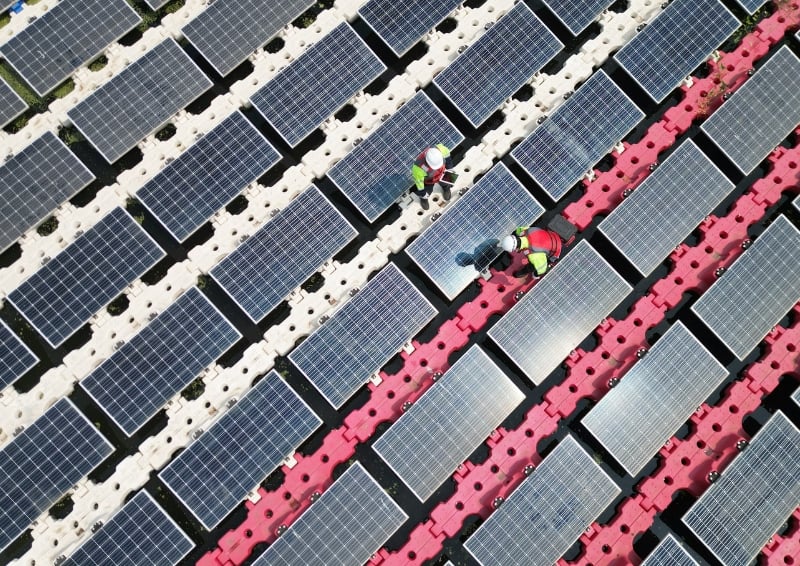
Standards play an essential role in the global effort to reduce lifecycle carbon emissions in the built environment.
PAS 2080:2023 Carbon management in buildings and infrastructure, supported by ICE guidance, and the Royal Institution of Chartered Surveyors’ (RICS’) Whole life carbon assessment (WLCA) for the built environment, global, 2nd edition are two such standards.
Together, they provide a consistent and complementary framework to measure and manage lifecycle carbon emissions across new and existing buildings and infrastructure assets.
They also support more consistent, data-driven decarbonisation of the built environment, and work hand in hand to lower carbon emissions.
PAS 2080 specifies the process and requirements to manage carbon across the entire building and infrastructure lifecycle.
It outlines the necessary roles and governance processes and establishes principles for leadership, decision-making, collaboration and ongoing implementation and improvement across the value chain.
It applies systems thinking to the carbon management process. Project teams can track performance, manage the carbon budget and make reduction in carbon emissions a shared responsibility.
This standard defines a consistent methodology for measuring and reporting carbon emissions from the design phase through to deconstruction, reuse or recycling.
It provides a comprehensive means to assess, quantify and report embodied, operational and user carbon – a unique feature of the standard that makes it an essential tool for decarbonisation-related decision-making.
This comprehensive approach ensures that no significant sources of emissions are missed and that the total carbon footprint of the asset is calculated.
The second edition of the standard came into effect on 1 July 2024 and is aligned with ISO/TC 59/SC 17 Sustainability in buildings and civil engineering works and EN standards in the field of sustainability of construction work that also address emissions.
It also aligns with ICMS, 3rd edition, meaning users of the standard can measure and report carbon and lifecycle costs in a comprehensive and integrated manner.
When adopted together, these two standards help the sector embed carbon measurement and management into core design, procurement, construction and post-construction workflows, making processes more streamlined.
Project teams can make informed decisions about lifecycle carbon management and act more consistently on those decisions.
Communication between stakeholders is improved as workflows are more aligned, and stronger accountability across project teams becomes possible.
This integrated standards-driven framework promotes decarbonisation based on data and technical assessment across the full value chain.
It helps organisations communicate carbon targets to stakeholders, demonstrate competence in carbon measurement and management, and keep track of regulatory and client expectations.
The two standards support global initiatives such as Buildings Breakthrough and emerging carbon labelling and certification schemes, helping promote low-carbon construction that meaningfully contributes to climate action.
The ICE and RICS are committed to harmonising our messaging around the WLCA standard and PAS 2080 to help bring clarity and confidence for all stakeholders, including clients, regulators and industry professionals.
By clearly articulating how these standards relate to each other, we can remove barriers to adoption and support their widespread implementation across the built environment sector.
We strongly encourage industry professionals to adopt and use these two standards as part of a unified and integrated framework for decarbonisation.
This will allow the industry as a whole to better work towards meeting decarbonisation targets.
This message of collaboration between our two professional bodies emphasises our shared commitment to our members and the broader industry to standards alignment and joint climate action.
Working together across industry enables us to more effectively move towards a built environment that is sustainable, resilient and equitable.


ICE President David Porter explains why being informed about flood risk is so important for the public and civil and infrastructure engineers.

The electrification of the Core Valley Lines impressed the judges at the 2026 British Construction and Infrastructure Awards.

Good decisions made at speed can lead the industry down unintended paths, writes Steven Yule, ICE country representative for the UAE.