





Earthquake engineering experts Emily So and Ziggy Lubkowski answer technical questions in an accessible way.
On Monday 10 August 2026, a 7.4-magnitude earthquake shook Colombia, the strongest the country's experienced this century.
The epicentre was reported in San Jose Del Palmar, which is 400km west of the capital, Bogota. Tremors were felt across an enormous area, reaching as far as Venezuela, Ecuador and Panama.
It's been reported that over 200 people have lost their lives, with over 2,500 injured. Over 45,000 homes were reported as damaged, with 9,215 destroyed. 140 buildings collapsed.
Why do buildings collapse during earthquakes?
The shaking from an earthquake is transferred from the ground to structures built on top.
Those that have not been designed with the required ductility or flexibility, could suffer harm or even collapse.
Damage could range from superficial cracks in non-loadbearing components of the buildings to more serious fractures. In reinforced concrete buildings, columns can buckle under the excessive forces of earthquakes if they aren't designed appropriately.
It can lead to complete collapses when critical joints between vertical and horizontal members of a building fail.
What does an earthquake emergency response consist of?
The most important aspect of an early emergency response is to identify where the trapped and injured may be within the affected area and try to help.
There are international search and rescue teams ready and able to help local authorities to administer these efforts.
A UN-classified urban search and rescue (USAR) team, such as SARAID, will not deploy unless they receive a request for assistance, either via the UN or directly via responsible officials.
These efforts must be coordinated by local emergency managers so that help is welcomed, not an added burden on the already stretched system. And, to make sure aid is distributed in the most effective way possible.
Follow SARAID for updates on the earthquake and the search and rescue efforts.
How can engineers help with the emergency response?
There will be many people who will be displaced after an earthquake.
Engineering expertise is required to provide support in identifying locations for camps, setting up temporary shelters, establishing water and sanitation supplies, and coordinating logistics.
Engineers will also be deployed to assess damage at specific essential services facilities, key transports links including the railway and airports, as well as a more general damage assessment.
Can buildings be earthquake-proof? And are there building codes that guide this?
Buildings can be designed to resist earthquake loads, but there will always be some risk of significant damage or collapse. In seismically vulnerable countries, earthquake-resistant designs are part of the building codes and design guidance.
The level of requirements would depend on the location of the building, the underlying soil conditions, and the acceptable level of risk to the building.
Some critical facilities like nuclear power stations would have a much stricter design criteria than single house dwellings, for example.
Is it possible to retrofit existing buildings to be earthquake-proof?
Yes, there are many examples around the world of retrofitting old heritage buildings and those that were designed before building codes were developed.
This can be done by introducing strengthening elements, such the addition of shear walls, or wall anchors.
What other types of infrastructure are likely to be affected by earthquakes?
In effect, anything that stands in the way of the path of the energy that spreads out during an earthquake, whether it’s the natural or built environment.
There are different methods of making infrastructure earthquake-proof, and again the proposed approach would depend on the location, its context, and underlying soil conditions.
What’s the process of rebuilding after an earthquake?
Rebuilding after an earthquake takes time.
Depending on the size of the event and the location of the earthquake, the severity and the geographical extent of the damage would vary.
For catastrophic events, the earthquake would leave hundreds of thousands of people homeless and in desperate need for shelter and housing. Not to mention repairs to utilities and critical infrastructure.
To put things in perspective, the UK builds around 200,000 homes a year.
One of the key requirements of rebuilding is in balancing speed vs deliberation. There is no magic formula, but public consultation and strong governance can lead to a successful outcome.
How are earthquakes measured?
Earthquakes are measured in terms of the amount of energy they release.
Scientists typically measure an earthquake’s ‘size’ using the moment magnitude scale, instead of the older but more renowned Richter scale.
Moment magnitude numbers scale such that the energy release increases by a factor of approximately 32 for each whole magnitude number.
Watch the animation to learn more.
Insights from previous earthquakes
What happened?
At around noon local time on 28 March 2025, a 7.7-magnitude earthquake struck Myanmar (previously known as Burma). Several aftershocks took place, the largest having a magnitude of 6.4.
The seismic event was also felt in India, China and Thailand, where an unfinished high-rise building has collapsed in the capital, Bangkok.
A state of emergency was declared in Myanmar, with reports of severe damage to buildings and roads.
It's estimated that there were between 3,600 to 5,350 fatalities and over 11,000 injuries in Myanmar.
Are earthquakes common in Myanmar?
Myanmar is in a region prone to earthquakes, with a long history of seismic events.
March 2025's earthquake occurred on a known major active fault, the Sagaing Fault, which runs south to north through the country.
This is a 1,200km-long right lateral strike-slip fault, meaning that as you look at the fault, the opposite side moves horizontally to the right.
It’s similar in nature to the San Andreas fault in California and the North Anatolian Faults in Türkiye.
Large and damaging earthquakes occurred along the fault in 1931 (7.5M), 1946 (7.3 and 7.7M), 1956 (7M), 1991 (6.9M) and 2012 (6.9Mw).
Why was the earthquake felt beyond Myanmar and into places like Thailand?
Despite the distance between Mandalay, Myanmar and Bangkok, Thailand, it’s not surprising that the earthquake was felt strongly there.
This is probably due to the soft clay deposits underlying the Thai capital strengthening and amplifying the ground movements.
This is an effect known as site response.
It will have affected taller structures, which would sway as a consequence. Other cities that have experienced similar effects include Mexico City, Dubai and Singapore.
Why were so many buildings damaged?
It's estimated that over 157,000 buildings were damaged in the earthquake.
In Myanmar, buildings are generally low rise and made of timber, masonry and reinforced concrete.
This can make them vulnerable because timber and masonry can be brittle. Reinforced concrete, if not designed and constructed well, can result in poor performance.
What happened?
At around 7am local time on Monday, 8 June 2026, a 7.8-magnitude earthquake struck in the southern Philippines, off the coast of Mindanao island.
At least 35 people have been confirmed dead, with footage showing that buildings have collapsed.
More than 130 aftershocks have been recorded, ranging from 1.3-6.7 in magnitude.
The earthquake triggered tsunami alerts in the Philippines, Indonesia, Japan and Australia, though some of the warnings were called off a few hours later.
Are earthquakes common in the Philippines?
The Philippines is vulnerable to earthquakes due to its position on the Pacific 'Ring of Fire'.
This is a 40,000km (25,000mi) long chain of volcanoes and seismically active sites that outlines the Pacific Ocean. It's responsible for 90% of the planet's earthquakes.
Many of the Earth's tectonic plates meet along this outline, and they are "constantly sliding past, colliding into, or moving above or below each other," according to National Geographic.
This triggers earthquakes, but also volcanic eruptions and deep ocean trenches.
What happened?
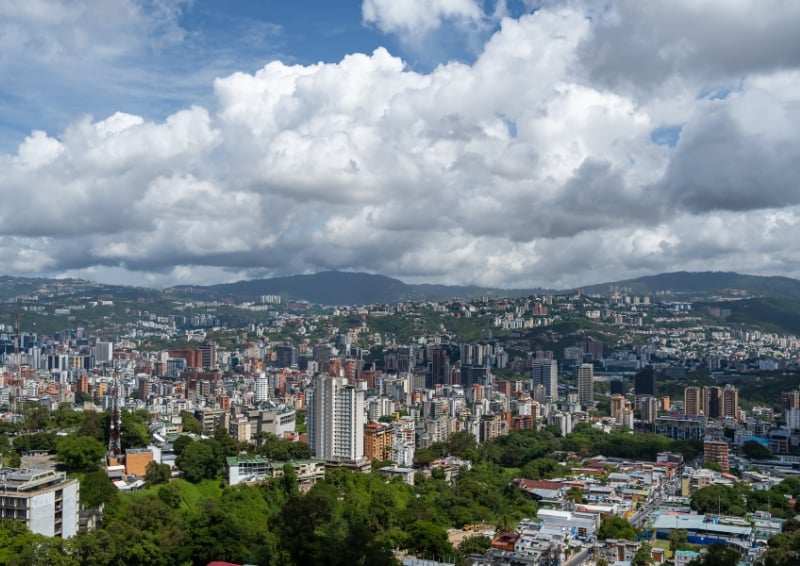
On Wednesday 24 June 2026, two earthquakes struck Venezuela less than a minute apart (at around 6pm local time).
Registering in at a magnitude of 7.2 and 7.5, the latter was the strongest to hit the country in over 100 years.
The earthquakes were shallow, at less than 30km underground, which can cause more damage as the shock waves have more energy when they reach the surface. A substantial amount of buildings in Caracas and the seaside city of La Guaira were damaged or destroyed.
What happened?
On Tuesday 28 July 2026, a 6.8-magnitude earthquake struck south of Kumamoto, Japan. As of 3 August, 38 people had been confirmed dead, with 98 injured and over 8,000 evacuated.
Relatively few buildings collapsed due to Japan's strict construction standards for earthquake resilience, with requirements raised several times over the last few decades.
The earthquake left tens of thousands of people without power and water. This heightened risks of dehydration and heatstroke as search and rescue operations took place under temperatures of high 30s°C (and in some places, 40°C), with high humidity and restrained access to air conditioning and water. One woman is believed to have died of heatstroke while taking shelter in her car.
Japan is located on the Pacific 'Ring of Fire' of volcanoes and seismically active sites and has recorded 20% of the world's 6+-magnitude earthquakes.


You may also be interested in

- Type
- ICE Community blog
What's the foundation of flood resilience? Information
ICE President David Porter explains why being informed about flood risk is so important for the public and civil and infrastructure engineers.

- Type
- Awards and competitions
It’s electrifying! South Wales Metro track transformation bags top award
The electrification of the Core Valley Lines impressed the judges at the 2026 British Construction and Infrastructure Awards.

- Type
- Civil Engineer blog
The long-term consequences of a really good idea
Good decisions made at speed can lead the industry down unintended paths, writes Steven Yule, ICE country representative for the UAE.