





There were some positive signs for infrastructure in today's Budget, but delivery will be the real test. The ICE breaks down the key takeaways.
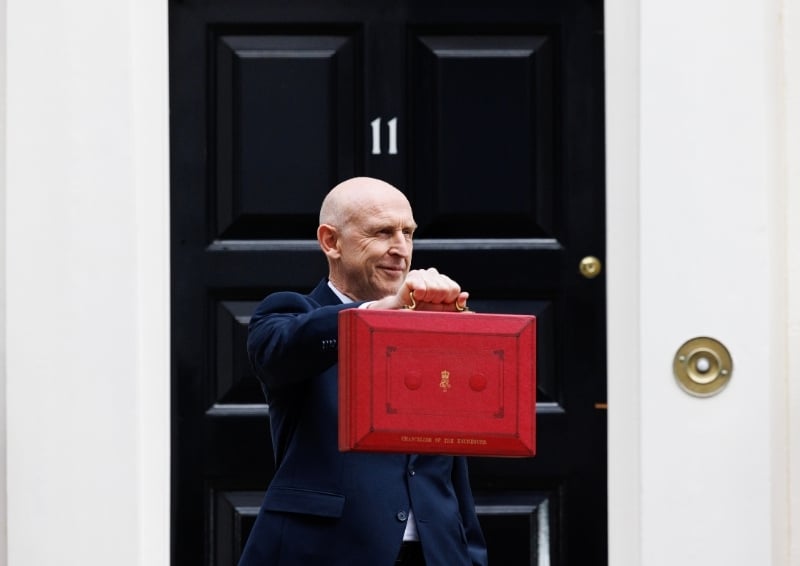
Today's Budget promises to provide 'breathing space' in the face of a difficult financial outlook for government, businesses and households.
In the first Budget delivered by Chancellor John Healey, the government tried to balance funding the big commitments new Prime Minister Andy Burnham has made so far with the financial realities facing the UK.
The answer to that balance? Kicking a lot of the difficult decisions into the Spending Review next year.
The context
Going into his statement today, Healey faced a £4.7 billion bill just to meet existing defence spending commitments, with more to come at the Spending Review in 2027.
And while the International Monetary Fund and the Office for Budget Responsibility upgraded growth in the short term, the government still has to grapple with £14 billion per year in extra government debt interest compared to the spring.
The government's "headroom" – the buffer it leaves itself to address crises or unanticipated spending commitments – is down from £23.6 billion earlier in the year, to £15 billion.
This is largely owing to the war in the Middle East, which is bringing down forecasted growth figures into next year and beyond as the UK's early resilience to the price increases wears off.
Big cost-cutting energy
Reducing energy and electricity costs, now and in the future, is the key tool Healey is brandishing in the face of fresh cost-of-living pressures.
Badged as the start of "radical reform" to bring these costs down in line with Europe, a package of short-term measures came alongside signals of deeper reform, including to the electricity market.
For households, the focus is on the removal of VAT on energy bills and a one-off payment for 80% of homes in England. Gas standing charges will also be removed from bills.
The government has also moved from funding hydrogen projects via a levy on energy costs, to government support out of general taxation. This will redistribute the burden of that cost, but ensure selected projects are still funded.
Businesses will be able to access new British industrial scheme, offsetting costs for electricity-intensive manufacturing industries.
The government has also launched the Warm Homes Loan Scheme to support heat pump and clean technology uptake, while cutting £1 billion of funding to the scheme, painting a mixed picture.
The government has refocused its clean energy investment policy on driving down energy costs. How this connects to reaching the government's net zero target and next carbon budget is still unclear. Especially following statements by the Energy Secretary earlier in the week that point to a move away from decarbonisation as the driving force behind energy policy.
Fiscal devolution begins its revolution…
The Budget took some notable, if tentative, strides towards fiscal devolution, with implications for infrastructure investment.
The accompanying fiscal devolution roadmap positions these reforms as a ‘first step’ towards giving local leaders greater control over locally generated revenues and a stronger incentive to support economic growth.
The biggest changes are the move towards greater local retention of business rates and the planned assignment of a share of income tax revenues to mayoral authorities from April 2028. Details on the share of tax each authority will keep are due in 2027’s Spending Review.
The reforms intend to create a stronger link between local economic performance and funding. Over time, income tax is expected to replace a significant proportion of grant funding for mayoral authorities.
The government is also seeking to strengthen local investment capacity through:
- a £1.5 billion borrowing facility for mayoral authorities;
- £165 million for new Good Growth Funds; and
- funding to support areas moving towards devolution arrangements and build capability within strategic authorities.
…but the details are still taking shape
This builds on the direction set out in July's Rewiring the State announcement, moving strategic authorities beyond a delivery role and towards becoming longer-term investors in the needs of their areas.
Coupled with the government's wider commitment to ‘devolve by default’, the reforms point to a future where infrastructure priorities are shaped regionally. Whitehall would set strategic frameworks while local leaders take on a greater role in investment and delivery decisions.
Further detail is expected later this year when the government publishes its Rewiring the State Delivery Plan, setting out how and when the reforms will be implemented.
Who's in control?
Burnham's first 100 days have centred around a desire for more public control.
The budget builds on previous announcements by putting more investment into public finance institutions like the National Wealth Fund and British Business Bank.
£15.4 billion will go to the National Wealth Fund, including £2 billion for the Energy Wealth Fund, which was announced recently alongside the approval of gas extraction at Jackdaw in the North Sea.
The Chancellor has directed the NWF to focus on defence, critical minerals and artificial intelligence.
Getting the public on board
The government has recognised public pushback on new data centres, particularly in areas like Slough, which has become Europe's data centre capital.
In response, they've launched a Data Centre Covenant aimed at establishing the tests that developers will be expected to meet, including the contribution they make to communities and the UK’s economic interests.
Developers will now need to agree a local benefit plan, ensuring that the communities that host nationally significant data centres actually feel the benefit.
In return, a 'ministerial control centre' will help developers connect their projects to the grid faster.
Positively, the government has also signalled a desire to move past the binary choice of 'less or more consultation' and focus on better and more representative engagement. The Budget ties this to infrastructure delivery more explicitly than we have seen in the past.
The ICE is clear that better engagement can speed up rather than slow down infrastructure delivery, and rebuild trust in the institutions that plan, fund and deliver it.
We will soon publish a report on public engagement, with a launch event scheduled for 18 November.
The road ahead
Infrastructure professionals will welcome confirmation of the upcoming 10-Year Infrastructure Strategy refresh.
The government has signalled its continued commitment and recognition of the role that infrastructure certainty and investment can play in driving economic growth and attracting private capital.
Many will, however, be looking for greater detail in the government's 10 Year Plan, next year’s Spending Review, and in that strategy refresh.
The key test will be delivery. While the Budget contained positive signals for infrastructure, many of the biggest decisions have been postponed.
The ICE will continue to make the case for protecting investment in new and existing infrastructure as those decisions are taken.


You may also be interested in

- Type
- Infrastructure blog
How public-private partnerships can save governments $200bn a year in infrastructure damage
Climate-resilient PPPs and infrastructure projects are achievable with integrated planning and a willingness to change our familiar models, writes ICE Policy Fellow Alec Hay.

- Type
- Infrastructure blog
How much is climate resilience truly worth?
A new ICE report calls for a review into the value of infrastructure adaptation and climate resilience in order to boost investment.

- Type
- Infrastructure blog
Rewiring the State: what does England’s devolution mean for infrastructure?
These reforms would change where decisions are made, who holds influence, and how infrastructure and other investment priorities are determined.