





Everyone involved in shaping our cities and buildings can make a difference, writes ICE Fellow Katie Wood.

Article originally published 25 September 2019
Globally people are living longer, more urban and more digitally connected lives than ever before.
But these changes aren't necessarily resulting in improved health and wellbeing for all.
Everyone involved in shaping the built environment can make a difference in how we plan, design, build and live in our cities and buildings to ensure they serve as many people as possible.
This blog covers 10 interconnected priorities that enable this – often the key to success on one will also involve tackling issues more commonly associated with others.
1. Focus on air quality
It's well known that outdoor pollution such as particulate matter, nitrogen oxides and carbon monoxide can put us at greater risk of contracting respiratory and cardiovascular diseases.
However, what's less recognised is that indoor air quality is also a risk.
Indoor contaminants are typically generated by emissions from building materials and operational processes like cooking or printing.
Understanding the sources of outdoor and indoor pollution is key to reducing the exposure. This will include consideration of:
- transport modes
- energy strategy and infrastructure
- building size, form and arrangement
- operational strategies
- material selection
- building emissions
- ventilation
- services design and control strategies
2.Design for building user comfort
The link between user comfort and health, wellbeing and performance is well recognised.
However, despite this, building user feedback reveals a significant gap between design aims and people’s experience of comfort in buildings.
This is partly due to the subjective and dynamic nature of comfort, which relates to diverse personal psychological, physiological, cultural, and behavioural factors. The way people feel about a space cannot be defined just in terms of the right light levels, decibels or degrees.
Embedding flexibility for different patterns of use, enabling greater user control over the environment, and providing opportunities for adaptation are key steps to creating spaces where people can flourish.
3. Understand the impact of materials
While the health impacts of some construction materials are well-known, those for all the synthetic chemicals used in today’s construction products are still emerging.
Materials can impact building users by emitting hazardous chemicals that can be inhaled, such as volatile organic compounds, or by producing dust that can be ingested.
High exposure can lead to serious health effects, but lower exposure levels can affect wellbeing by causing headaches, lethargy, skin and eye irritation.
Legislation is evolving, and there's plenty of scope to go beyond the minimum and select materials with lower health impacts on humans and the wider environment.
4. Maximise the use of data
It's now feasible to collect a huge array of differing types of data, from historic to real-time data streams, covering a range of topics such as environmental quality to personal health.
This, combined with advanced computing and analytic power, results in an opportunity to optimise operations and inform future decisions.
In order to achieve this and have a positive impact on the daily choices people make regarding their health and wellbeing, we need to collect the right data, address privacy and approval issues, and establish appropriate digital infrastructure and transparent sharing of findings.
5. Design for healthy streets and active travel
An active lifestyle dramatically reduces the likelihood of chronic disease and improves mental health and wellbeing.
For the past century, the car has dominated how we plan and grow our urban areas. Now, there's an opportunity for walkability and human-centred design to be used as a catalyst for developing sustainable, healthy, prosperous and attractive places.
Opportunities exist in creating visions and strategies for walking, recognising it as a transport mode in its own right.
In addition, providing safe and efficient transportation systems, liveable environments and a sense of place and community will all help to make walking a normal part of everyday life and the natural choice for shorter journeys.
6. Incorporate green and blue infrastructure
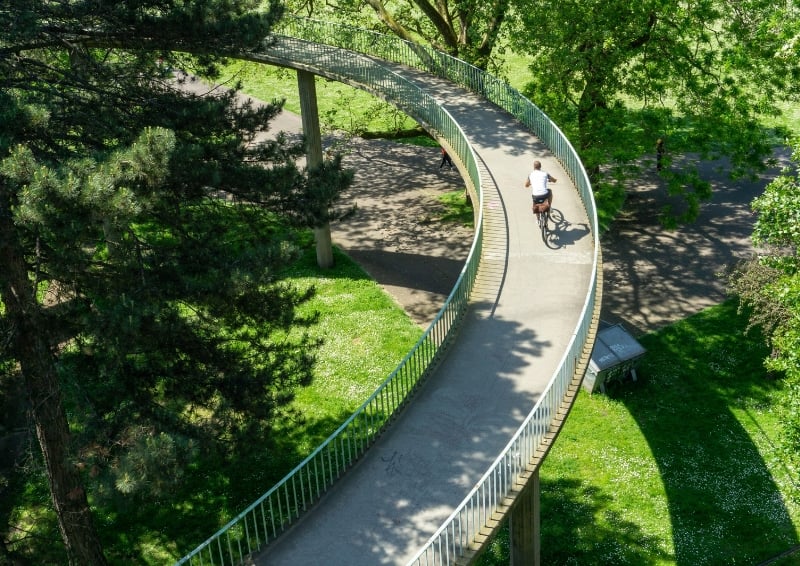
There's growing research on benefits to people’s wellbeing, physical and mental, particularly in cities where human connection with nature is at its most vulnerable.
The benefits are known to include reduction in stress, depression and other mental health issues, as well as improved community cohesion and the promotion of an active healthy lifestyle.
Opportunities are to incorporate water and green spaces more intimately within urban developments and buildings themselves, and shift from grey to green and blue infrastructure.
7. Take evidence-based planning decisions
Urban developments and buildings respond to national planning policy, local planning strategies, community needs, and design best practice guidance.
These provide a robust framework towards vibrant, healthy and inclusive communities - when they're all aligned and built on a sound evidence base.
We can all support this through health and wellbeing research, joint strategic need assessments, health impact assessments, strong community engagement, and transparently sharing lessons learnt.
8. Create cities for all ages and abilities
The young and old have much in common. Mobility, perception, physical dependence, meaningful social networks and communication are all shared concerns.
However, there's increasingly less contact between generations.
Cities that all ages can enjoy together, which support children’s independent play alongside the needs of elderly people, will deliver tangible health benefits for the whole community.
To achieve this, measures include:
- accessible public transport;
- improved active infrastructure;
- car-free open space supporting indoor and outdoor communal activities; and,
- encouraging the use of spaces by diverse groups.

9. Optimise operations, behaviour and the built environment
With a healthier operational and psychosocial environment comes a huge range of benefits, including improved public health outcomes, user experience, engagement, and staff productivity and retention.
These in turn build resilience and create long-term social value for communities.
This requires a widening of professional disciplines including operations specialists, human factors and ergonomics professionals, psychologists and behavioural specialists, logisticians and data analysts.
10. Improve evaluation of health and wellbeing outcomes
Building a tangible evidence base of how the built environment affects people’s health and wellbeing is the first step in making better decisions to create healthy buildings and cities in the long term.
A variety of tools and methods exist that can be applied at a range of scales, from individual buildings to whole city regions.
It's important to carefully consider what should be measured at the outset to ensure it aligns with the strategic outcomes, using an existing framework or developing a bespoke tool if necessary.
The evaluation framework should be applied in advance to create a baseline and identify optimal design solutions, and then retrospectively to evaluate the impact achieved.
Credit where credit's due
Do you know of a person or project deserving of recognition among the wider civil engineering community?
Why not nominate them for any of the 2026 ICE Awards? The nominations deadline has been extended to 11.59pm on Thursday 8 October 2026.

You may also be interested in

- Type
- News
Nominations open for ICE president
Candidates who meet the requirements are invited to stand to represent the institution as a future president of the ICE.

- Type
- Civil Engineer blog
Linking data to value: 5 priorities from the ICG's data and digital benchmarking report
The Infrastructure Client Group's 2026 benchmarking survey shows progress, but greater focus is needed on value, data quality and delivery outcome.

- Type
- Infrastructure blog
Devolution, ambition, and public control: reflections on Burnham’s first 90 days as PM
Andy Burnham has brought an injection of energy into Britain’s top job. But what does his tenure spell for infrastructure?