





ICE Knowledge Hub
Access the very latest and best CPD content to help you grow your knowledge and skills.
Sign in now

Delegates at the ICE Resilient Transport conference in Manchester discussed how to help road and rail networks resist disruption.
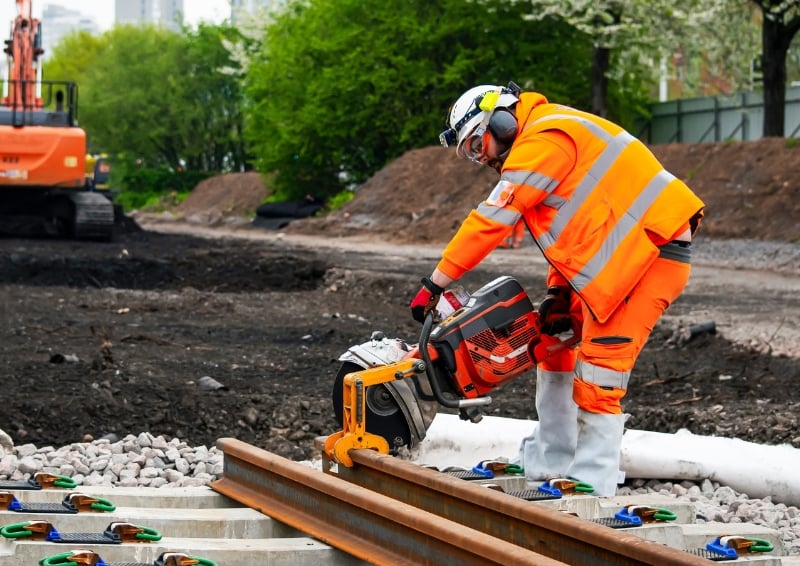
The transport sector has always had to adapt to changes – and do so on tight budgets.
But the pace and complexity of the challenges the network faces means that a more proactive approach is needed.
Infrastructure resilience and adaptation is rising up the agenda. Recent weather events, including an extremely hot summer in England, have highlighted the scale of the issue.
But any intervention to boost the resilience of transport needs to be joined-up, evidence-based and tailored to the local area if it’s to make a difference to communities.
That was the verdict of asset owners, government and technical experts at the ICE Resilient Transport conference, who came together for a roundtable discussion hosted by the ICE and Arup.
The participants identified three aspects that are central to this approach: integration, evidence and localisation.
PAS 3090, the standard on adaptation pathways for infrastructure systems, is open for public consultation until 10 December.
Have your sayMore than any other challenge the transport sector has faced, climate change emphasises the need for a systems approach to our networks.
They are interconnected and rarely seen or experienced in isolation by users.
Collaboration across disciplines will be key, but also looking at things at catchment scale, beyond traditional border and administrative lines.
This mindset can enable engineers to identify risks and create more targeted interventions going forward.
The transport sector could draw many lessons from the catchment approach used by the flood management sector – many of their drainage solutions offer resilience solutions to our transport networks. It will need a multiple discipline approach to solve.
Tom Wharf, head of design at Transport for Wales
The human experience of transport networks cannot be underplayed either.
Transport patterns and passenger habits will change and networks need to have adaptive design to ensure communities and services are delivered.
This will require engineers to better communicate the risks and trade-offs facing the system.
There will be disruption, tough choices and a need for change, and this needs to be explained with communities and stakeholders more effectively.
The costs and benefits of resilience have been hard to quantify, and as a result long-term impacts have been undervalued.
But the benefits of resilience upgrades are often far reaching: improved safety, capacity, reliability, economic growth, and more.
These impacts need to be incorporated in the planning and business cases for projects if they are to get future investment.
This can be applied at a large scale, such as improved safety at a motorway junction, but also at a local level, for example, how improved drainage makes routes more appealing to cyclists.
Lorna Ball, director – UKIMEA roads and streets business leader at Arup, explained: “Many solutions that we as an industry are working on offer multiple benefits. Making the case for resilience is not easy, but for safety or other data driven work, their evidence brings resilience to the forefront."
The industry needs to effectively communicate to decision makers the risks and impacts of failures on the wider network, economy and communities, which cannot be understated.
The ICE has called on the UK government to commission a review of the economic value of climate adaptation and resilience.
Devolution at a national, regional and city level in the UK is empowering many communities to own the challenges they see and provide an integrated and local solution.
As a profession, delivering services for communities is central, and for transport that means making sure they are safe, usable and operate with minimal disruption.
People feel the impact of a rail or road closure, even for a day, but there are many examples of disruption lasting for years, such as Hammersmith Bridge in London or the Rest and Be Thankful in Scotland.
The ability of the sector to recover and respond is important, but highlights the gap between being responsive and being resilient, which will take years to enact through investment, innovation and new mindsets.
"We need to understand what we as communities want from infrastructure – do we want it to resist, recover quickly, be resilient or adaptable?” Asked Lisa Constable, head of climate change resilience and adaptation at Network Rail.
“By answering that we can better target local interventions and inform wider actions,” she said.
The transport habits of the public can be difficult to change, especially among those for whom the car is the most convenient option. However, at a local level, people are willing to use multiple modes of active travel to get from A to B.
The more integrated and resilient our networks are, the more adaptable people will be to how they move around.

The group remained optimistic for the future, as the need and focus is there from government and industry to make a positive change.
By integrating approaches across organisations and stakeholders, engineers can build the evidence base needed to secure investment and deliver the technical and non-technical solutions required for resilient infrastructure.
Whether at a regional or local level, we need to understand the risks better, communicate them effectively, and make informed decisions for the economy, society and environment.

The new standard on preparing infrastructure for uncertain climate scenarios will integrate with the existing standard on carbon management. Public consultation on the standard is open until 10 December.

Drawing on the experience of delivering complex programmes, panellists at the latest ICE Connects: Women in Fellowship event discussed the opportunities and challenges involved in creating collaborative environments.

The industry-sponsored PAS 4010 standard has been published today alongside guidance to support its implementation.
