





ICE Knowledge Hub
Access the very latest and best CPD content to help you grow your knowledge and skills.
Sign in now

Low rivers are grounding barges and straining supply chains, energy and budgets — how should engineers respond?
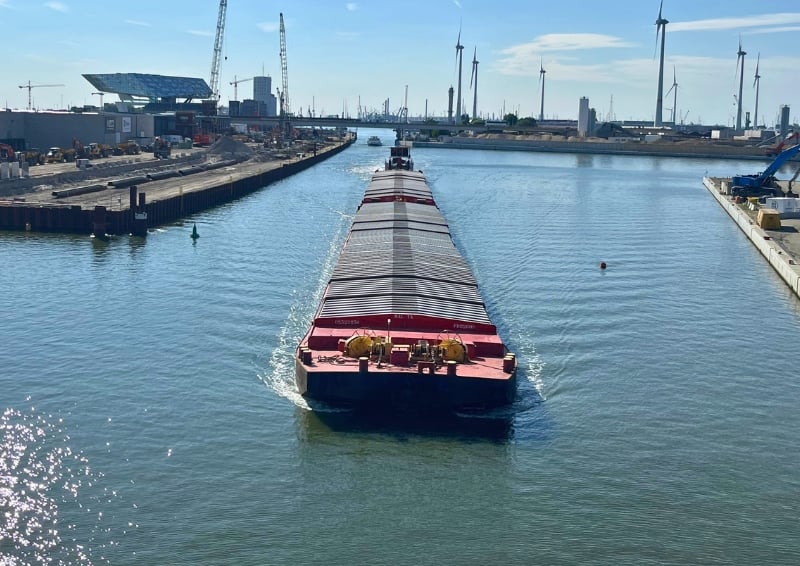
The summer of 2026 has turned Europe's great rivers into a live stress test for our infrastructure.
Here's a breakdown of what's happening, why it matters to civil and infrastructure engineers, and where our profession can respond.
Across central and western Europe, weeks of extreme heat and little rainfall have pushed the major navigable rivers to historic lows.
On the Rhine, the gauge at Kaub — one of the most restrictive bottlenecks for cargo vessels — fell to 15cm on Tuesday. That’s below the previous lowest recorded level of 25cm in 2018, according to Reuters reporting.
With roughly a further metre of depth available in the fairway itself, the usable draught for shipping dropped to little more than 1.2 m, and traffic was expected to halt almost entirely within days.
This is not a one-off. Belgian newspaper De Tijd notes it’s the second consecutive year of near-continuous low water on the Rhine.
Industry voices in De Tijd's reporting point to a structural cause: with less Alpine snow and meltwater to top the river up through summer, the buffer that once kept levels stable is thinning.
Attend the Resilient Transport conference in Manchester this September and discover how industry experts are future-proofing the vital networks people and businesses rely on day in, day out.
Spaces are limited and filling up fast.
Inland waterways are among the most efficient and lowest-carbon freight corridors we have. When they falter, the consequences ripple straight into the built environment.
The clearest example is construction materials.
Rhine sand and gravel — used in concrete, screed floors, drainage layers and more — move west toward Flanders and the wider region largely by barge.
De Tijd reports that one shipment which would normally carry around 3,500 tonnes of sand arrived with barely 900, because vessels can load only a fraction of capacity while costs stay the same.
Suppliers quoted in the piece describe the situation for certain upper-Rhine aggregates as critical, with large infrastructure sites already struggling to source drainage material.
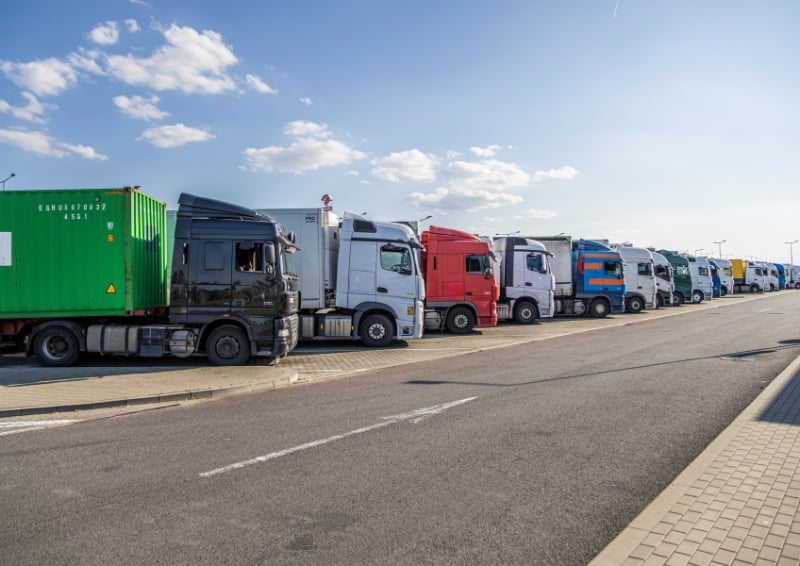
A single barge replaces dozens of trucks, so every tonne shifted onto the motorway raises budgets and emissions, precisely the trade-off our sector is working to avoid.
The economics escalate quickly. Reuters, reports that the cost of shipping a tonne from Rotterdam to Karlsruhe rose from roughly €45 in late June to €140 within weeks as low-water surcharges climbed.
During the comparable 2018 episode, the Kiel Institute estimated that low water trimmed about 0.4 percentage points from German economic output. A European Central Bank board member has warned that river drought can lift transport and production costs and feed through into inflation.
Low water is also an energy story.
Hungary has had to shut down its only nuclear plant, at Paks, for the first time in 44 years, because the Danube no longer supplies enough cooling water.
The plant accounts for close to 40% of the country's electricity, but with a heatwave pushing temperatures toward 40°C, the government has asked industry to cut water use. It has also restricted freight-train movements at peak hours.
Neighbouring Romania faces similar cooling pressures.
For engineers, this joins the dots: the same water stress that grounds barges can simultaneously constrain power generation, transport scheduling and heavy industry - a compound event rather than a series of isolated ones.
None of this is completely beyond our influence. The 2026 drought is a reminder that climate adaptation is core infrastructure work, not a future add-on.
Several responses are already in play or within reach:
This is precisely the territory that the Netwerk De Vlaamse Waterweg Working Group on Sustainability and Innovation is working on: how to keep Flanders' waterways navigable, resilient and low-carbon as the climate shifts.
The Meuse, less exposed to low water than the Rhine, has already served as a partial alternative supply route in earlier droughts — a small but telling illustration of why network redundancy is worth designing in.
And make no mistake, there is not one solution that will save the day. Several continued responses will be needed.
Rivers have always shaped where and how we build. What the summer of 2026 underlines is that their reliability can no longer be assumed.
For the engineering community that is a warning and an invitation: to treat waterway resilience, climate adaptation and material-supply security as connected parts of the same design challenge.
We must bring our expertise to bear well before the next dry summer arrives.

The annual award celebrates outstanding ideas, research and best practice.

The ICE breaks down the headline announcements from five of the major UK parties.

A new standard, which will guide the sector in improving productivity, is set to launch in 2026.
