





ICE Knowledge Hub
Access the very latest and best CPD content to help you grow your knowledge and skills.
Sign in now

Neil Gibson, chair of the ADEPT Live Labs 2 Commissioning Board, shares what’s made this initiative so different and positive.
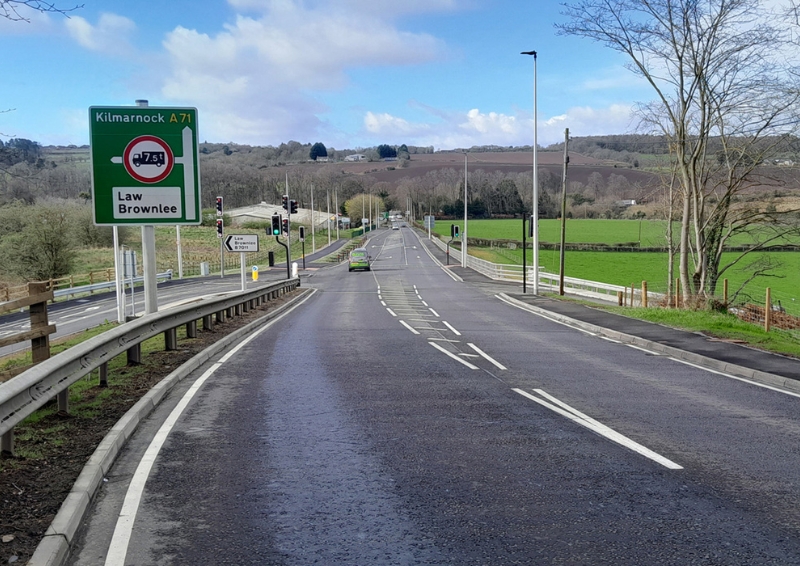
Live Labs 2 is not a typical government initiative. It didn’t begin life as a mandate from Whitehall or a well-crafted pitch from a consultancy firm.
The idea for this £30 million, three-year programme to decarbonise the UK’s local highway network by trialling seven innovative projects was built from the ground up.
Local highway authorities (LHAs), practitioners, academics and sector stakeholders knew that change was needed and had ideas about how to achieve something better.
As chair of the Live Labs 2 Commissioning Board, I’ve had the privilege of guiding a diverse and committed team through this journey.
Now that we’re in the final year of the programme, I wanted to share some reflections of what has made it so different and positive.
Attend the Resilient Transport conference in Manchester this September and discover how industry experts are tackling the biggest challenges in road construction and maintenance.
Spaces are limited and filling up fast.
This initiative didn’t come from central government. It was created at the grassroots level, by the sector, for the sector.
That’s why we are seeing ideas, data and results that work.
There’s an authenticity and trust that comes when peers are leading the change.
When a fellow LHA shares a new methodology or a trial outcome, it resonates more deeply than a consultant’s pitch or a central mandate.
This has been by far one of our most powerful advantages.
In East Riding in Yorkshire, for instance, residents from neighbouring areas have been requesting the lighting infrastructure solutions they’ve seen deployed nearby.
That’s not something that can be forced from above, it’s earned on the ground with clear and proven results.
We learned important lessons from the Live Labs 1 programme and made changes to improve governance in Live Labs 2.
Our model links the Commissioning Board, the programme leadership team, the projects themselves and specialist advisors into a joined-up and supportive community.
Crucially, our governance structure works horizontally and vertically. Across the Live Labs 2 teams for knowledge exchange, and from board to project for strategic alignment.
The board itself includes around 20 individuals drawn from public, private, academic and central government sectors.
These are not just names on paper for the purposes of looking good. They bring lived experience, valuable networking and intellectual firepower.
They challenge assumptions, ask tough questions and most importantly, they care deeply.
What was clear from the outset was that if this programme was poorly run, those ‘sector big hitters’ would simply walk away.
Their continued support is a testament to the strength of what we have been able to achieve.
You can’t lead on reducing carbon emissions without knowing where you are starting from.
That’s why a key aspect of Live Labs 2 has been developing a consistent and robust carbon baselining methodology.
It’s not headline-making or sprinkled with attention-grabbing pixie dust. But it has been one of the most valuable and impactful pieces of work that we’ve been able to offer for the benefit of others across the sector.
We have co-developed our methodology with the Future Highways Research Group and our academic partner Proving Services.
It’s not perfect but honestly, what method ever is? However, it is accessible, trusted, increasingly widely adopted and it’s sector-owned, which is vital. It’s also free.
This is a methodology that has not been sold to the sector, it has been devised by stakeholders and partners within the sector.
As a result, it has legs and thanks to Department for Transport (DfT) support, it is being embedded through the new ADEPT Carbon Leadership Programme.
A critical early decision was to secure a post-project tail of monitoring and evaluation lasting five years, even though the Live Labs 2 delivery period spans just three.
This was because we knew from the outset that outcomes would not emerge overnight and that behaviour change takes time.
We’re working with ARUP on M&E across the Commissioning Board’s oversight and the projects’ outputs to ensure a consistent, high-quality evidence base.
It also means we can tell the story of the emerging impacts as they evolve.
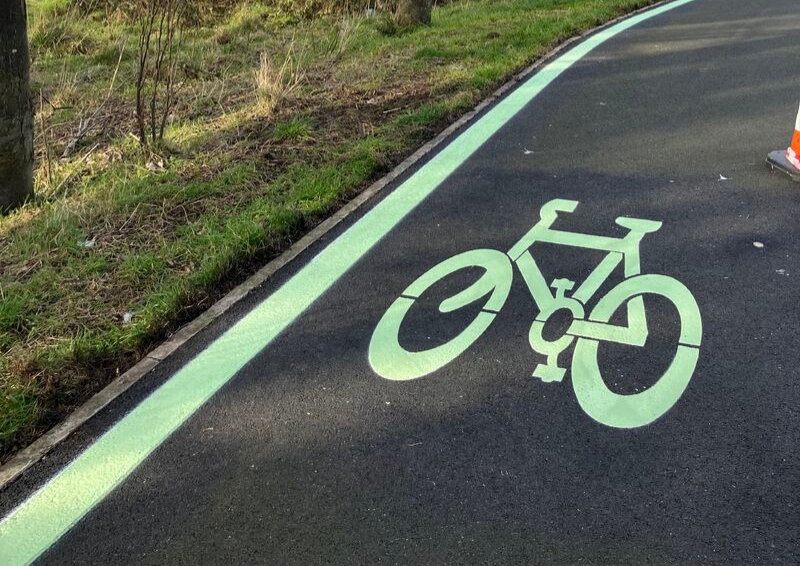
Changing the behaviours of councils, suppliers, communities and government departments is not simple - it probably never will be.
This is why we brought in the Behavioural Insights Team (BIT) to explore what approaches might actually work.
Their recommendations have been invaluable and include a range of solutions from embedding carbon thinking in procurement to reconsidering short-term funding cycles.
We have also launched a sector decarbonisation pledge, a simple commitment to join a network of like-minded organisations seeking to reduce carbon in highways.
We are seeing that behavioural shift starting.
Not because we have finger wagged and lectured people, but because the data and peer experience make the case for change better than any command from on-high.
Ultimately, this programme has one core aim to reduce the carbon impact of how we design, construct, maintain and manage local highways.
We’re not relying on any one solution to move the dial alone.
This is a multi-pronged approach from public engagement and SME support to national funding reform and supplier innovation. It only really happens if it all works together.
That is what Live Labs 2 is trying to enable and what I've learned from leading the programme as chair of the Commissioning Board.
It’s not just about decarbonisation. It’s about creating a model for innovation in local infrastructure that delivers positive outcomes.
If we can achieve that, we can transform UK highways, creating a beacon approach for other countries to aspire to.
While formal evaluation will take time, we are already seeing meaningful outcomes across the Live Labs 2 projects.
From Greenprint’s circular economy pilot and trials in the Centres of Excellence, to low-carbon materials and lighting redesigns, benefits are beginning to emerge.
We are also hearing from communities who have seen the results in situ and want these innovations where they live and work. And that’s the ‘litmus’ test.

ICE President David Porter explains why being informed about flood risk is so important for the public and civil and infrastructure engineers.

The electrification of the Core Valley Lines impressed the judges at the 2026 British Construction and Infrastructure Awards.

Good decisions made at speed can lead the industry down unintended paths, writes Steven Yule, ICE country representative for the UAE.