





The Princess Royal Award for Emerging Engineers celebrates outstanding ideas, research and best practice.

A study demonstrating the feasibility of using tram-trains to reopen Edinburgh's South Suburban Railway (South Sub) to passengers has won The Princess Royal Award for Emerging Engineers.
The award, which was renamed in honour of the ICE’s royal patron, celebrates the communication of outstanding engineering ideas, research and best practice in projects and design.
The top prize went to Corey Boyle, who was part of the student-led master's group at Heriot-Watt University that conducted the feasibility study.
Their research drove the development of a cost-effective and deliverable proposal that succeeded where four previous studies had failed.
Boyle recently spoke at Edinburgh's City Chambers for the official launch of the campaign to bring back the South Sub passenger service.
The ICE announced the award's new name at the live final on 10 October 2025.
Her Royal Highness, The Princess Royal, has been a long-time supporter of the engineering sector.
An Honorary Fellow of the ICE, she is also a patron of the WISE campaign, which encourages young women to pursue science and engineering.
She is president of RedR, a charity established by a civil engineer to provide the skills needed for disaster relief.

Boyle, who represented ICE Scotland, was joined at the final by runners-up:
- Timothy McCaughey (ICE Northern Ireland), who presented his paper on RAAC - the Crumbling Concrete Crisis; and
- Josephine Joseph (ICE Middle East and North Africa), who presented on Parametric Façade Design to Suit Daylighting Needs and Its Impact on the Energy Demand of an Office Building.
Boyle was awarded a cash prize and the prestigious Institution Medal for his efforts.
2025 regional finalists

Samira Hejazi, a civil engineering student at the University of Nottingham, has won the East Midlands regional heat.
Her paper on Evaluating the Ageing Resistance of Bitumen Using Bio-sourced Lignin impressed the judges at the final held on 28 May.
Globally, demand for bitumen, also known as asphalt binder, continues to rise. Because it’s made from crude oil, the embodied emissions associated with its production sometimes contribute over 25% of asphalt’s carbon footprint.
These environmental pressures, alongside rising costs, have prompted a shift towards the use of sustainable, bio-based modified binders, such as lignin (an organic polymer found in wood and bark).
Hejazi’s study not only explored the use of lignin as a bio-based modifier in asphalt, but also evaluated whether this blend could make it more resistant to ageing.
Runners-up:
- Sylvia Okolie, a graduate civil engineer at the Environment Agency, for her paper: Early Strength of Concrete Using Metakolin.
- Emma Rhodes, a technical engineer at Jean Lefebvre, for her paper Analysis of Sustainable Asphalt Alternatives: Warm-Mix Asphalt.
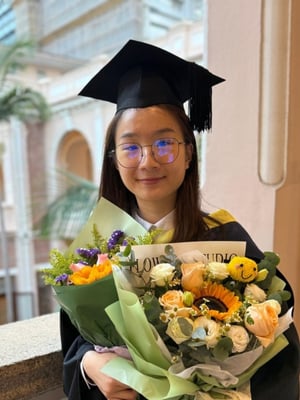
Elise Yau, a recent graduate from the University of Hong Kong, won the regional final for ICE Hong Kong.
Her presentation was on her paper, titled Developing an energy-positive and low-carbon emission sludge treatment process by integrating physicochemical capture and anaerobic digestion.
Her research investigated the potential of recovering bio-energy (energy from biomass) from chemically enhanced primary treatment sludge (a form of sewage treatment).
Her experiments were set in the Stonecutters Island Sewage Treatment Works using a lab-scale anaerobic membrane bioreactor. This technology filters sewage by membrane filtration in an environment where anaerobic bacteria can convert organic materials into CO2 and methane.
She found that the system demonstrated high efficiency in removing chemical oxygen demand (COD, a measure typically used to quantify the amount of organic substances in water).
The system also indicated the ability to generate an energy surplus through the production of methane.
Runners-up:
- Felix Law, for a presentation on Critical review on existing bridge traffic action requirements with future increase in electric vehicle volume.
- Fung Kwan Yee, for a presentation on Extreme temperature distribution in composite bridges under climate change.
- Nicole Tse, for a presentation on Investigation on interaction of cracks using Hele-Shaw setup.

Chris Quigley, temporary works civil design engineer at Barhale Ltd, won the London heat of the award.
His paper detailed engineering innovations for the Ridge Road Tunnelling Project, which aimed to safely divert a high-pressure gas pipeline beneath a live railway line by building a microtunnel.
As one of the lead design engineers, Quigley was responsible for developing a range of structural and geotechnical solutions for the project, including:
- Shaft collars: in-situ reinforced concrete ring structures designed to transfer the weight of partially constructed caisson segments (watertight retaining structures) into the surrounding ground.
- Shaft base plugs: the shafts were founded on concrete base plugs designed to resist hydrostatic uplift (upward pressure from water below) and provide a stable, dry foundation for tunnel operations.
- Slurry tank foundations: a system to separate surface slurry (a waste by-product of tunnelling) into liquid and solid parts was used. Quigley developed a shallow raft foundation system to support the necessary equipment that eliminated the need for deep excavations or piling. This significantly reduced embodied carbon.

Josephine Jane Joseph, sustainability analyst at AESG UAE, has been named the 2025 winner for ICE Middle East and North Africa.
She won for her paper on Parametric Façade Design to Suit Daylighting Needs and Its Impact on the Energy Demand of an Office Building.
It investigates how parametric kinetic façades (meaning they can move to adapt to environmental conditions) on office buildings can optimise how much daylight comes in while reducing cooling loads (how much heat needs to be removed from a building to maintain a desired temperature).
This is a significant challenge in sustainable design, particularly in hot climates such as Dubai’s.
Using computational tools such as Rhino’s Grasshopper, IES-VE and Revit Insight, Joseph modelled various façade configurations to assess their performance across multiple daylighting and energy metrics. These integrated international standards such as ASHRAE, LEED v4.1, and CIE Unified Glare Rating.
Joseph's study highlights how adaptive façade solutions can enhance daylight quality, improve energy performance, and contribute to the comfort of people in the building.
It offers a promising approach for future applications in sustainable architecture.
Runners-up
- Jobin George Kachora from the University of Wollongong Dubai, UAE for Effect of bonding pressure and orientation on the adhesive bonding shear strength of hybrid Cross-Laminated Timber using Asian wood species.
- Geevarghese Mammen Koyippally from AECOM UAE for Design and Implementation of an Advanced Water Transmission Program for UAE.
- Sohrab Salehi from the Tarbiat Modares Universit in Iran for Solar Energy Meets Water Conservation: Investigating the Nexus of Floating PV Systems and Reservoir Sustainability.
- Mahmoud Abd El Aziz from the Arab Academy for Science, Technology and Maritime Transport in Egypt for Sustainable Cooling and Heat Recovery System for Concrete Structures Using Water Recycling.

Adam Smith, a graduate civil engineer at Stantec, has won the ICE North East regional heat.
He captured the attention of the online audience with his paper Solving the Problem Not Just the Issue: A Sustainable Approach to Spill Reduction in Berwick-upon-Tweed.
His paper explored techniques such as consolidating storm overflows, removing surface water, and using bioretention (shallow landscaped pits where pollution can be filtered out of water).
The judges were very impressed with the quality and delivery of Smith's presentation.
They said: "On the day, Adam delivered a professional presentation with excellent contextual overview of the project, he answered questions well and demonstrated his ability to expand on the subject further during the Q&A."

Timothy McCaughey, an apprentice civil engineering technician at Translink, took home the Northern Ireland title.
His paper, RAAC – the Crumbling Concrete Crisis, is set in the context of changing infrastructure needs, particularly in terms of climate adaptation and resilience building.
It seeks to draw opportunities for lessons to be learned as new materials, processes and technologies are implemented en-masse across the industry.
The paper makes recommendation for the safe integration of new techniques remaining mindful of the role civil engineers play in the stewardship of vital national critical infrastructure.
The judges described the content as excellent, succinctly challenging the construction industry and using an emotive writing style to arouse interest and promote a connection with the readers.
Runners-up
Richard Fitzsimmons (AtkinsRéalis) and Mark Loughran (Baly Renewables Ltd) also presented excellent papers, making the final decision for judges a difficult one.
Fitzsimmons presented on ‘Enhancing Construction Efficiency through Concrete Maturity Methods’, while Loughran’s presentation considered ‘Is the necessary expansion of the Renewable Energy Sector in Northern Ireland being curtailed by the Planning Process?’

Corey Boyle, a final year civil engineering student at Heriot-Watt University, has been named ICE Scotland's Emerging Engineer of 2025.
Boyle impressed the judges through a presentation on his paper The South Sub Tram-Train.
Growing up in Crieff, a rural Scottish market town whose railway closed in 1964, Boyle witnessed how lost transport links restrict opportunity and limit a community’s ability to thrive.
This shaped a belief that transport is not just infrastructure. It’s essential to building prosperous, connected communities.
As member of a student-led master’s group at Heriot-Watt University, the author has helped drive the development of a cost-effective and deliverable proposal to reopen the South Sub to passengers using tram-trains as an extension of Edinburgh Trams.
The group has succeeded where four previous feasibility studies have failed.
This student-led initiative shows how engineers can lead inclusive, sustainable urban transformation.
The South Sub Tram-Train represents a second chance for overlooked communities to reconnect, regenerate, and thrive.
Runners-up:
- Rocco Panetta for his paper: From Waste to Strength: Eggshell Powder as a Cement Replacement in Ultra High-Performance Concrete for Bridge Repair.
- Thanos Karampourniotis presented his paper: Can AI be a Structural Engineer? Evaluating AI’s Skills in Structural Engineering.
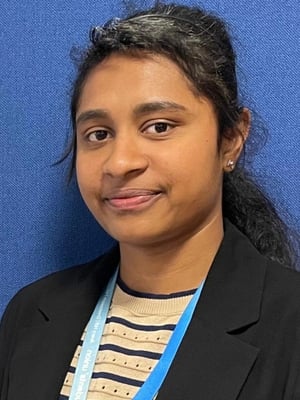
Harini Shivani, a graduate civil engineer from the University of Greenwich, won the South East heat of the competition for her research into using recycled content in concrete mixes.
Using recycled aggregates (granular materials) instead of natural ones (quarried from the ground) in concrete can be a way to reduce environmental impact.
However, while sustainable, recycled content can reduce strength. Carbonation treatment is a way to enhance their performance.
Shivani’s paper, titled Effects of Using Carbon-Treated Demolition Waste as Aggregate Replacement on Mechanical Properties of Concrete, explored this.
She tested three mix levels: none, partial and full replacement of natural aggregates with recycled ones.
Her research found a significant loss of strength (specifically, compressive, tensile and flexural) with more recycled content.
Her paper highlighted sustainability potential but called for optimised mix designs and more testing.

Graduate engineer, Emily Mulley, won the top prize in the South West regional final for her paper exploring opportunities for using blockchain and digital models to improve efficiency in construction.
Mulley, who works for Hochtief (UK) Construction, presented a study to determine the feasibility of implementing blockchain-based methods in BIM for a construction phase.
Blockchain is a secure, digital way to record and share information that everyone can trust. BIM, which stands for building information modelling, is used to create a shared digital model to plan, design and build infrastructure.
Mulley said: “With significant material wastage, especially within the construction industry, it is proving increasingly necessary to find methods of smart resource management.
“I believe that a key to achieving this is keeping material components at their highest value for the duration of their lifecycle over multiple projects.
“Operating with tight profit margins and demanding schedules seems to be restricting the construction industry’s ability and willingness to innovate and invest in systems such as blockchain.
“However, I am hopeful that the industry can adopt technological advances that will deliver improvements in the efficiency of resource management and the quality of project outputs.”
Runners-up:
- Sami Mustafa, an undergraduate at the University of Bath, was awarded second place for his paper, Optimising Concrete Bridge Geometry for Enhanced Seismic Resilience: A Computational Analysis.
- Oscar Davies, a civil engineering student at the University of Bristol, came third with his paper, Validation of An Analytical Model for Bridge Deck-abutment-backfill Pounding.

Mihiri Rathnayake, a graduate civil engineer working on the Hinkley Point C (HPC) project in Bristol, has won the ICE Wales Cymru regional final.
Her thesis Strength & Durability Characterisation of Structural Concrete made of Recycled Plastic captivated the judges at the regional final held on 27 June.
Rathnayake’s work reviews the feasible use of recycled plastic waste as a partial substitute for sand within concrete production.
This addresses environmental concerns related to plastic disposal and the resource scarcity of natural sand.
Her thesis has subsequently been published in an international journal.

Shreah Bargota, a graduate urban drainage modeller at Stantec, has been named ICE West Midlands' Emerging Engineer.
Her paper, Exploring the Efficiency of Arsenic Removal from Water with Biochar, impressed the judges by demonstrating extensive knowledge supported by detailed experimental data and analysis.
Arsenic, a carcinogenic substance to humans, is naturally present in groundwater. The World Health Organisation (WHO) has guidance on the limit of arsenic that can be present in water for it to be safe to drink (0.01mg/L).
Bargota’s study examined sewage sludge biochar (SSB), a material that can adsorb arsenic ions in water, specifically in its modified version, which adds potassium hydroxide to enhance the process.
The study found that modified sewage sludge biochar (MSSB) is an effective adsorbent of arsenic and could be used in the wastewater treatment process.
This would contribute to the circular economy, as it would take sewage sludge and turn it into biochar (SSB), which can then be modified and used to treat arsenic-contaminated water.
Runner-up:
- Benediction Mbaya, final year civil engineering student at Birmingham City University, for his paper: Retrofitting of Concrete Beam Using Alkali Activated Mortar and Rubberised Alkali Activated Mortar.
- Eleanor Lee, design engineer at Tony Gee and Partners, for her paper: Carbon and Light Rail Infrastructure - Insights from Extensions to the West Midlands Metro.

Mohammed Karolia, a graduate structural engineer at AtkinsRéalis, took home the award in Yorkshire and Humber.
Karolia impressed the judges with his paper, titled Life Cycle Embodied Carbon and Cost Analysis of Fibre-Reinforced-Polymer (FRP) Reinforced Concrete Slabs.
FRP composite reinforcement bars (rebars) offer an alternative to steel rebars in concrete structures. But their benefits aren’t fully understood across the industry.
Karolia’s study contributes to the knowledge available by comparing steel reinforcements against four common FRP composites (glass, carbon, basalt and aramid).
He assessed the alternatives through lifecycle embodied carbon and cost analyses, with glass and basalt FRPs emerging as two optimal reinforcement materials.
About The Princess Royal Award for Emerging Engineers
This award is for ICE members in the early career cohort: students, graduates and apprentices.
Candidates from across the world are invited to submit synopsis papers to compete in regional heats. Three papers are selected for the overall final, which is held in October every year.

You may also be interested in

- Type
- Awards and competitions
Recycled materials offer sustainable future for concrete in royal patron award-winning research
The annual award celebrates outstanding ideas, research and best practice.

- Type
- Lecture
PIANC UK young professionals seminar 2026
An engaging seminar showcasing presentations from young professionals across the industry, with opportunities to learn, connect and network with peers.

- Type
- News
ICE calls on members to support students in award-winning engineering competition
Mentors are needed for the 2026 ICE CityZen Award and Pollution Control Challenge.