





The ICE Hong Kong Association Graduates and Students Division (HKA G&S) challenged undergraduate student teams to design earthquake-resistant buildings.
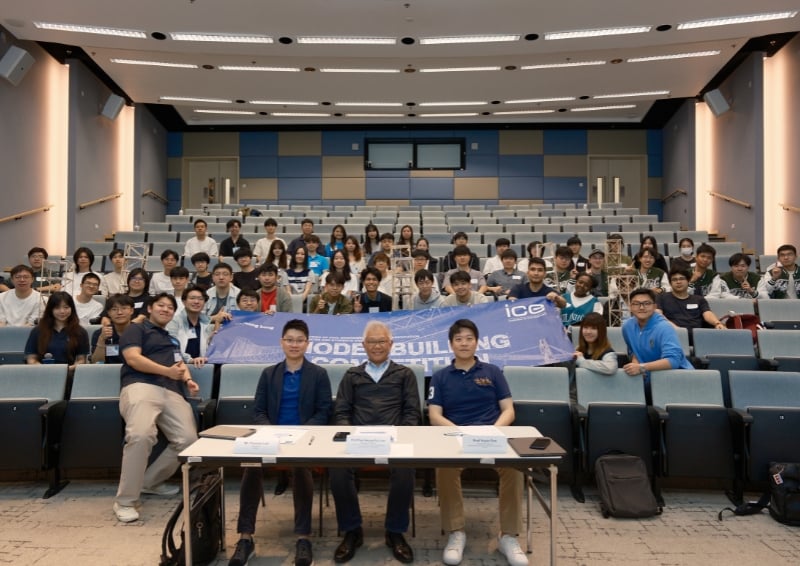
ICE HKA G&S brought together seven teams from universities across Hong Kong to test their skills in the 2026 Model Building Competition (MBC).
The competition provided a platform for future engineers to bridge classroom theory with hands-on application, testing their creativity, problem-solving abilities, and workmanship under demanding conditions.
The technical focus of the 2026 MBC was on structural and earthquake engineering.
Participating teams were recruited as design-build contractors to reconstruct buildings capable of sustaining earthquakes.
They were challenged to construct lightweight, flexible, multi-storey skeleton frames with balsa wood that were capable of coping with shaking, sideways forces and sudden ground movements during a simulated earthquake.
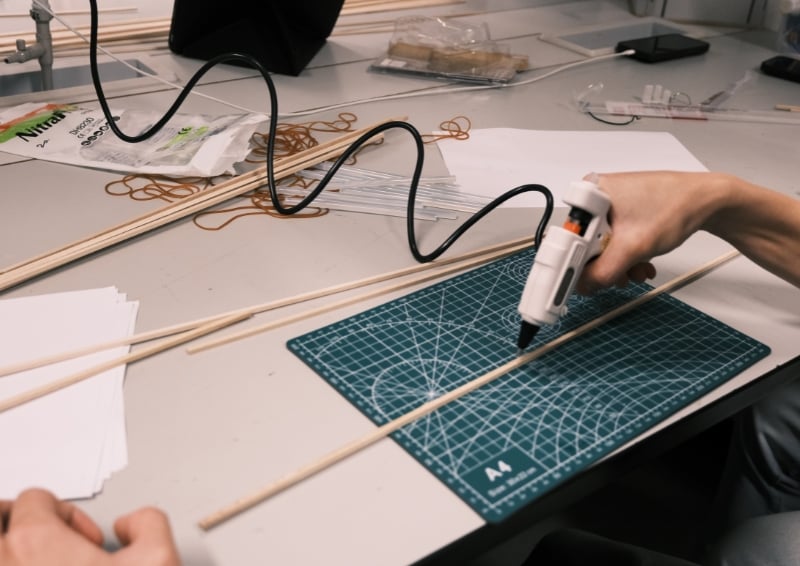
Participants were provided with balsa sticks and plywood boards as the main structural elements. The materials were highly standardised and intentionally restrictive to test the team's structural optimisations.
With their structural knowledge, careful analysis and innovation, they kicked off the competition by working together to build their unique structures within 3.5 hours.
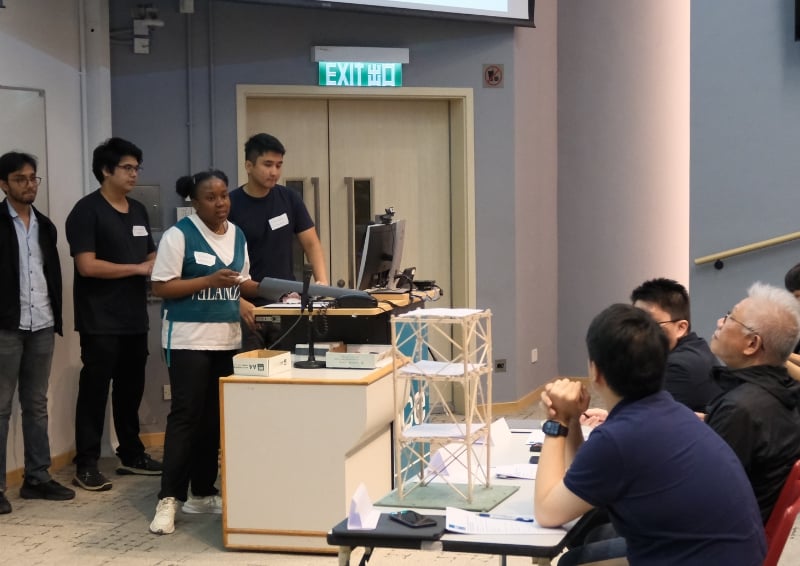
After the morning’s model-building, the teams were faced with a different kind of pressure: pitching their designs to the client, the judging panel.
This year, the panel consisted of:
- Professor Paul Lam from the City University of Hong Kong;
- Professor Pan Yuxin from the Hong Kong University of Science and Technology (HKUST); and
- Mr Thomas Luk from Arup.
During the presentations, teams explained their fundamental design philosophies, elaborated on the engineering reasoning behind their bracing selections (structural elements that help resist sideways forces), and highlighted their architectural innovations.
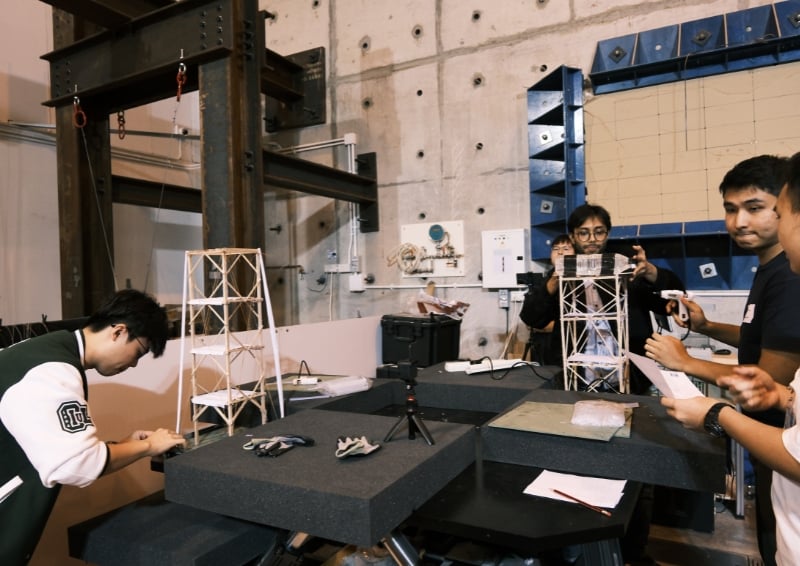
The climax of the day took place at the biaxial shaking table (the earthquake-testing platform), where the seven models faced the ultimate test.
One by one, after adding weights to represent the loads each building would carry, the teams placed their models on the shaking table.
The balsa wood buildings were then subjected to a series of simulated earthquakes that gradually increased in strength, testing how well the structures could remain stable under seismic forces.
For 60 seconds per run, the room was filled with anxiety and anticipation, watching as the models swayed, vibrated and flexed.
Regardless of the outcome, the competition offered invaluable insights into the team's craftsmanship and the effectiveness of their bracing mechanisms.
2026 winners:
- Champion – Shake Shake Syu4 Tiu2 from the Hong Kong University of Science and Technology
- First runner-up – The Damped Squad from The Hong Kong Polytechnic University
- Second runner-up – City Rebar Fixing Union from the City University of Hong Kong
- Best presentation award – The Badgermoles from City University of Hong Kong
The competition took place at HKUST in April.
The organising committee sincerely thanked HKUST for its support in providing the venue, and the judges for their technical insight and time.

Sustainable Development Goals:
You may also be interested in

- Type
- News
Closing the loop: Hong Kong students witness circular economy in action
During a visit to France and Belgium, ICE Hong Kong delegates explored sustainable building practices, underground transit networks and cutting-edge material science.

- Type
- News
ICE and Hong Kong Institution of Engineers renew mutual recognition agreement
The framework that streamlines the route to membership at HKIE for ICE members, and vice versa, has been extended for another five years.

- Type
- News
Innovation and meticulous planning key to building in dense urban environments
Students and graduates from ICE Hong Kong visited Tokyo, Japan to learn smart solutions for infrastructure redevelopment.