

Year
2011Duration
40 days (annually)Cost
£16mLocation
United kingdomProject achievements
Economy boosted
The annual event programme generates over £100 million for the Scottish economy
Used engineering skill
The arena uses a variety of engineering techniques to preserve the historical monuments around it
Solved the problem
The arena cut previous construction time in half
Meet one of Scotland's largest entertainment venues, for one month only
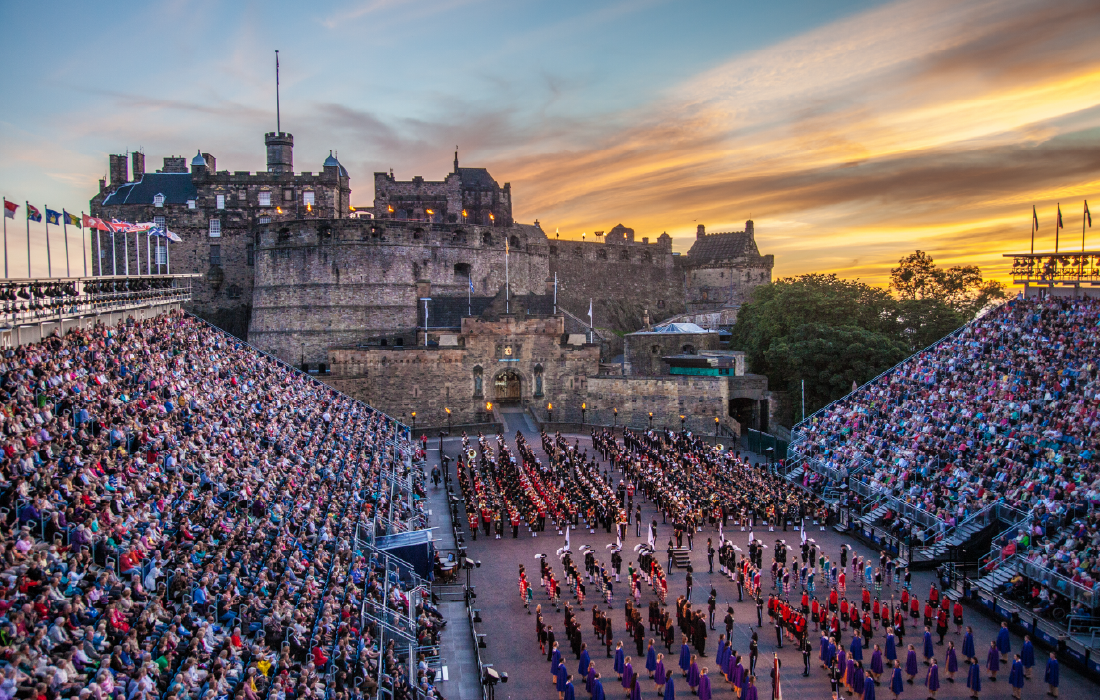
The Edinburgh Castle Arena attracts visitors from across the world, and only during the month of August.
Home to the Royal Edinburgh Military Tattoo and hosting legendary acts like The Who and Kylie Minogue, the venue sits on an esplanade in the shadow of Edinburgh Castle. It has a seated capacity of 8,825.
In the 40 days it takes to construct the U-shaped arena, 6,799 pieces of steelwork are put in place, requiring 1,700 crane lifts.
It’s even faster to come down, taking just 37 days to disassemble after the festivities.
To enable the quick construction, engineers designed 326 mini-pile foundations drilled directly into the castle bedrock, each of which can support around 100 tonnes of weight.
When not in use, the arena is stored just outside of the city, waiting for its next chance to take to the stage.
Over 80% of the arena’s attendees are tourists from outside of Scotland, generating over £100 million for the Scottish economy annually.
Did you know …
-
To reduce emissions, contractors reuse the materials annually, storing everything less than 30 miles from the venue
-
70% of visitors to the events held at the castle say it’s their sole reason for coming to Scotland.
-
The Tattoo is shown on TV annually, normally around New Year, where it attracts over 100 million viewers.
A well-oiled machine
With over a decade of practice, engineers have the assembly of the stadium down to a fine art.
Lorries navigate the narrow medieval streets of Edinburgh’s old town, through the Royal Mile and deliver the stadium in parts, all before 9am every day.
If constructing an arena on the top of a cliff wasn’t difficult enough, Edinburgh Castle remains open during the entire process of assembly.
Over 10,000 visitors a day will walk through the esplanade while works are ongoing. To navigate this, engineers work closely with multiple stakeholders, upholding a strong commitment to health and safety.
Sitting on a UNESCO World Heritage site, tourists are not the only concern when it comes to safety.
The esplanade holds a selection of monuments to honour past soldiers, including the 1862 Runic Cross, which are carefully preserved during construction, with cranes meticulously lowering parts around the important stone.
An overdue upgrade
While the arena’s current iteration was first constructed in 2011, various versions of the grandstand have existed since the first Royal Military Tattoo was hosted in 1950.
As demand grew for both the Tattoo and Edinburgh Castle as a tourist destination, the previous iteration of the arena, dating back to 1975, was no longer fit for purpose.
It took around three months to construct, limiting access to the castle during construction, and once built, proved cramped for patrons, with many reporting a poor view of the performances.
The new and current version, designed by Arup, cut the annual construction time by more than half, improving legroom and ensuring better sightlines for attendees.
Accessibility also improved, providing space for 73 wheelchairs and an elevator going up each level of the 13-metre-high structure.
Can we keep this party going?
The idea of building a permanent structure on the esplanade to host year-round events has been gaining traction recently.
Drawings from local Benjamin Tindall Architects would see an open-air amphitheatre built in a complementary style to the castle, sitting lower to the ground to preserve Edinburgh’s well-loved skyline.
To fit in with the Old Town location, they suggest using the underlying rock to build the structure, the same material that would have been used historically to build much of the city.
This idea hopes that it would remove much of the impact the construction site has during the city’s best months.
There are, however, concerns that a permanent structure would impact the city’s UNESCO World Heritage status, and that in true Scottish style, the unpredictable weather would make hosting events outside of the summer months difficult.
People who made it happen
- Arup
- Tilbury Douglas
- Sir Robert McAlpine
- Nüssli (Schweiz) AG
- formTL