





Year
18th centuryDuration
active 51 yearsCost
averaged £500 per commission by 1760s (almost £80k today)Location
United KingdomProject achievements
Environment benefitted
Worked with nature to create beautifully enduring landscape gardens
Conservation
Many of his landscapes still survive today
Area improved
Created gardens to match the elegant country homes of his wealthy clients
Comfort, elegance and great ‘capability’ for improvement
Such were the principles of renowned landscape architect, Lancelot ‘Capability’ Brown, who designed over 170 gardens and parks during the 18th century.
If you’re familiar with the English landscape garden style, a lot of his works might come to mind.
From Blenheim Palace in Oxfordshire to Hampton Court in London, Brown’s designs were massive in scale, created as elegant companions to the country mansions of his wealthy clients.
His view was that every garden should fulfil the needs of the house (comfort), while appearing seamless and effortless (elegance).
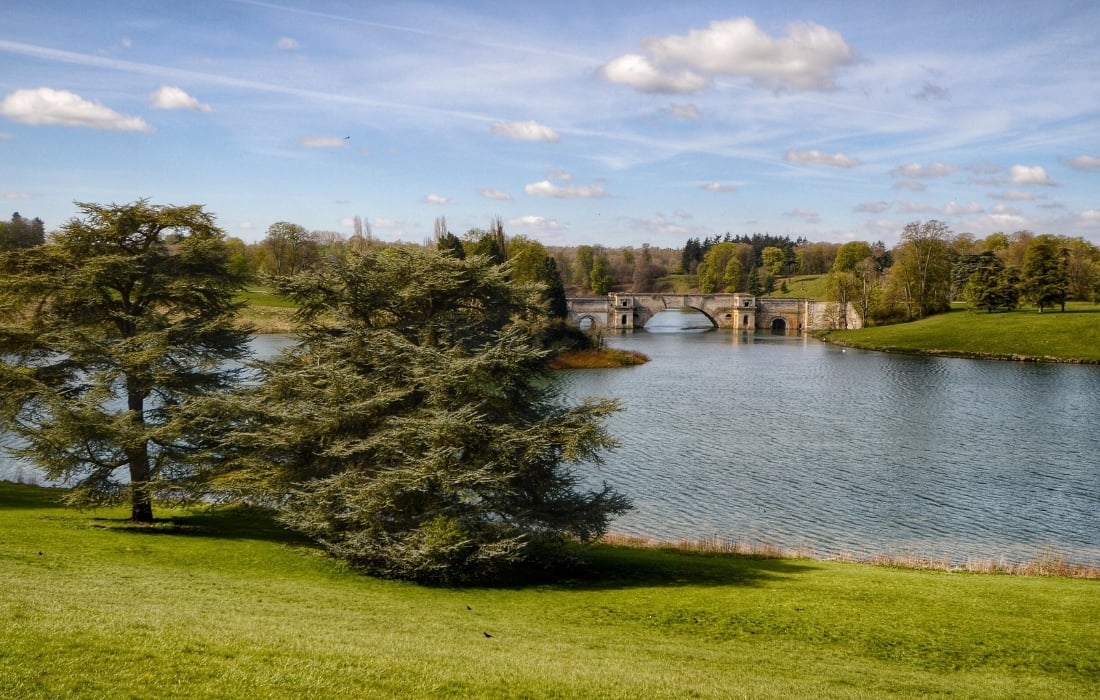
Brown incorporated woodlands, parks and grounds and even created serpentine rivers and lakes, often adorning these with follies (mock castles, bridges or temples) and bridges.
He mimicked nature so closely that his work was often confused with the natural environment. His nickname came from him constantly telling his clients that their property had great ‘capability’ for improvement.
Where he is the happiest man he will be least remembered, so closely did he copy nature his works will be mistaken.
Anonymous, from Capability Brown's obituary following his death in 1783
Did you know …
-
He started his career as a head gardener’s apprentice at Kirkharle Hall, where he worked from age 16 to 23.
-
He became the most sought-after landscape gardener of his time, earning around £6,000 a year (over £1 million in today’s money) by the 1760s.
-
King George III visited Blenheim Palace in 1786, after Capability Brown’s design was completed. The king commented: “We have nothing equal to this!”
Famous gardens
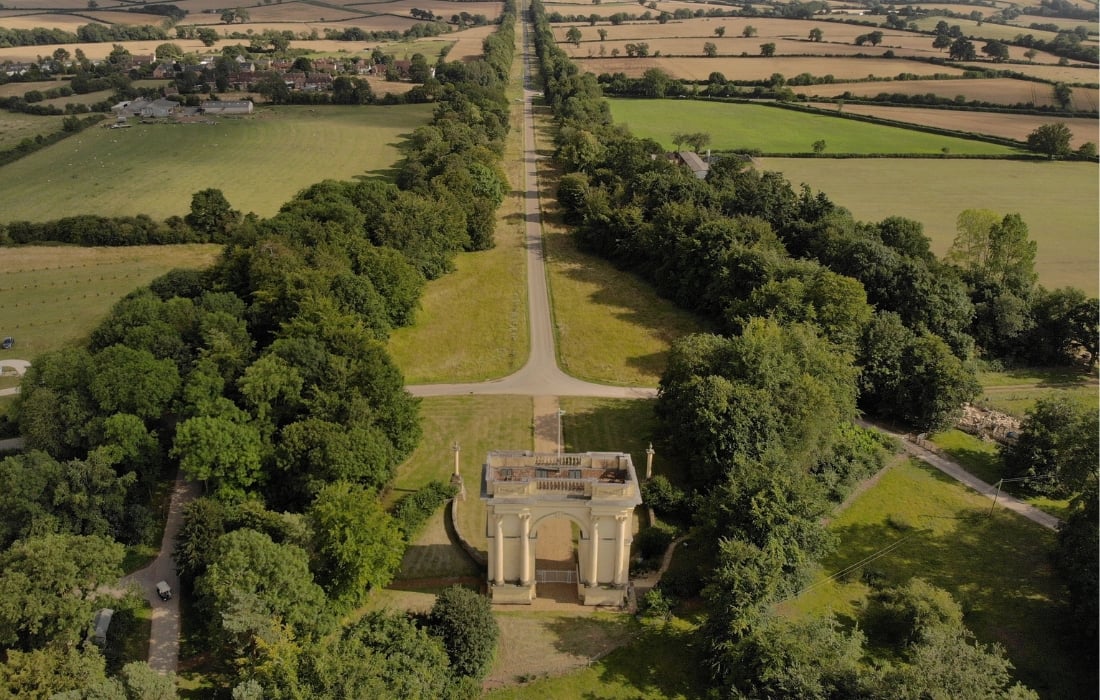
Stowe, Buckinghamshire
Brown was head gardener of Stowe from 1742. Here, he experimented with the nature-inspired style that he became known for.
He sculpted out a Grecian Valley by digging out 24,000 cubic yards of soil and introducing temples and sculptures that represented an idyllic vision of Ancient Greece.
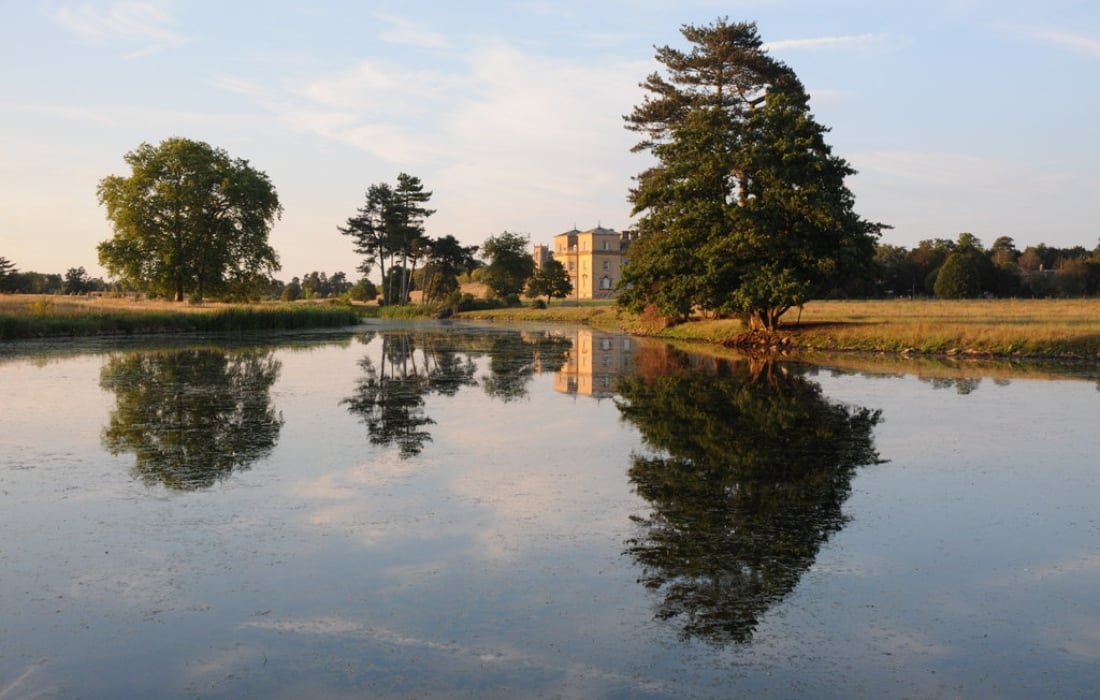
Croome, Worcestershire
Croome was Brown’s first major freelance project, commissioned in 1751 by the 6th Earl of Coventry.
As part of his design, Brown did away with the formal gardens and instead imitated nature through a new parkland and lake, whose serpentine shapes resembled a river.
Temples, follies and carriage drives complete the look. He relocated a local village, rebuilding it further away and hiding it with trees, to ‘protect’ the views from Croome.
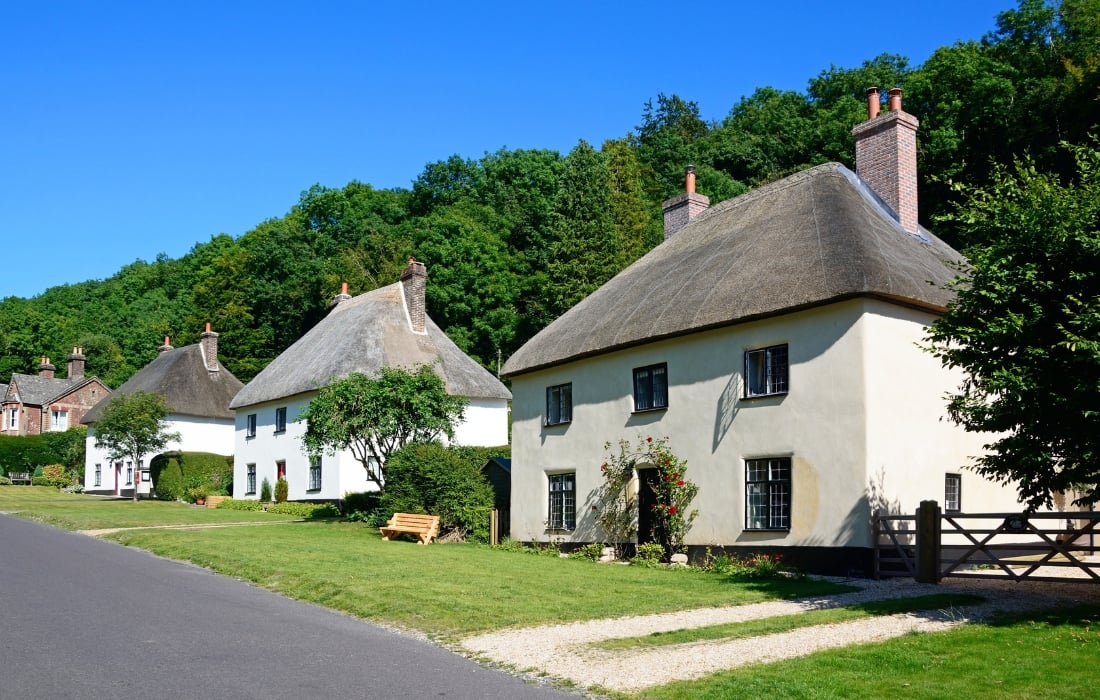
Milton Abbey and Milton Abbas, Dorset
In 1763, Lord Milton commissioned Brown to create a spectacular landscape that befit the Milton Abbey estate.
The design included 500 acres of woods in the valley, with trees on one side and 500kg of clovers planted on the other. The landscape featured an extensive circuit for people to walk and ride on.
The second part of the scheme began in 1773, when the local village was taken down to expand the estate’s gardens.
To replace it, he built Milton Abbas, a new model village (out of sight of Milton Abbey) that consisted of twin pairs of 36 thatched cottages that lined a serpentine road leading down to a nearby lake.
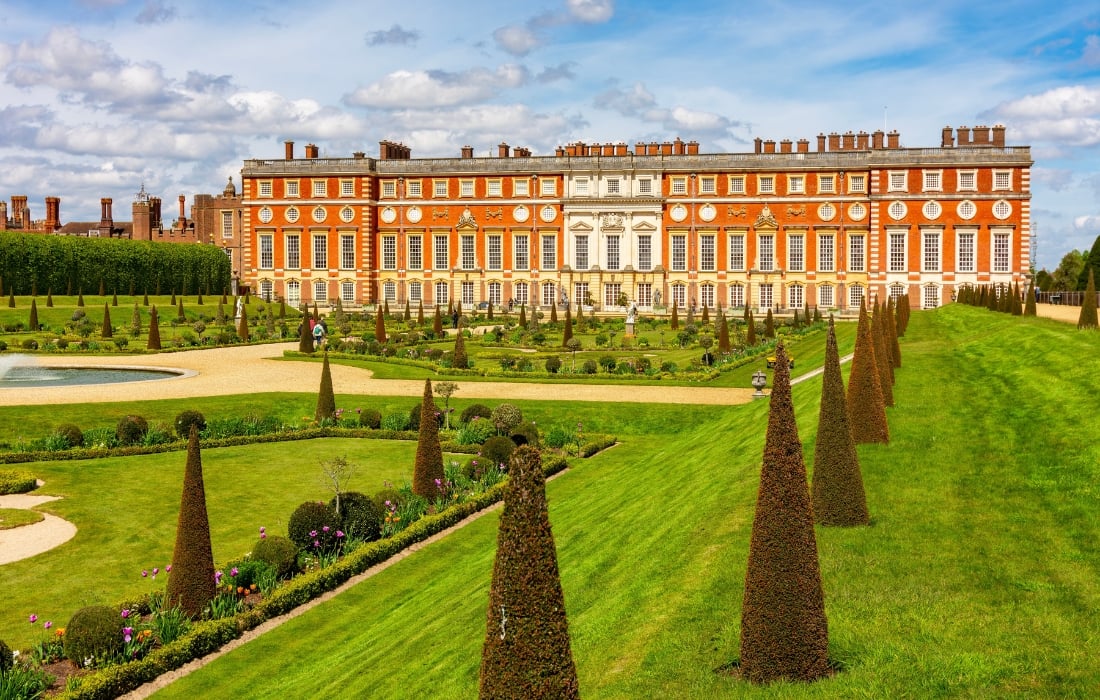
Hampton Court, London
King George III appointed Brown head gardener at Hampton Court Palace in 1764.
Brown decided to keep the existing layout ‘out of respect’, including preserving the hedge maze in the Wilderness part of the garden.
The most notable change he made was introducing the ‘Great Vine’, which, to this day, is the world’s largest grape vine.
While working on this project, he also remodelled the gardens at Richmond Palace.
Blenheim Palace, Oxfordshire
The works at Blenheim Palace took 11 years to complete. They included widening the ‘trickling’ River Glyme into a lake by digging a valley, flooding it and then finally, damming it.
He created a waterfall – the Grand Cascade – over a section of the dam and re-designed 2,000 acres of gardens and parkland.
He grassed over the formal gardens and planted thousands of mature trees in the parklands.
One of the trees found in the grounds has a claim to fame: a Cedar of Lebanon features in the 2007 film, Harry Potter and the Order of the Phoenix!
Capability Brown's personal life
Lancelot Brown was born in August 1716 and grew up in Kirkharle, Northumberland.
In 1739, he moved south to start a job as an under-gardener at Stowe. He rose through the ranks until he became head gardener in 1741.
He got married to Bridget Wayet in 1744 and they had nine children together. He became a freelance designer and landscaper in 1751, and went on to employ several foremen, assistant surveyors and landscapers to manage labourers and contractors onsite.
He died in 1783 and is buried at Fenstanton Parish Church near Cambridge.
A memorial plaque also commemorates him at Westminster Abbey, where the ICE's first President, Thomas Telford, was buried!


