





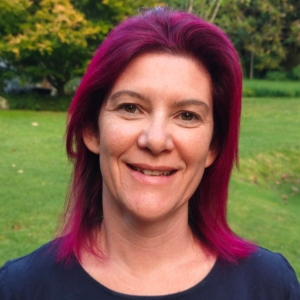
Cerys White
Assistant project engineer, Nuclear Restoration Services
Expertise
Design, ConstructionLocation
WalesMy highlights
Graduated from my master's degree with first-class honours
Awarded the Akzonobel Prize for best student in graduating year
Completing a secondment with ANSTO in Sydney, Australia
I would recommend a career in civil or infrastructure engineering because…
I’d recommend civil engineering because of the incredible variety it offers.
From nuclear and aviation to energy, infrastructure, and environmental projects, civil engineers are needed across countless sectors.
This diversity means you can shape your career around your interests, whether that’s working on cutting-edge technology, sustainable solutions, or large-scale public works.
It’s a dynamic field that combines technical skill with real-world impact, offering endless opportunities to grow and make a difference.
Gaining professional qualification will not only open doors to new opportunities but also provide recognition for the skills and experience I’ve developed.
What inspired you to become a civil engineer?
Growing up on Anglesey, I crossed the Menai Suspension Bridge almost every day.
I was always fascinated by its elegant design and the engineering behind such a historic structure.
Seeing it up close so often sparked my curiosity about how infrastructure shapes our world and ultimately inspired me to pursue a career in civil engineering.
We asked Cerys…
Complete this phrase: I’m a civil engineer, but I’m also...
I’m a civil engineer, but I’m also a proud contributor to the safe decommissioning of nuclear sites for a cleaner future.
Name one civil or infrastructure engineering myth you’d like to bust.
That civil engineers just build things. In reality, our responsibilities go far beyond new construction.
Civil engineers also play a vital role in decommissioning infrastructure, ensuring that sites are safely dismantled, restored, and repurposed for future use.
It’s about managing the full lifecycle of infrastructure, not just its creation.
How does your role contribute to addressing climate change?
In my role within the nuclear decommissioning industry, I help return sites to a brownfield state, making them safe and suitable for future use.
This process supports the transition to cleaner energy by preparing land for potential developments like small modular reactors (SMRs) or renewable energy sources.
It’s a key part of reducing environmental impact and supporting long-term sustainability in the energy sector.
How does your role contribute to making the industry more diverse and inclusive?
By working in this sector, I contribute to making civil engineering and the nuclear industry more inclusive,
I bring fresh perspectives, encourage diverse talent, and help to reshape public perceptions of nuclear work as innovative, sustainable, and accessible to all.
What role does digital technology play in your job?
Digital technology is essential to my role.
Our team is spread across the UK, and we frequently collaborate with contractors based abroad.
Having a centralised digital model of the project allows all team members to work together, regardless of location.
This shared model ensures consistency, improves coordination, and significantly enhances productivity.
The model serves as a vital onboarding tool for new contractors, especially those who can't easily access the site.
It provides them with a clear, up-to-date visual representation of the project, helping them understand the scope and context without needing to be physically present.
This not only saves time but also reduces the risk of miscommunication or delays.
What is motivating you to become professionally qualified?
I’m driven by the desire to grow in my career.
Gaining professional qualification will not only open doors to new opportunities but also provide recognition for the skills and experience I’ve developed.
It’s a way to validate my contributions and continue building a meaningful and impactful career in civil engineering.
What does being professionally qualified with the ICE mean for your career?
Achieving professional qualification will support my career progression, especially as many of the more senior technical roles within NRS and across the wider industry require it.
Working towards this goal has already benefited my development, as it allows me to shape my experiences around the ICE attributes.
Without undertaking my initial professional development (IPD), I may not have had the same opportunities to gain such targeted and valuable experience.
How did the ICE and your employer support you to become professionally qualified?
The ICE and my employer have played key roles in supporting my journey toward professional qualification.
The ICE has encouraged me from early on in my career through the QUEST scholarship, opportunities to be an ICE ambassador, and access to IPD workshops and mentoring.
My employer has also been instrumental by assigning me a supervising civil engineer (SCE) during the graduate scheme.
I work closely with my SCE to develop my IPD, and they help tailor my work experiences to align with the ICE attributes, ensuring I gain the right exposure and skills.
How has being a member helped your career?
Being a member of the ICE has supported my development in many ways.
It’s provided valuable networking opportunities and access to resources like the ICE Library, which was especially helpful during my university dissertation and continues to be useful in my professional work.
I’ve also benefitted from being part of a community of like-minded individuals through the graduate and student committees, which I’ve always been involved in.
Regular webinar recordings, IPD workshops, and mentoring have all helped me stay informed and focused on my career path.
What’s the biggest difference you’ve noticed from studying to working in engineering?
One of the biggest differences I’ve noticed between studying and working in engineering is how much learning happens on the job.
At university, you build a strong theoretical foundation, but in the workplace, you gain practical knowledge that only comes with experience.
Every project, challenge, and collaboration teaches you something new and that hands-on exposure is invaluable for developing as a professional engineer.
Any hobbies?
Outside of work, my hobbies include taking part in Hyrox events, going to the gym, walking along coastal paths and in the mountains, and travelling the world whenever I get the chance.
Cerys' career path
- A-levels in physics, mathematics, chemistry, and the Welsh baccalaureate
- ICE QUEST Scholarship sponsored by Morgan Sindall, including summer placements during university
- Northumbria University – graduated with a first-class honours master's in civil engineering
- Two-year nuclear graduate scheme sponsored by NRS, with secondments at NRS, Arup, and the Australian Nuclear Science and Technology Organisation (ANSTO) in Sydney, Australia
- APM Project Management Qualification (PMQ) – achieved as part of the graduate scheme, strengthening project delivery and leadership skills
Major projects
- Trawsfynydd reactor dismantling
- Trawsfynydd height reduction
- Barry Waterfront Campus (BWC) and Advance Technology Centre (ATC) for Cardiff and Vale College (CAVC)
- Central Quay, Cardiff




Related Content

- Type
- ICE Community blog
What's the foundation of flood resilience? Information
ICE President David Porter explains why being informed about flood risk is so important for the public and civil and infrastructure engineers.

- Type
- Awards and competitions
It’s electrifying! South Wales Metro track transformation bags top award
The electrification of the Core Valley Lines impressed the judges at the 2026 British Construction and Infrastructure Awards.

- Type
- Civil Engineer blog
The long-term consequences of a really good idea
Good decisions made at speed can lead the industry down unintended paths, writes Steven Yule, ICE country representative for the UAE.