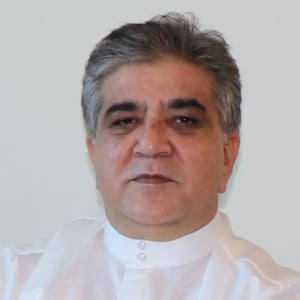


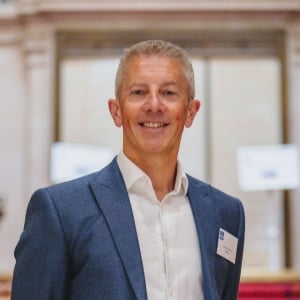
Jonathan Millard
Associate director, Arup
Expertise
DesignLocation
South WestMy highlights
Working on the Defence and National Rehabilitation (DNRC) project near Loughborough
My year long assignment to Hong Kong, designing highway alignments for the new West Rail line
Obtaining Incorporated Engineer status with the ICE
A day in my life
Mostly based in our fancy new office in EQ Bristol, my days often start off with a little deception from my calendar.
It suggests I’m going to have nice mix of meetings and focus time. As the day unfolds, my focus time quickly erodes and I spend a lot of my day having unexpected conversations either responding to urgent client queries, talking with team members, or helping colleagues deliver our One Arup approach to projects.
I'm in a fortunate position where I lead strategic work, I have a high-level review role across a number of projects, and I make plenty of time to talk with team members.
Team leadership is one of my strengths and making time to be present in the team is key to success and will be even more so going forward.
What inspired you to become a civil engineer?
After school, I started a graphic design course.
After a few months my older brother spotted an advert in the paper that suggested I could get paid to continue a different type of drawing work, while also still getting some qualifications.
I had no idea what I was getting into at the time!
We asked Jonathan…
I would recommend a career in civil or infrastructure engineering because...
I enjoy the variety and the responsibility.
To be that generalist that brings everything together is such an important role.
Even when the digital world is changing rapidly, we are always going to need common sense and emotional intelligence.
Complete this phrase: I’m a civil engineer, but I’m also …
...a dad, husband, into photography, golf, fitness and skiing/snowboarding.
Name one civil or infrastructure engineering myth you'd like to bust.
You don’t have to be academically brilliant to be a technician or engineer.
For me its more about the attitude, commitment, clear communication and team work.
How does your role contribute to addressing climate change?
My core skills are things like flood, drainage, pavements, earthworks and utilities.
I think good and efficient design has always been a key driver for me.
My role now is to create that open environment for others to think, explore and challenge the norm.
While there are things often immediately in our control, there are often others that aren’t and I enjoy challenging others when appropriate and encouraging the team to do the same.
How does your role contribute to making the industry more diverse and inclusive?
I’m passionate about this generally and am always very conscious of my behaviours and words I use.
I’ll often correct myself in front of others which is useful in showing vulnerability and drive to do the right thing.
I’m committed to learning on this subject and I regularly nudge others including senior leaders to correct their behaviours also.
What role does digital technology play in your job?
It’s changing fast, and over the last few years I’ve come to terms with two facts. It's never going to not change, and I’m not old enough to ignore it on the run up to retirement.
Those two things alone are useful in my mind shift to keep exploring, keep an open mind, and listen to those in the teams that have some excellent ideas for change.
At the moment, we have some great initiatives to share practical AI examples in and across teams.
From what I can see this organic sharing and enabling approach seems to be working.
What motivated you to become professionally qualified?
It's the expected standard. It's also recognition to myself, and the reassurance that I’ve reached a certain standard that the profession recognises.
I’ve felt this is more important for me after coming into the profession a very young and immature 16-year-old. So there is, and probably almost always will be, an underlying need to prove myself.
What does being professionally qualified with the ICE mean for your career?
Arup holds itself to a high standard and this includes striving for staff to commit and reach those same high standards.
ICE qualification has definitely helped secure my progression.
How did the ICE and your employer support you to become professionally qualified?
I feel very fortunate to have been supported by the ICE and Arup. Both organisations have a long-established relationship and support across the board is excellent.
How has achieving Fellowship impacted your career?
I went for Fellowship for two reasons.
The first is that I wanted to elevate my previous membership grade following promotion to a senior leadership grade in Arup.
I’m proud of my IEng status and background. The Fellowship route seem a perfect addition allowing me to now be both.
The other reason is that I want to increase the level of senior support we as Arup give back to the ICE.
Jonathan's career path
I started with Arup in 1993. I completed an ordinary national certificate (ONC) and then a higher national certificate (HNC) in civil engineering in the first four years.
I achieved Incorporated Engineer status sometime after – HNC was the qualifying academic grade at this time.
Fast forward a few years and then I got my Fellowship in December 2025.
A very brief version of my roles in Arup were: assistant technician, technician, senior technician, senior engineer, associate, associate director.