






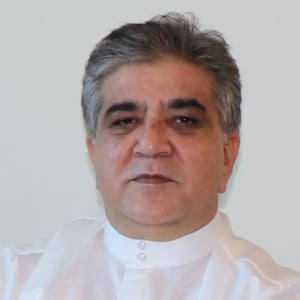
Nasreen Hunt
Director of programme controls and PMO leadership, Turner & Townsend
Expertise
Project Management, DigitalLocation
United KingdomMy highlights
Leading programme controls and PMO functions across major international infrastructure programmes
Establishing governance and performance frameworks that strengthened accountability and decision-making
Driving the adoption of digital reporting and data-led assurance to support board and government stakeholders
A day in my life
While no two days are ever the same, in essence my day centres on building the Programme Management Office (PMO) and putting the right foundations in place to support effective programme delivery.
I work across teams and stakeholder groups to improve visibility, strengthen governance, and start aligning planning, cost, risk and change into a more integrated and disciplined approach.
A significant part of my role is bringing challenge: identifying gaps, testing assumptions, and helping establish the structures and controls needed as the programme evolves.
Just as importantly, I work to engage stakeholders (internal as well as external) and bring them on board with the changes required to drive improvement, ensuring that new ways of working are understood, supported and embedded effectively.
I’m also focused on empowering my team by creating clarity, encouraging accountability and ownership, and supporting their development so they can grow in confidence and make a meaningful contribution as the PMO matures.
Ultimately, my focus is on building a PMO that adds value through stronger control, better stakeholder alignment, and a capable team equipped to support successful delivery.
My journey shows that the profession needs not only great engineers, but also great leaders, collaborators and innovators to deliver the infrastructure that society depends on.
What inspired you to join the infrastructure industry?
My initial awareness of infrastructure engineering came through my husband, who was already involved in leading major infrastructure programmes when we met.
However, what inspired me to consider the sector for myself was not simply that introduction, but the significance of the work itself.
I became increasingly interested in the scale and complexity of infrastructure projects, and in the way they support communities, economic development and long-term public value.
What particularly appealed to me was the challenge of operating in an environment that requires strategic thinking, collaboration and strong programme discipline.
I was struck by how many moving parts must come together to deliver successful outcomes, and by the importance of effective leadership in navigating complexity, engaging stakeholders and maintaining momentum.
That insight gave me a real appreciation for the role infrastructure engineering plays, and it ultimately inspired me to build my own career in the industry.
It offers the opportunity to shape society at scale. Infrastructure underpins how people live, move and connect, and the sector provides the chance to work on complex challenges with lasting impact across generations.
We asked Nasreen…
I would recommend a career in civil or infrastructure engineering because...
It offers the opportunity to shape society at scale.
Infrastructure underpins how people live, move and connect, and the sector provides the chance to work on complex challenges with lasting impact across generations.
Complete this phrase: I’m an infrastructure professional, but I’m also …
...a systems thinker, people leader and thought leader who is passionate about empowering teams, improving delivery environments and turning complexity into clarity.
Name one civil or infrastructure engineering myth you'd like to bust.
One myth I’d like to bust is that infrastructure delivery is driven solely by technical design.
Technical excellence is, of course, essential, but successful outcomes rely just as much on strong governance, leadership, robust controls and effective decision-making.
Infrastructure delivery is about far more than engineering alone. It's about bringing together people, disciplines and priorities to turn complex ambition into something deliverable.
I would also challenge the idea that the sector is boring or overly technical.
In my experience, it's anything but. It's a dynamic and rewarding industry, shaped by diverse individuals from different backgrounds, disciplines and often global perspectives, all of whom bring something unique to the work.
That diversity is part of what makes the sector so engaging, and over the years I have met some truly incredible people and made lifelong friendships along the way.
How does your role contribute to addressing climate change?
My role contributes by helping to build the governance and performance structures that keep sustainability visible in programme delivery.
By improving planning, risk management and decision-making processes, I help ensure that environmental considerations are taken into account, alongside cost, schedule and other delivery priorities.
In that sense, my contribution is about creating the discipline and visibility needed to support better long-term outcomes, including those linked to climate change.
How does your role contribute to making the industry more diverse and inclusive?
I contribute to diversity and inclusion by actively supporting a culture where different perspectives are welcomed, valued and heard.
As a woman from an ethnic minority background, I have often experienced what it means to be underrepresented, particularly after spending many years as the only female in meetings.
That experience has strengthened my commitment to mentoring and supporting others, particularly women and colleagues from diverse backgrounds, to build confidence, speak up and progress in their careers.
I also believe inclusion requires active advocacy, and I make a conscious effort to support and stand up for those who may not yet feel they have a voice.
This commitment extends beyond my immediate role.
I have presented at the Women in Construction and Engineering Awards UK & Europe, received recognition from Women in Rail UK, and have been a serving judge for the Project Controls Expo in the UK and the Middle East for the past few years.
I'm also proud to serve as a board advisor for the Middle East Project Controls Expo.
These experiences have given me a broader platform to champion inclusion, visibility and progression for underrepresented groups across the industry.
What role does digital technology play in your job?
Digital technology is central to my role.
I focus on implementing data-driven reporting, integrated systems and real-time performance insights that enable informed decision-making and greater transparency across programme delivery.
What motivated you to become professionally qualified?
A desire to formalise my contribution to the profession and to be recognised at a level that reflects strategic leadership and impact across major infrastructure programmes.
What does being professionally qualified with the ICE mean for your career?
For me, at my stage in my career, it provides recognition of leadership and influence at the highest level, strengthening credibility when operating within complex programme and stakeholder environments.
How did the ICE and your employer support you to become professionally qualified?
Throughout my career, I have benefitted from developing and building a network who have encouraged me to continue to develop myself professionally.
I've been supported internally as well as by the ICE via guidance, sponsorship and a structured process that enabled me to demonstrate my experience, leadership and contribution effectively.
How has being a member helped your career?
ICE membership has provided professional recognition, access to a global network and opportunities to contribute to the development of the infrastructure sector.
How has achieving Fellowship impacted your career?
I'm proud to have achieved Fellowship as a leader who came into civil engineering and infrastructure through programme leadership and delivery rather than a traditional engineering pathway.
My journey shows that the profession needs not only great engineers, but also great leaders, collaborators and innovators to deliver the infrastructure that society depends on.
I hope my journey encourages others from non-traditional backgrounds to believe that they too can reach the highest levels of professional recognition.
What’s the biggest/most complex thing you’ve made out of Lego?
A city skyline, complete with transport links between different areas.
It may not have matched the complexity of a real metro system, but it was still a detailed project that took several weeks to complete.
Anything else? i.e. personal causes, hobbies
I'm particularly passionate about mentoring and supporting the next generation of infrastructure leaders, especially those from non-traditional backgrounds.
Nasreen's career path
I've built my career over 25+ years in programme controls, PMO and infrastructure leadership across the UK, Middle East and international programmes.
My experience spans major transport and infrastructure developments, with a focus on governance, performance and organisational leadership.





Related Content

- Type
- Civil Engineer blog
The limits of efficiency: not every slow step in engineering is waste
Steven Yule, ICE country representative for the UAE, asks which slow steps in engineering AI should not remove.

- Type
- Civil Engineer blog
Engineers, if it’s not in the contract, it’s unlikely to happen
The project outcomes we want only become real when they’re written down where they carry consequences, explains Steven Yule, ICE UAE country representative.

- Type
- ICE Community blog
When every consultancy looks the same, where does innovation go?
There’s no shame in making a name for yourself in a consolidated industry, writes Steven Yule, ICE country representative for the UAE.

- Type
- Civil Engineer blog
The long-term consequences of a really good idea
Good decisions made at speed can lead the industry down unintended paths, writes Steven Yule, ICE country representative for the UAE.