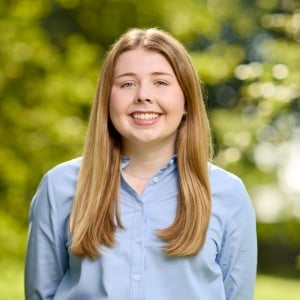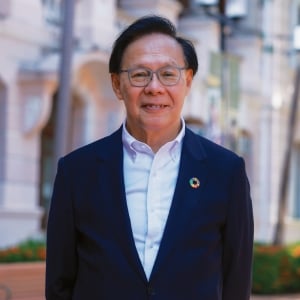


Lauren Rodgers
Area services manager, Network Rail
Expertise
Construction, Design, Project ManagementLocation
North EastMy highlights
Achieving Chartered Engineer status with the ICE in 2019
Leading the design, delivery and hand back of Blackburn King Street Depot, a £23m light maintenance facility
Leading the design, delivery and hand back of Wigan Springs Branch Depot, a £46m light maintenance depot project including electrification
I would recommend a career in rail because…
It offers the chance to shape the future of sustainable transport, while working on projects that have a real and lasting impact on communities.
The rail industry combines innovation, engineering, and public service – making it ideal for those who want to solve complex challenges and contribute to greener, more efficient mobility.
It’s a sector that values collaboration, long-term thinking, and continuous improvement.
Whether you're interested in operations, planning, technology, or infrastructure, there’s a wide range of opportunities to grow and make a difference.
There’s a wide range of opportunities in rail to grow and make a difference.
What’s the most exciting part about being a rail engineer in the 21st century?
Helping to shape a cleaner, smarter, and more connected world.
Rail, 200 years ago, was about opening-up new frontiers and fuelling industrial growth.
Today, it’s about decarbonisation, digital innovation, and building sustainable transport networks that serve people and the planet.
Looking 200 years ahead, I imagine rail will be fully autonomous, seamlessly integrated with other modes of travel, and powered entirely by clean energy.
For me, this work is also deeply personal. As a mother, I want Wilf and Beau to grow up in a world where transport is safe, green, and accessible for all.
Being part of that transformation and knowing I am helping to build a better future for them is what makes this career so meaningful.
We asked Lauren…
A day in your life...
In my role, I am the ‘voice’ of the North and East route.
I ensure the route’s needs are represented across the region and wider business.
To support service delivery, my days involve problem solving, programme management, and cross-team collaboration.
I consult with unions and build strong relationships with internal and external partners to align objectives and improve outcomes.
An early starter to get my two young sons ready (alongside my husband as we are very much a team), I sort breakfast and ensure that they get to nursery.
After a busy day of meetings, performance reviews and strategic planning, I switch back into ‘parent mode’ to prepare dinner, sort bedtime and everything in between!
Balancing a demanding job with family life is a challenge, but it is one I really value. It keeps me grounded and focused, bringing perspective and empathy to my days.
What inspired you to work in civil engineering? And why did you specialise in rail?
My dad inspired to become a civil engineer. He taught me the value of hard work and showed me how engineering can shape the world for the better.
I chose to specialise in rail because it offers the chance to work on projects that have a lasting impact on communities and the environment.
With continued investment and innovation, rail is a global career path that supports sustainable growth.
What’s the most exciting project in rail at the moment?
I think that the TransPennine Route Upgrade is one of the UK’s most exciting rail projects, improving connectivity between Manchester and York through electrification and faster, greener services.
It’s a major step toward a low-carbon future, alongside East West Rail, which will unlock growth between Oxford and Cambridge.
What’s the biggest thing the public misunderstands about railways and how they operate?
One of the biggest public misconceptions about railways is that they are simple systems, just trains running on tracks.
In reality, rail is a highly complex and interconnected network where infrastructure - including signalling, rolling stock (carriages), staffing, and safety - all need to work in perfect harmony.
A minor issue in one area can cause delays across the entire network.
People often wonder why upgrades or repairs take time, but these must be carefully planned to avoid major disruption and ensure safety.
Railways are precision engineered systems that require constant coordination and investment.
Understanding this helps explain why even small changes or delays can have a big impact and why modernising the network is such a challenging, but vital, task.
What do you think is the key to a society-wide modal shift towards public transport, particularly rail?
The key lies in making it the most convenient, reliable, and sustainable choice.
This means investing in modern infrastructure, seamless connections, and affordable fares, while ensuring services are frequent, safe, and accessible.
Public trust grows when rail is seen as a dependable alternative to driving.
Clear communication, integrated ticketing, and visible environmental benefits also play a role.
Long-term, consistent government policy and funding are essential, alongside urban planning that prioritises public transport over car dependency.
Ultimately, people shift modes when rail becomes the easiest and most attractive option for daily life.
How does your role contribute to making the industry more diverse and inclusive?
As a female chartered engineer, a wife and a mother of two young boys, I am proud to demonstrate that it is possible to hold a senior role in rail while raising a family.
I work flexibly across five days in four, which allows me to balance my leadership responsibilities with family life.
By being visible in this role, I hope to set a standard and be a role model for others, to show that you can thrive professionally without compromising on your personal commitments.
The industry has made real progress in creating inclusive environments and opening senior career paths for women. I am committed to helping that momentum continue.
What role does digital technology play in your job?
Network Rail is undergoing a major digital transformation process across its asset and maintenance divisions, which will bring real value and efficiency to operations.
Integrated digital solutions have the potential to streamline workflows, improve decision-making, and enhance the experience for the end user.
I see huge opportunity in embracing smarter systems that support preventive and predictive maintenance, real-time data, and better connectivity across teams.
What motivated you to become professionally qualified?
Ambition, professional recognition, and the desire to be part of a respected community of engineers.
Becoming chartered was a goal I set early in my career.
I wanted the status and credibility that comes with having the post nominals, knowing how much effort and expertise it takes to earn them.
For me, it was also about proving I could balance a demanding career and family life, while achieving the highest professional standards.
What does being professionally qualified with the ICE mean for your career?
It has brought real value to my career. It provides recognition among peers and adds credibility to my decisions and leadership.
Being chartered, shows that I meet a high standard of technical and professional competence, which is respected across the industry.
It has opened doors to senior roles and given me the confidence to lead complex projects and teams.
How did the ICE and your employer support you to become professionally qualified?
I received clear advice and guidance from both. This was invaluable to help me understand the requirements and stay on track.
My employer offered mentorship and connected me with others in similar positions, creating a supportive network to share experiences and challenges.
The ICE kept me up to date with the latest information, while my supervising civil engineer and delegated engineer provided tailored feedback and encouragement.
This combination of structured support, peer connections and personal guidance made a real difference and helped me feel confident throughout the process.
What’s the biggest/most complex thing you’ve made out of Lego?
To date, it is the Creator Expert London Bus (Set 10258), which has 1,086 pieces.
It took a few evenings and, truthfully, a few glasses of wine to get through, a very relaxed and enjoyable construction process.
The real challenge is still waiting in the box. My husband received the Star Wars Millennium Falcon (Set 75192), with over 7,500 pieces, as a wedding present.
We are saving it to build with our two little boys when they are older. It will be a true family experience and core memory.
Do you have any hobbies?
Outside of work, I enjoy spending time with family and friends and get outdoors whenever possible.
Our lively, working cocker spaniel, Poppy, keeps us active with plenty of walks.
We have recently relocated to Northumberland to prioritise a better work-life balance and make the most of the beautiful surroundings.
The move has given us more space, fresh air and time together as a family, something that is really important to me.
Lauren's career path
I studied civil and structural engineering at Newcastle University, where I built a strong technical foundation and developed a passion for infrastructure.
After graduating, I began my career in engineering consultancy, gaining experience with major firms including AECOM and WSP.
I progressed through project and programme management roles, eventually joining Network Rail where I am currently the area service manager for the North and East route.