


Specialist Knowledge Societies
Our specialist knowledge societies are closely affiliated membership bodies with interests in specialist areas of civil engineering
Read more


The panel identifies historical engineering works that are worthy of recording, promoting, and in some cases, preserving for posterity.
The panel helps to organise groups of civil engineers in the regions who are interested in the history of their profession, and publishes a quarterly newsletter, regional guides and leaflets on the subject. The panel also work with the regions to commemorate structures and engineers by putting up plaques and creating maps to bring these to public attention.
The Panel for Historical Engineering Works (PHEW) is made up of a variety of industry experts. Find out more about our panel chair and details of the panel's members.

| Name | Position/region |
|---|---|
| Michael Chrimes | Vice Chair |
| Vacant | East of Scotland |
| Sandra Purves | West of Scotland |
| Steve Jones | North West |
| Niall McKay |
North East |
| John Spain | Yorkshire and Humber |
| Stephen K. Jones | Wales |
| David Brown | West Midlands |
| Paul Sharratt | East Midlands |
| Ian Anderson | East of England |
| Vacant | South West |
| Richard Adam | South East - Kent & East Sussex |
| Vacant | South East - Hants, West Sussex & Surrey |
| David Hunter | South East – Thames Valley |
| Mervyn Carter | London |
| Kris Hilburn | Northern Ireland |
| Dr. Dermot O'Dwyer | Engineers Ireland representative (newsletter editor) |
| Sue Threader | Archive panel representative |
The panel identifies historical engineering works that are worthy of recording and, in some cases, preserving for posterity. This information is recorded in a searchable database. Data available includes historical details about the structure and its construction process.
The Panel for Historical Engineering Works produces a quarterly newsletter, providing stories and updates concerning some of the UK's most important historical structures.
For older issues of the PHEW newsletter, please see the PHEW newsletters library or contact us below.
The ICE PHEW and Library and Archives have been using Google My Maps to create interactive maps of historic engineering works.
So far, we've created maps of the engineering works of John Smeaton and John Rennie. Alan Harding, an ICE Associate Member and engineering history enthusiast, has also created a map of Thomas Telford's works.
You can zoom in and out of the maps and click on locations to see a short description, image and links to further information. The maps also work on mobile phones, making it easy to explore historic engineering works wherever you are.
We hope you enjoy browsing the maps that reveal how intrepid these early engineers were in reaching parts of the UK and Ireland before their own transport projects made it easier to get there.
We welcome feedback and suggestions for future maps.
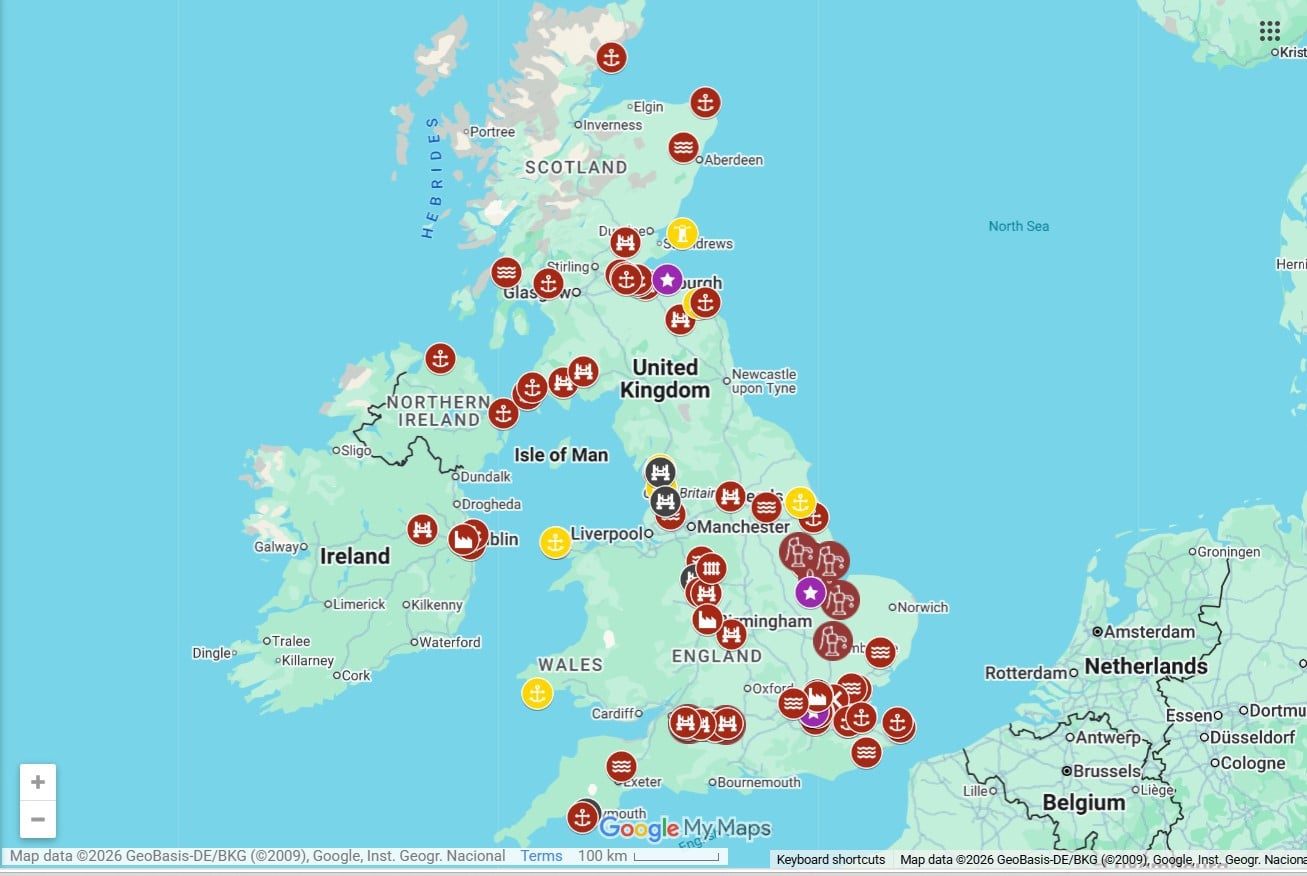
We've mapped 26 canals, 28 bridges, 34 harbours and coastal works, and six drainage projects of the pioneering engineer John Rennie. Rennie was one of the leading civil engineers of his time. His sons, George and Sir John Rennie, continued the family's engineering tradition. Sir John served as ICE President from 1845 to 1848.
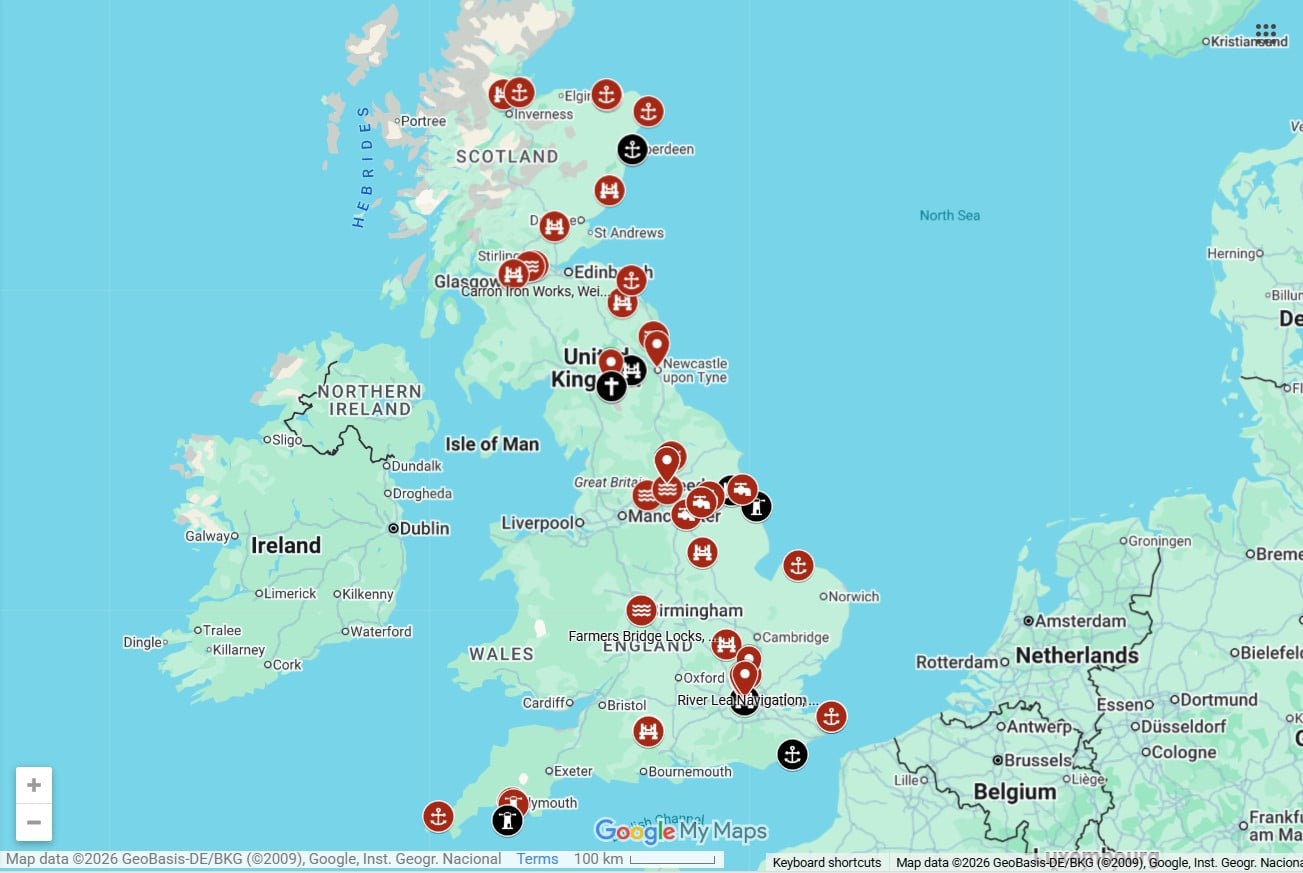
John Smeaton is widely regarded as the first person to describe himself as a civil engineer. We've mapped 45 of his surviving canals, drainage works, harbours, bridges, mills and his revolutionary Eddystone Lighthouse. Most of the lighthouse is now rebuilt on Plymouth Hoe.
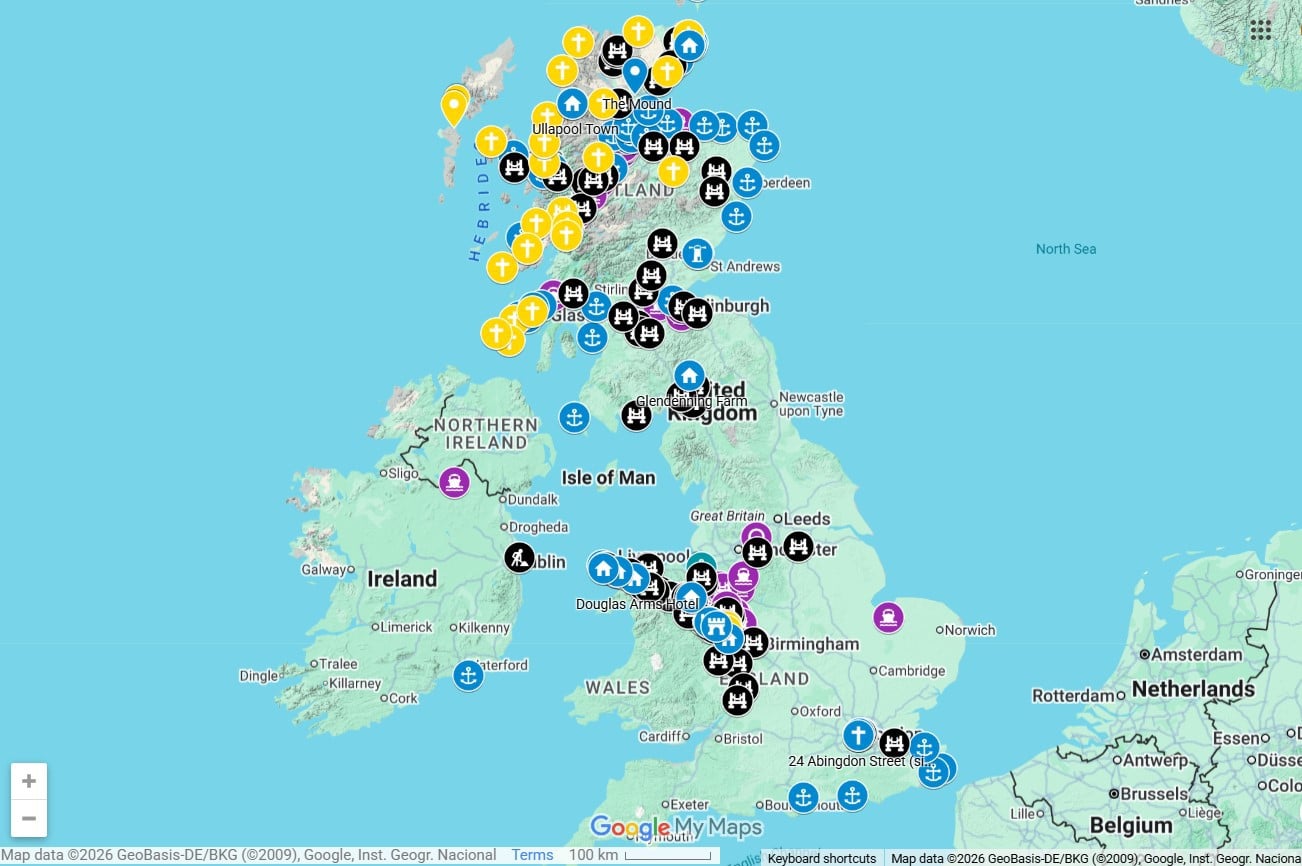
The works of the ICE's first president have been mapped by ICE Associate Member Alan Harding and is included here with his kind permission. The map shows Telford's major contribution to connecting the countries of the United Kingdom.
To find out more about the Panel for Historical Engineering Works contact the team: