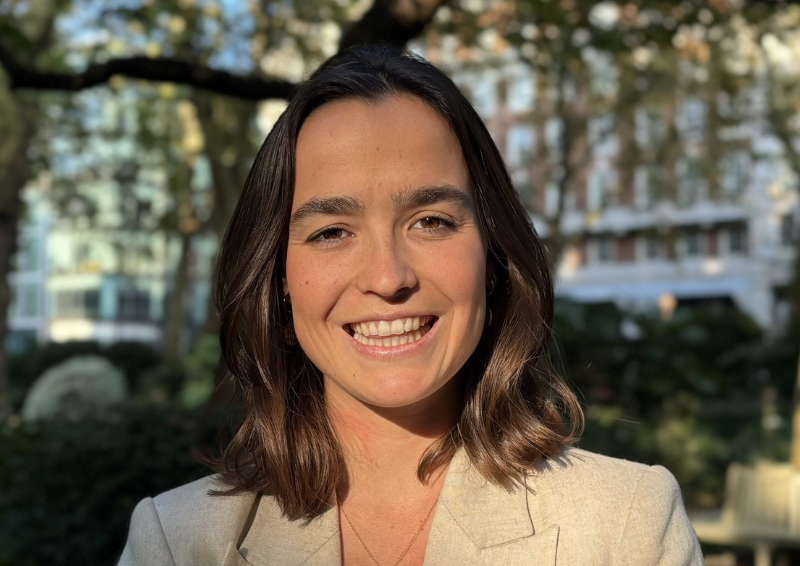
Ed’s Future Leaders worked on projects linked to the institution’s business plan.
Who they are:
- Asil Zaidi worked at London Bridge Associates Ltd in London
- Emma Wei worked at Mott MacDonald in the South East
- Karina Augustine worked at COWI UK in London
- Kristina Dahyaraj was working with Skanska in London
- Lara Lightfoot worked for BAM Nuttall in Yorkshire and Humber
- Panagiotis Stratos worked for SNC Lavalin Atkins in Wales
- Rhona Kerr worked for Buro Happold in the North West
What they did:
Ed’s Future Leaders joined one of the Community Advisory Boards. This meant that they embedded into the core knowledge programme linked to the Institution’s Business Plan, which ensured that the talents and energies of the Future Leaders were aligned directly with the work of the Institution.
Whilst moving back to a greater sense of normality after the impact of the coronavirus pandemic, there was still an element of uncertainty surrounding events. Therefore, Ed’s Future Leaders were able to participate in both physical and online events.
The Community Advisory Boards (CABs) were established to identify problems and challenges faced by engineers, the environment and society and to drive the production of trusted, authoritative, independent insight into the major issues facing the industry.
The CABs provide direction to creating engaging digital knowledge programmes for ICE members. In addition, the CABs identify gaps in knowledge or dissemination and propose the creation of new professional or knowledge networks to fill them.
Asil, Emma, and Panagiotis joined the Data & Digital Community Advisory Board. This CAB is focused on advancing better solutions through the exploitation of data and digital solutions.
Karina joined the Community Advisory Board which was focused on water. This CAB is looking at transforming the availability of potable water and sanitation solutions.
Kristina joined the Climate Resilience Advisory Board. The remit of this CAB is to work with others to mitigate and provide resilience to the significant effects of climate change.
Lara joined the Transport Community Advisory Board. The remit of this CAB is to focus on mobility and access to safe and affordable transport.
Panagiotis also joined the Geotechnical and Structures Community Advisory Board.
Panagiotis joined the Low Carbon Energy Community Advisory Board. This CAB is looking at the provision of and promotion of access to low carbon energy.
Rhona joined the Decarbonisation Advisory Board. The remit of this CAB is to place the decarbonisation of the industry at the heart of the agenda.
All of them joined the Productivity CAB, which was focussed on driving productivity through modern methods of procurement and delivery including advocating for a systems-engineering approach and Project13 style thinking.
The Productivity CAB also produced this year’s State of the Nation report “Improving Infrastructure Productivity”. The aim for the State of the Nation was to produce a practical and user-friendly guide backed by best practice case studies for civil engineers to transform infrastructure productivity while delivering carbon reduction goals.
It focuses on what civil engineers can do to make sure infrastructure projects are i) more effective: maximising a much wider range of benefits to people around the world, and ii) more efficient: delivering that value with fewer resources and eliminating waste wherever it is found.
The State of the Nation also introduces the Infrastructure Lifecycle Guidance – a new toolkit from the ICE that allows professionals to pinpoint advice on boosting productivity tailored to their role at every stage of a project.